





HKUST Boundless Article
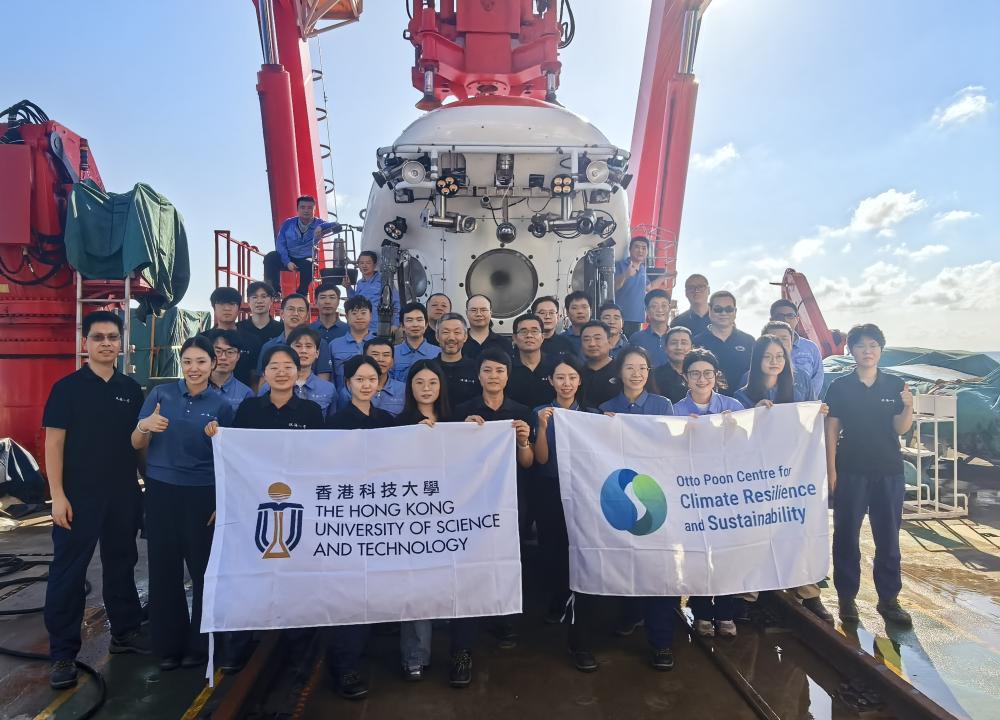
A deep-sea scientific expedition aboard the research vessel Shenhai Yihao to the Haima cold seep in the South China Sea marked the first time a large group of early-career researchers from Hong Kong has participated in such a manned deep-diving voyage.
The achievement represents a major step forward for Hong Kong scholars in engaging deeply with national deep-sea research platforms and international deep-sea scientific programs.

HKUST is building a fast-moving bridge between research and real-world application through the Industrial Alliance alongside the inaugural Cheng Kar-Shun Robotics Institute (CKSRI) Industrial Summit.
The dynamic platform will help turn intelligent breakthroughs into technologies that can be tested, improved, and deployed.
Built around one shared goal, the alliance aims to advance embodied intelligence and other emerging technologies, in alignment with the national “AI+ initiative” in the 15th Five-Year Plan.

We know that the bond between a teacher and a student can supercharge learning. But what if the “teacher” isn't human?
A recent study from HKUST, published in the neuroscience journal Neuron, suggests that a brief pre-class interaction with an AI can change how your brain prepares for learning.


Developed economies worldwide, including Hong Kong, are now dealing with the issue of aging societies. Extended lifespans place significant caregiving and financial burdens on older adults, their families, and healthcare systems, creating an urgent need to understand the biological basis of “healthy aging.”
In response, a 5-year study project launched at HKUST, with support from the Bright Future Charitable Foundation, has set out to unlock the secrets to healthy longevity using HKUST’s groundbreaking technologies.

With the rapid aging of Hong Kong's population, it is projected that by 2039, individuals aged 65 or above will account for over 30% of the total population, making early intervention for cognitive health an urgent necessity.
This demographic shift highlights the critical need for effective strategies to address cognitive decline in the elderly.
One of these strategies is to promote the detection of Alzheimer's disease at the community level.

As the world pivots toward a sustainable energy future, the need for greater interdisciplinary collaboration and knowledge exchange is becoming more urgent.
In response, elite scientists, engineers, and industry partners from Asia, Europe, and the Americas convened at The Hong Kong University of Science and Technology (HKUST) from February 24 to 27 to explore the latest innovations in sustainable energy research.