

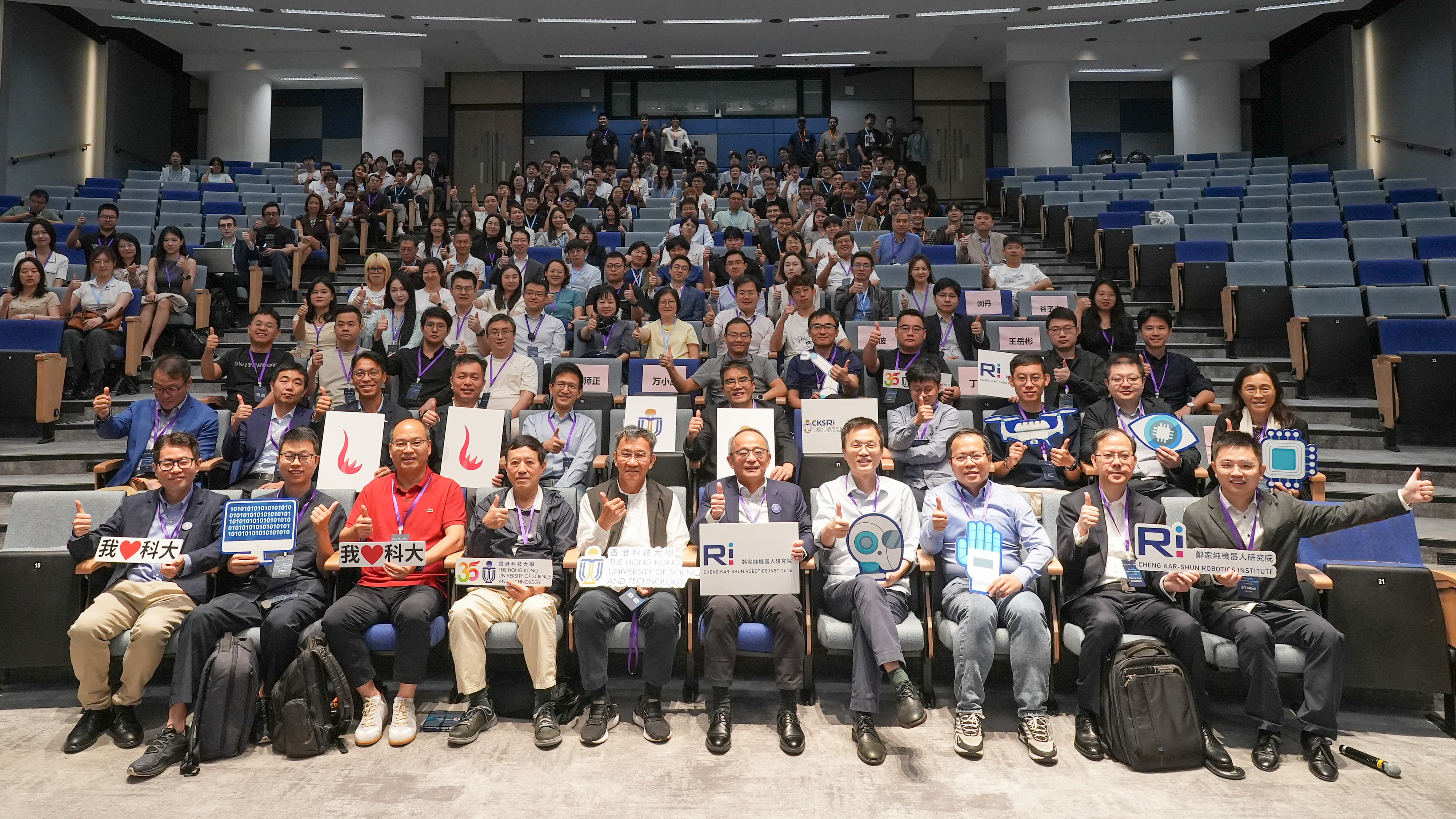
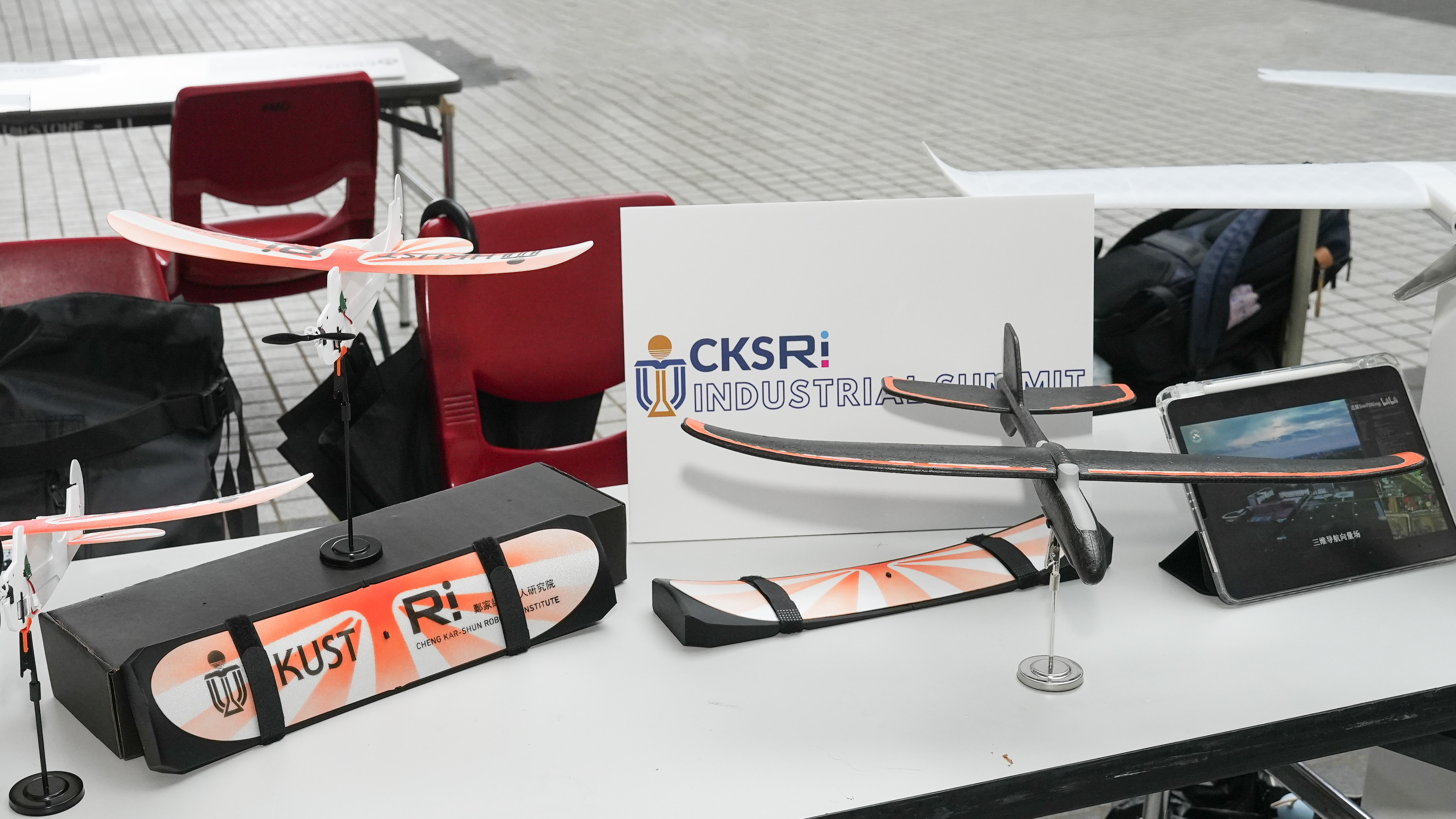
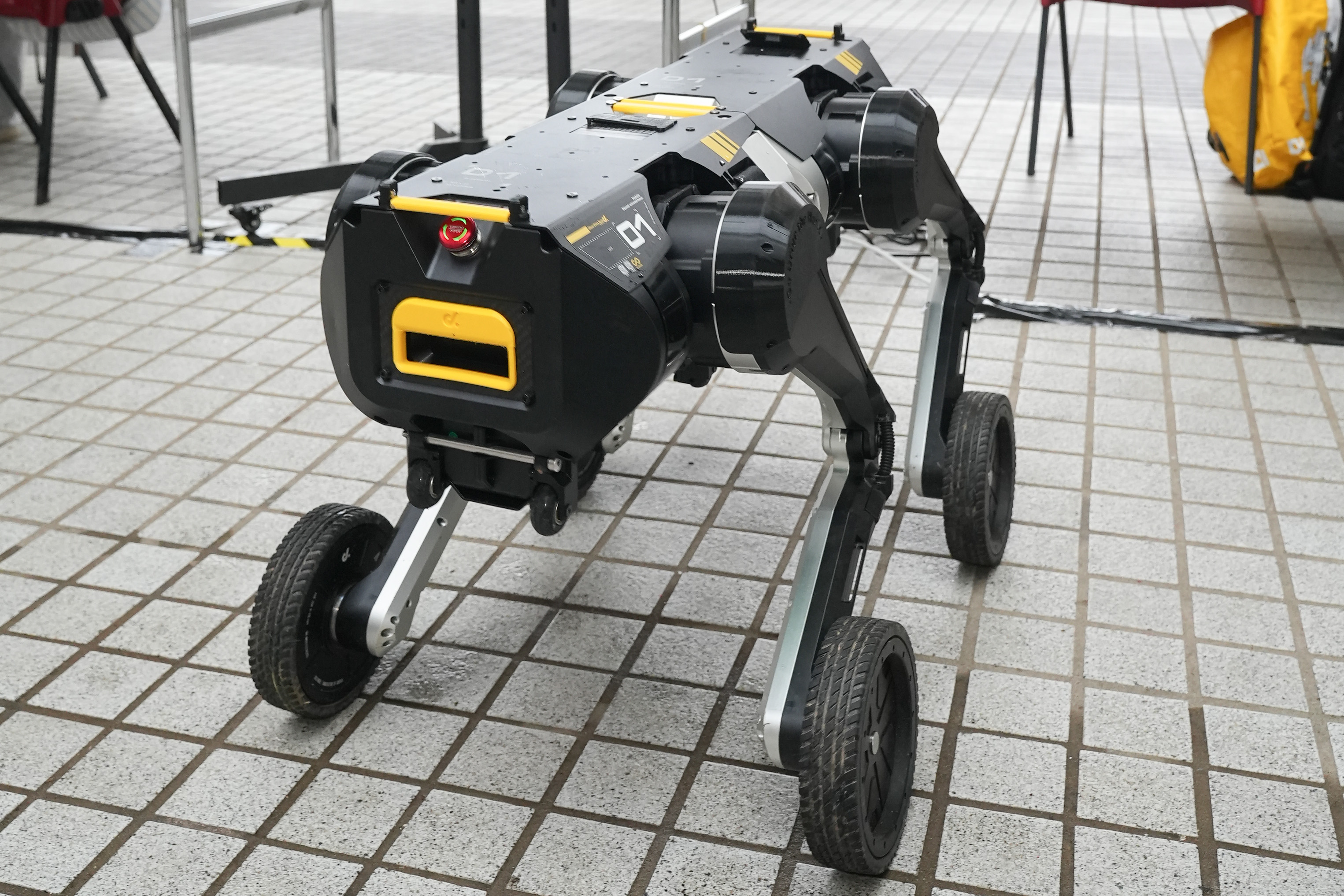
HKUST is building a fast-moving bridge between research and real-world application through the Industrial Alliance alongside the inaugural Cheng Kar-Shun Robotics Institute (CKSRI) Industrial Summit.
The dynamic platform will help turn intelligent breakthroughs into technologies that can be tested, improved, and deployed.
Built around one shared goal, the alliance aims to advance embodied intelligence and other emerging technologies, in alignment with the national “AI+ initiative” in the 15th Five-Year Plan.
Founding members include leaders in autonomous systems, aerial robotics, marine systems, power and energy equipment, computing and semiconductor technologies, and optics.
Under the partnership, HKUST will contribute its research expertise and technical foundations, while industry partners will provide real-world testing and application environments.
Students will be involved in joint projects and internships, applying what they learn directly in practical settings.
By combining HKUST’s strong research with industry testing opportunities, the alliance creates a sustainable ecosystem for technology translation and talent development.
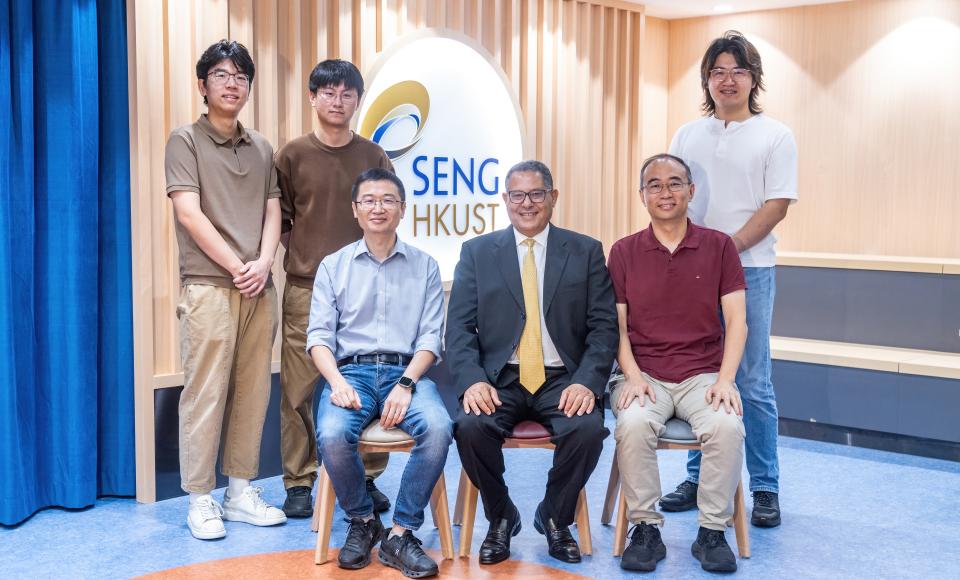
Prof. Tim CHENG, HKUST Vice-President for Research and Development, emphasized the strategic importance of this initiative.
“Since 2015, HKUST has built formidable strengths in control and robotics, automatic systems, smart transportation, and machine learning,” said Prof. Cheng.
“The Industrial Alliance allows our research outcomes to be tested and refined in real-world settings, accelerating the translation of innovations into practical applications. This plays a key role in advancing the deployment of humanoid robotics and supporting the continued development of embodied intelligence.”
Prof. SHI Ling, Director of CKSRI, added that the future of robotics requires cross-disciplinary synergy rather than isolated breakthroughs.
“As more companies join, we expect collaboration to evolve from individual projects to broader, large-scale applications, enabling robotics technologies to expand across different sectors while attracting top-tier talent and resources to Hong Kong,” he said.
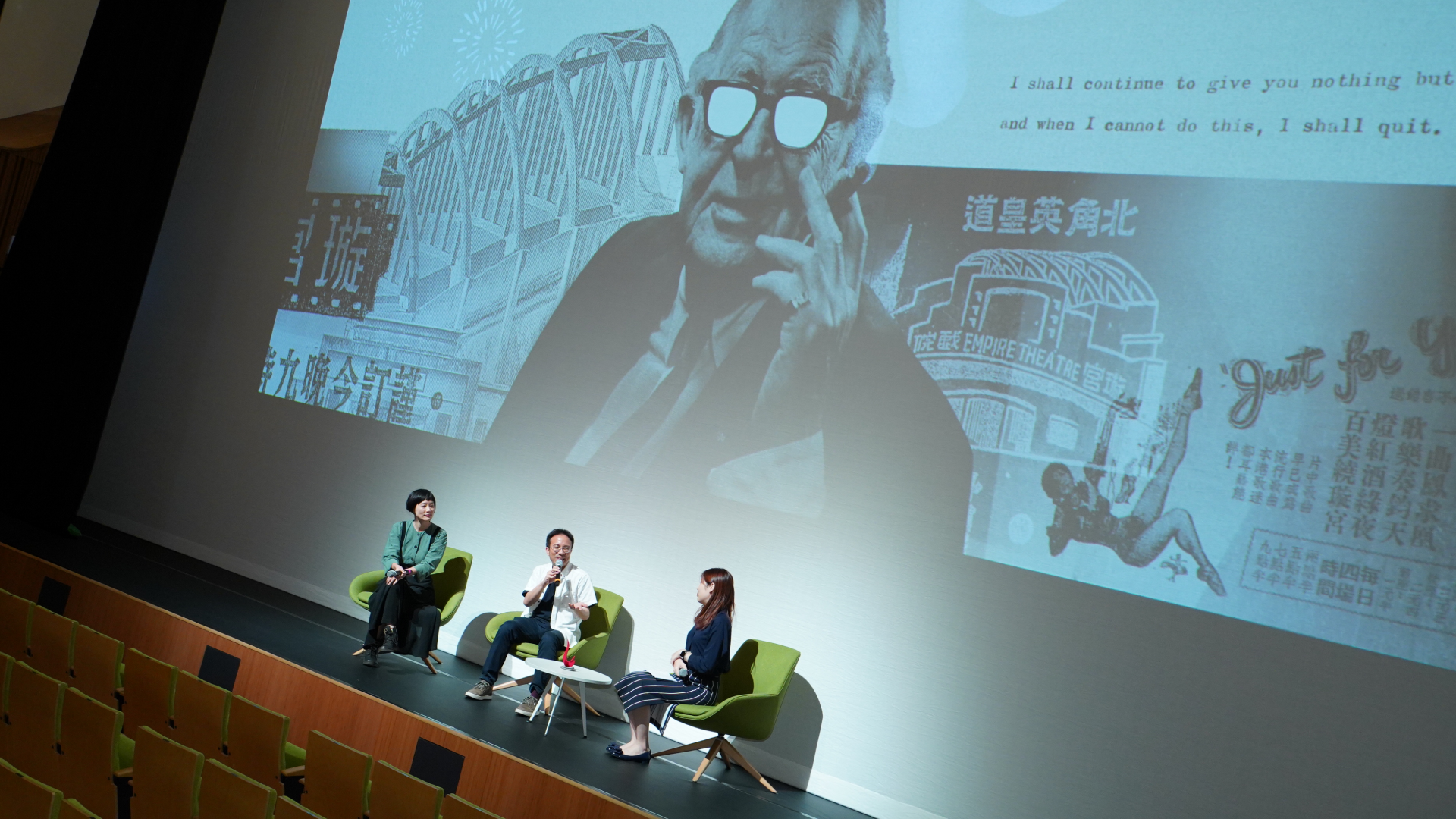
The alliance launched at the high-energy CKSRI Industrial Summit, which brought together leading voices from academia and industry.
Prof. LI Zexiang, Professor of the Department of Electronic and Computer Engineering and the Colin Lam Ko Yin Professor at HKUST, discussed how pioneering a new model of engineering training can foster an integrated ecosystem of education, talent, and tech innovation.
Mr. SHENG Kehua, Chief Technology Officer of DiDi Autonomous Driving, shared critical breakthroughs in autonomous driving technology and the journey toward full-scale industrialization.
Dr. CHEN Wenjie, Director of the Robotics & Automation Research Institute at the Midea Corporate Research Center, presented the latest research and practices in achieving leapfrog performance enhancements for heavy-duty robots.
The full-day event drew representatives from more than 16 organizations, mostly tech companies from the Chinese Mainland.
In response to the growing demand for deep-tech talent, CKSRI is also preparing to launch a Master of Engineering (MEng) program in Robotics and Embodied AI.
Led by Prof. SHEN Yajing, Associate Director of CKSRI, the program will be jointly offered by the Department of Electronic and Computer Engineering and the Department of Mechanical and Aerospace Engineering.
Breaking away from traditional formats, students will spend their first year completing rigorous academic coursework at HKUST, followed by a full second year embedded in an industry internship. Admissions are scheduled to open in 2026, with the first cohort beginning in Fall 2027.
With the dual engines of the Industrial Alliance and the upcoming MEng program, CKSRI is uniquely positioned to transform cutting-edge robotics into tangible progress.
Together, these efforts will cultivate a vibrant ecosystem that connects academia, industry, and innovation, supporting the long-term development of the robotics sector.