





Green hydrogen is heralded as the cornerstone of a low-carbon future, yet it harbors a hidden paradox: producing it requires vast amounts of purified freshwater.
In an era of escalating water scarcity, relying on precious freshwater to generate clean fuel raises important questions about the sustainability of hydrogen production.
While seawater offers an abundant alternative, a high salt content poses challenges for conventional electrolysis, potentially causing corrosion, contamination, and equipment degradation. Furthermore, the electrolysis process tends to generate significant waste heat.
What if, instead of viewing seawater and waste heat as insurmountable obstacles, we could harness them?
A collaborative research team from HKUST, Arizona State University (ASU), and the Polytechnic University of Hong Kong has answered this question. Published in Nature Communications, their study introduces a "thermal symbiosis" design that transforms the inherent inefficiencies of hydrogen production into its greatest assets.
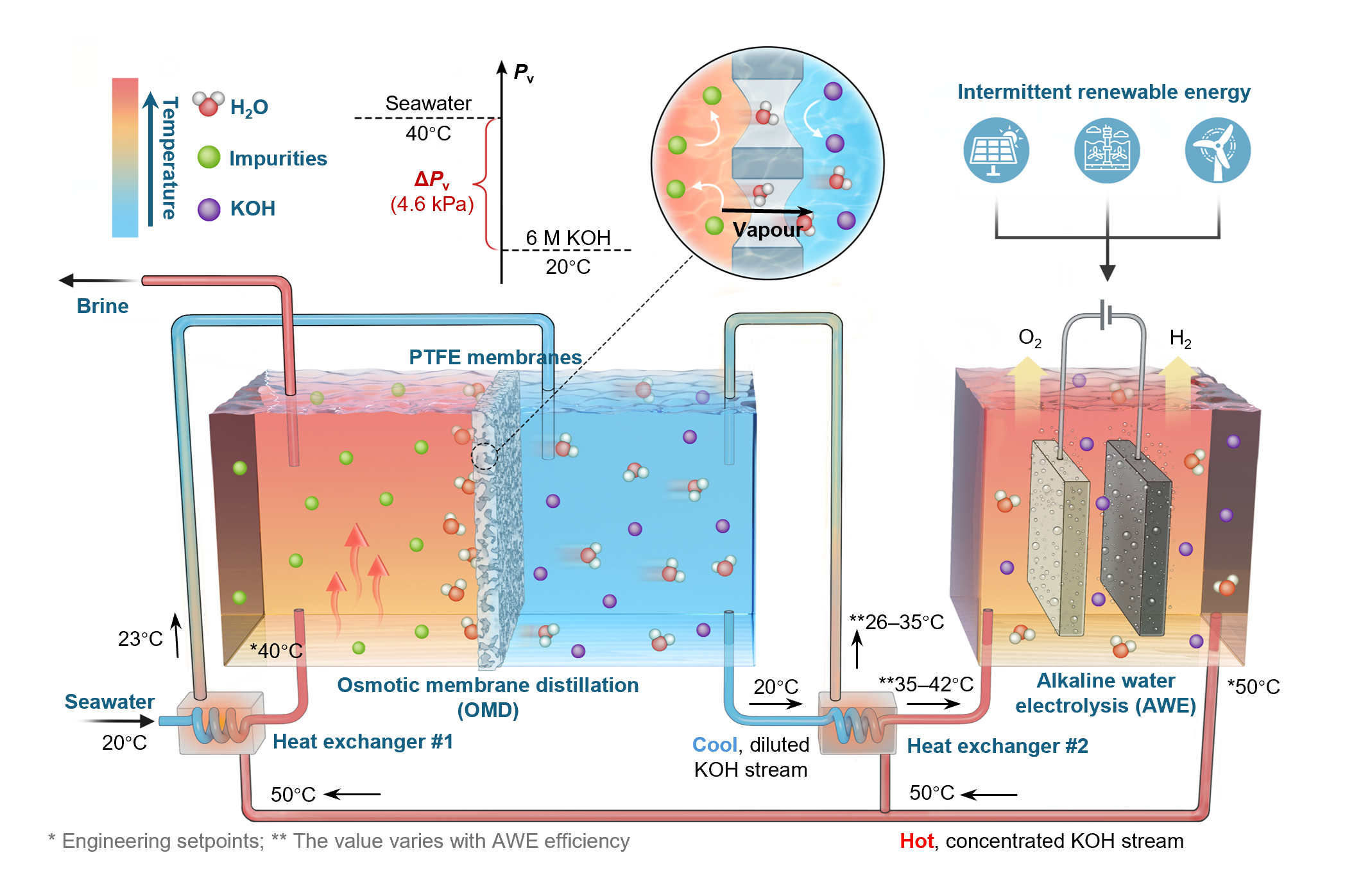
By integrating osmotic membrane distillation with alkaline water electrolysis, the team has engineered a system that extracts purified water directly from seawater while blocking harmful salts.
Crucially, the design captures the waste heat generated during electrolysis and repurposes it to drive this water purification, creating a self-sustaining cycle.
"Developing hydrogen energy requires not only renewable electricity but also a sustainable water supply," said Prof. SHANG Chii of HKUST’s Department of Civil and Environmental Engineering, who co-led the study.
“Our research demonstrates a new approach that uses heat generated by the electrolysis process itself to produce the purified water needed by the system, transforming what would otherwise be waste heat into a valuable resource,” he said.
This thermal symbiosis design not only improves the use of energy and water resources but also shows the feasibility of integrating seawater hydrogen production, desalination, and thermal management on a single platform.
Their results showed that the integrated system achieved over 99% rejection of seawater constituents and maintained a stable performance for 500 continuous hours.
“We hope this research can provide valuable insights for the future development of green hydrogen technologies in coastal and water-stressed regions,” Prof. Shang added.
By turning waste heat into a valuable resource and bypassing freshwater entirely, this innovation offers a vital blueprint for scaling green hydrogen in coastal and water-stressed regions worldwide.
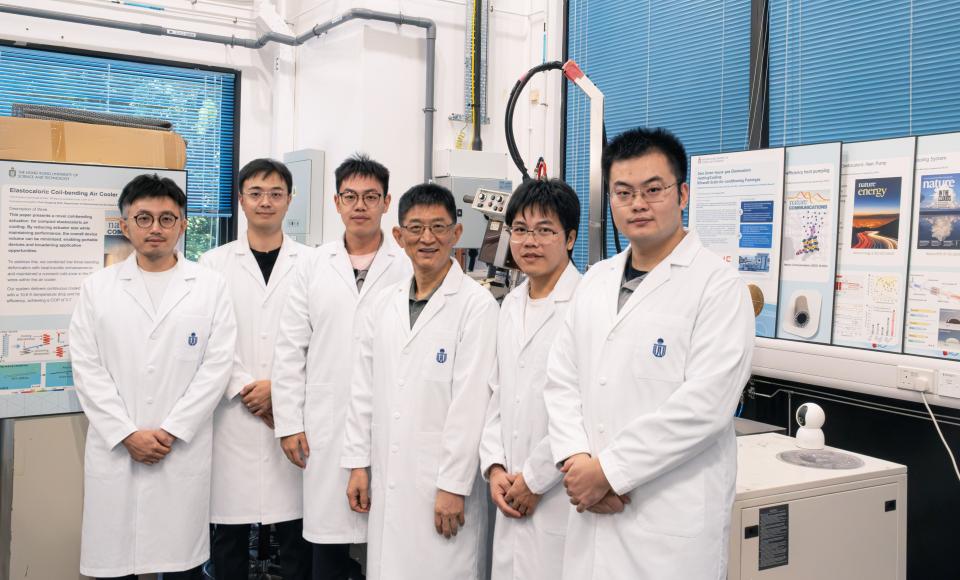
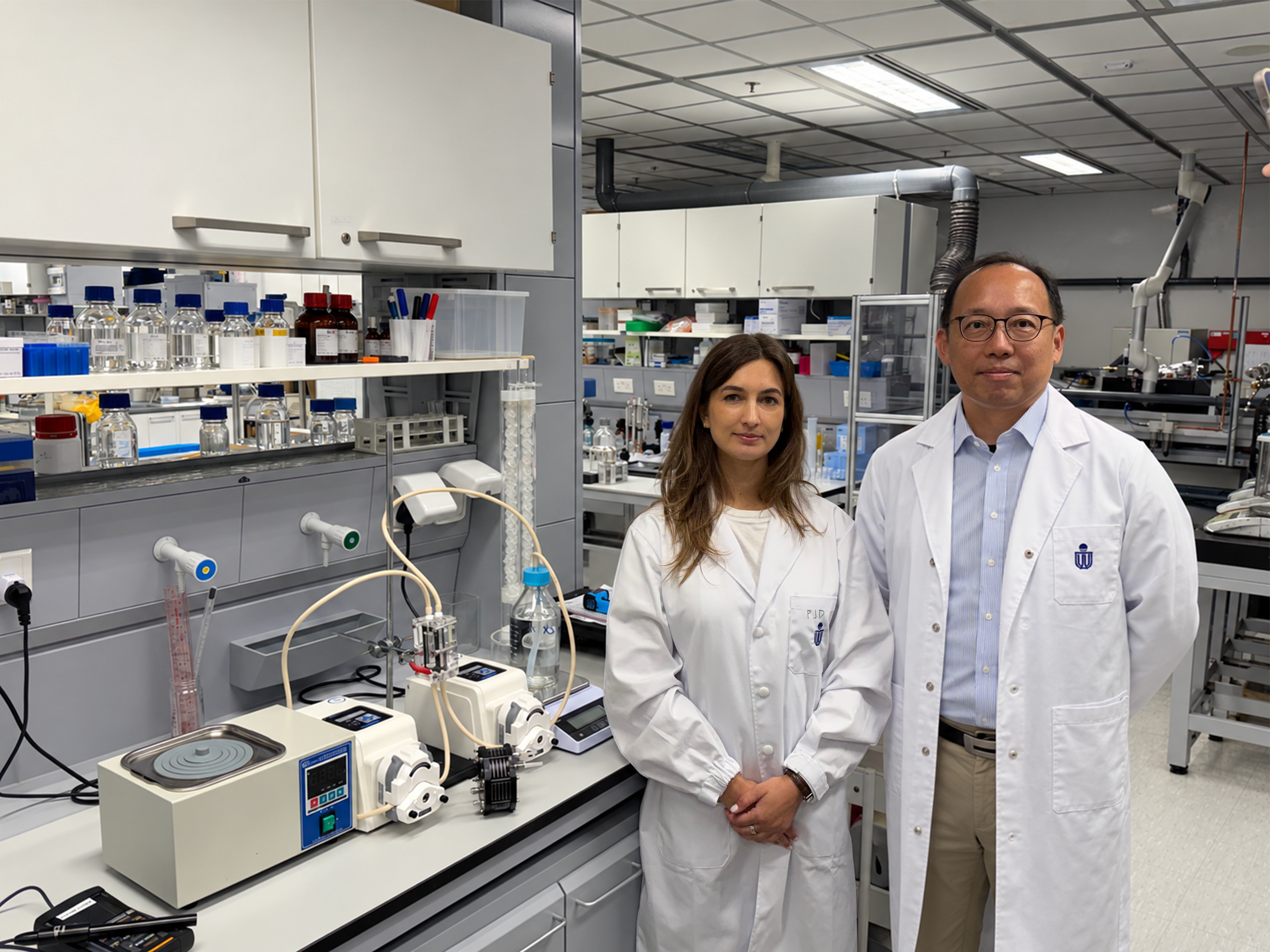
In addition to Prof. Shang, the team comprises Dr. Gabriela Scheibel CASSOL, an HKUST PhD graduate in Environmental Engineering, Dr. SONG Yinghao, an HKUST PhD graduate in Civil Engineering, and Prof. Paul WESTERHOFF of ASU.
You can read more about the research here.