




Floating in microgravity inside China’s Tiangong Space Station, Hong Kong’s first payload specialist, Dr. LAI Ka-Ying, alongside her Shenzhou-23 crewmates, carefully assembled and mounted a compact high-tech payload developed by HKUST on the exterior of the station.
The launch and operational success of “MUSICO”, the Multi-Spectral Imaging Carbon Observatory, brings together two Hong Kong firsts: our first astronaut and the first Hong Kong-developed scientific payload to be deployed on a national space station, representing a unique confluence of Hong Kong talent.
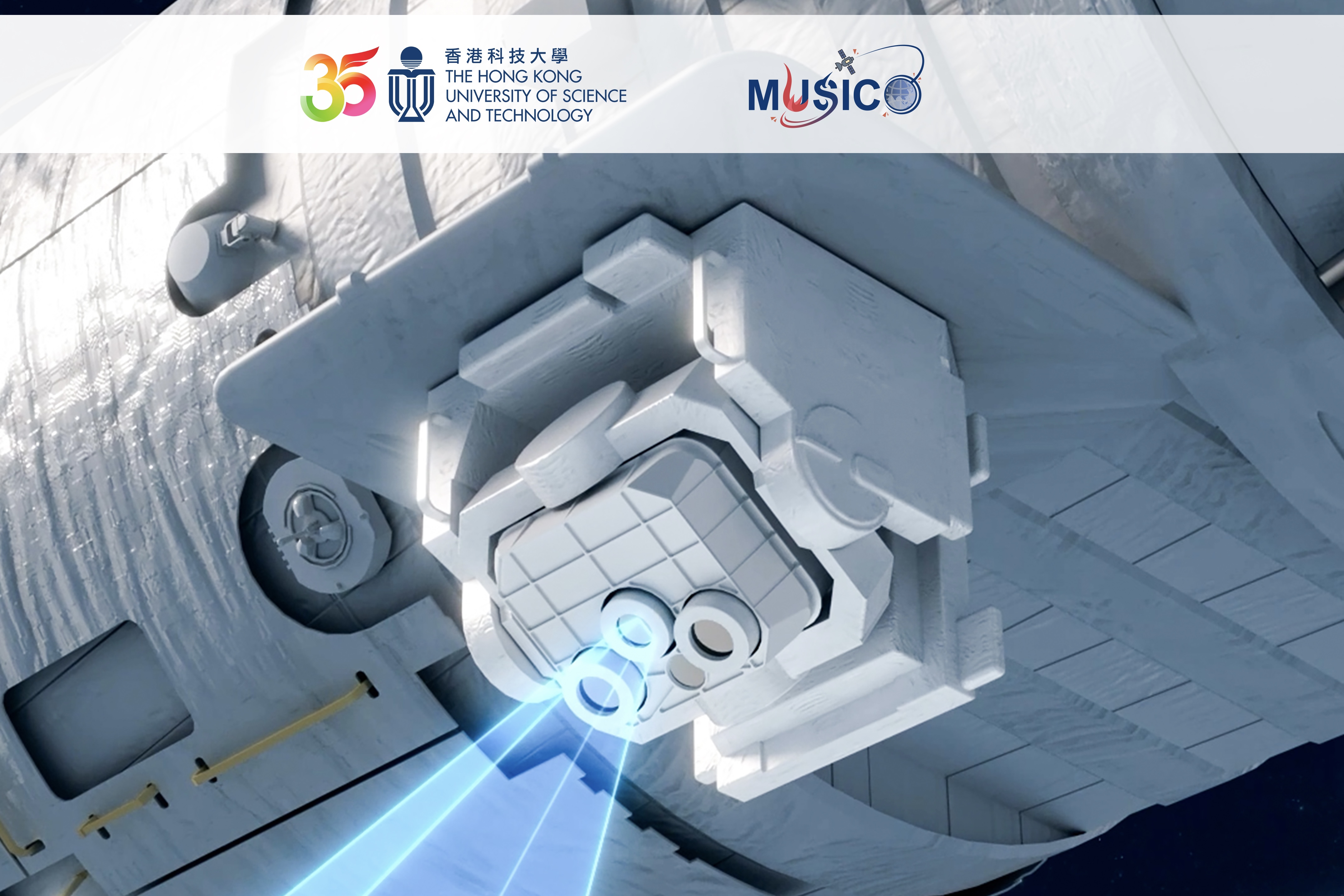
Also known as “Eye for Space," MUSICO is the world’s first lightweight, high-resolution observatory designed for point-source detection of carbon dioxide and methane. It weighs less than 80 kg and is roughly the size of a washing machine.
The instrument is now officially ‘alive,’ orbiting Earth at 7.7 km per second—nearly 100 times faster than China’s high-speed trains—recording its first crisp images and transmitting vital greenhouse gas signals back to ground stations.
“To capture sharp, high-precision imagery while traveling at such immense speed requires exceptional stability and calibration,” explained Prof. SU Hui, Chair Professor in the Department of Civil and Environmental Engineering and the lead researcher on this project. "The fact that MUSICO is now operating normally and stably is a great encouragement to the research team and fully reflects Hong Kong’s capability to develop high-end aerospace research payloads and undertake long-term scientific missions for the national space station."
Seeing MUSICO operating onboard Tiangong is a defining moment for the University’s research vision, according to Prof. ZHANG Limin, project co-lead and Chair Professor and Head of the Department of Civil and Environmental Engineering.
“HKUST’s MUSICO and Hong Kong’s first astronaut conducting China’s first Earth observations together on Tiangong is a momentous milestone. MUSICO’s coverage spans most low-to-mid latitude landmasses and oceans, providing consistent, comparable greenhouse gas data globally,” Prof. Zhang said.
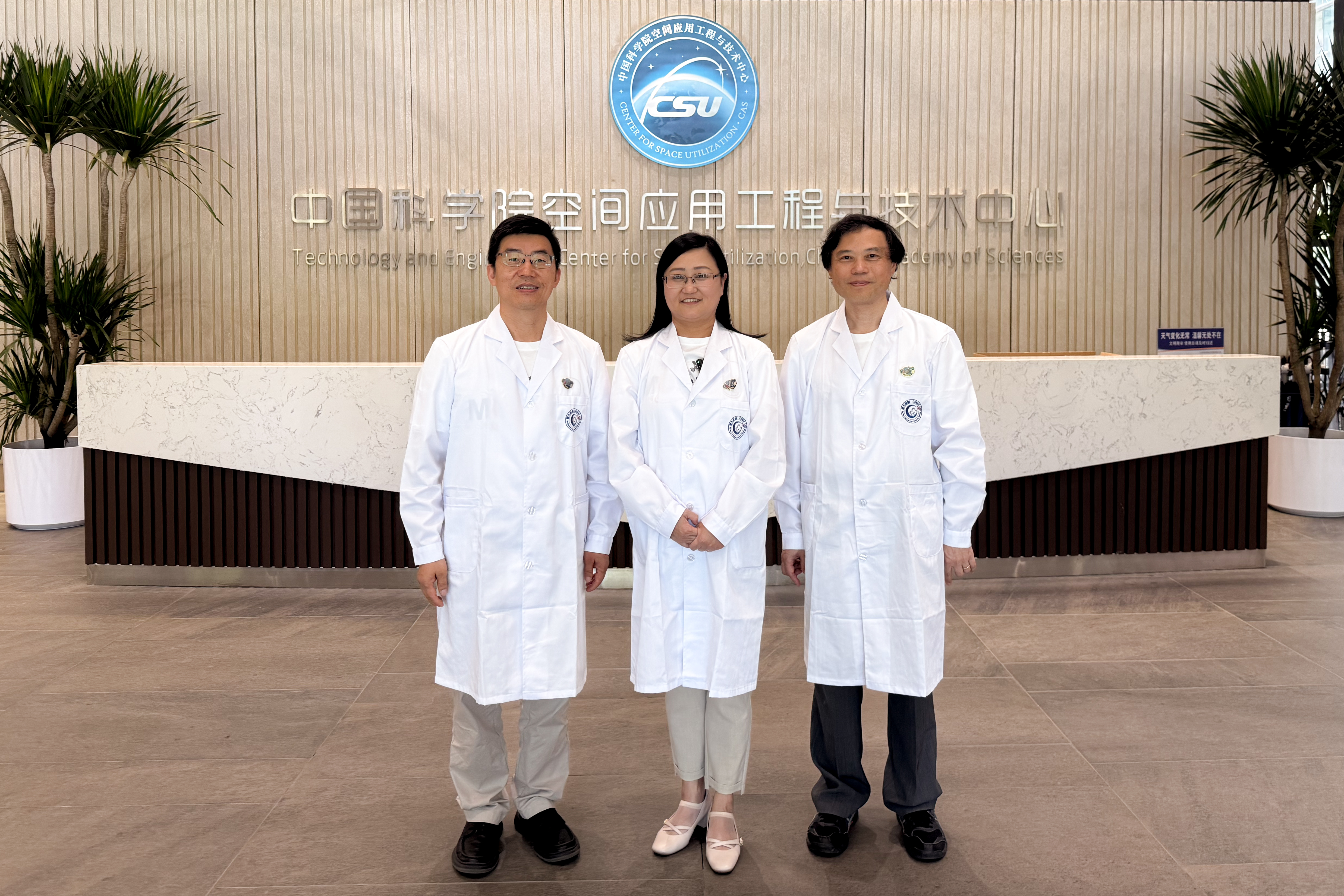
The core research team observed the setup process in Beijing and assisted with the analysis of initial data. Once the data's accuracy has been confirmed, MUSICO is expected to enter regular operations within the next two to three months.
Researchers expect MUSICO to operate for at least two years, generating data to support China’s dual goals of carbon peaking and carbon neutrality while contributing to international climate research.
MUSICO is well protected for the duration of the mission, especially against the hazards of heat and cold in space. It is equipped with a custom-made thermal control system, dynamic data buffering, and near-real-time communications capabilities to help withstand extreme temperature fluctuations, according to Prof. ZHAI Chengxing, mission system engineer and Associate Professor in the Division of Emerging Interdisciplinary Areas.
With a burgeoning reputation in this field, HKUST is partnering with the Environmental Protection Department, Hong Kong Observatory, and CLP Power to translate MUSICO’s observations into practical tools for environmental assessment and climate action.