




The key takeaway from the "HKUST Industry Engagement Day – AI + Medicine: The Future of Intelligent Healthcare" was that AI and medical innovation will substantially reshape healthcare in the coming years, particularly through advances in data analysis and technology.
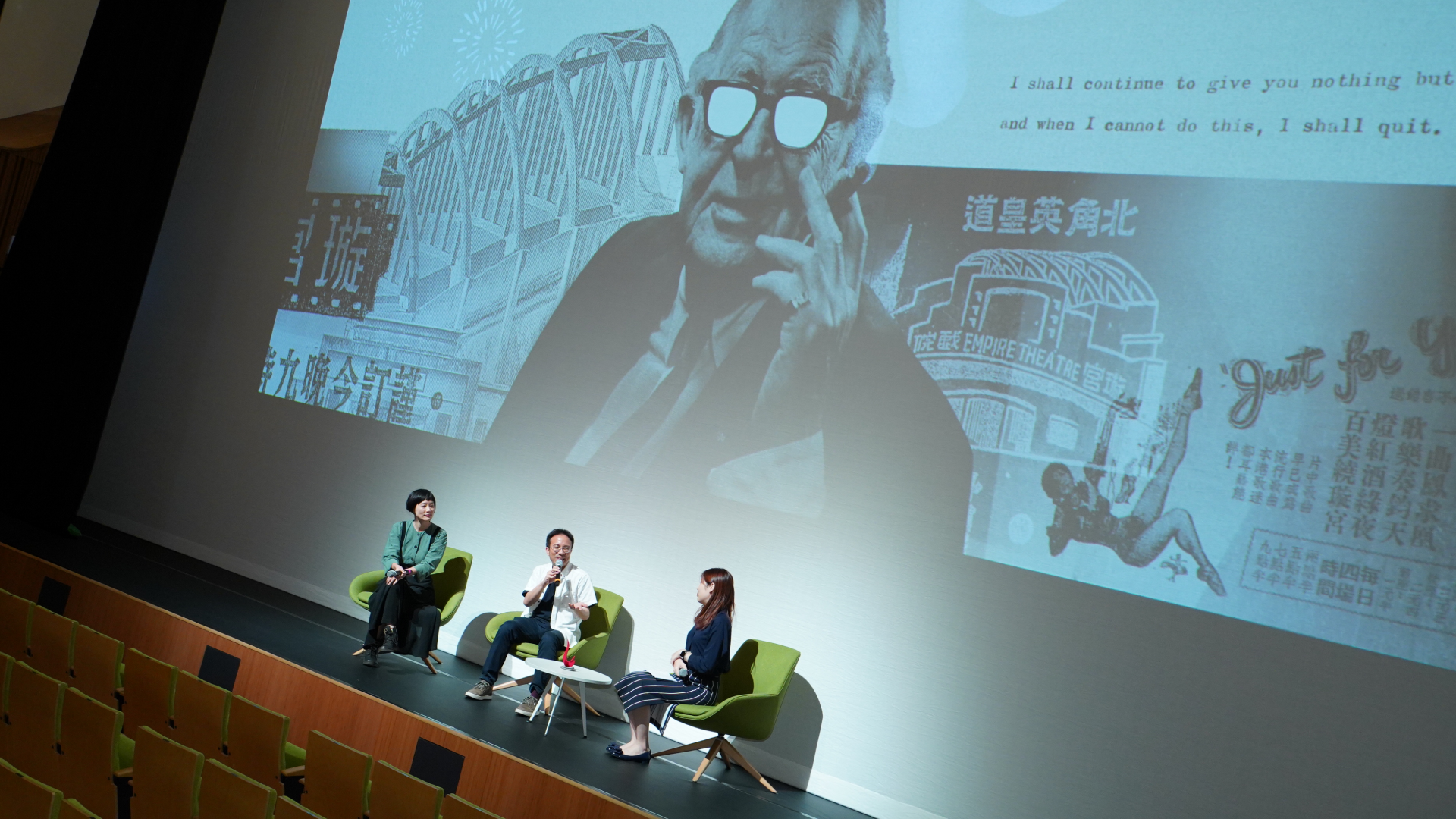
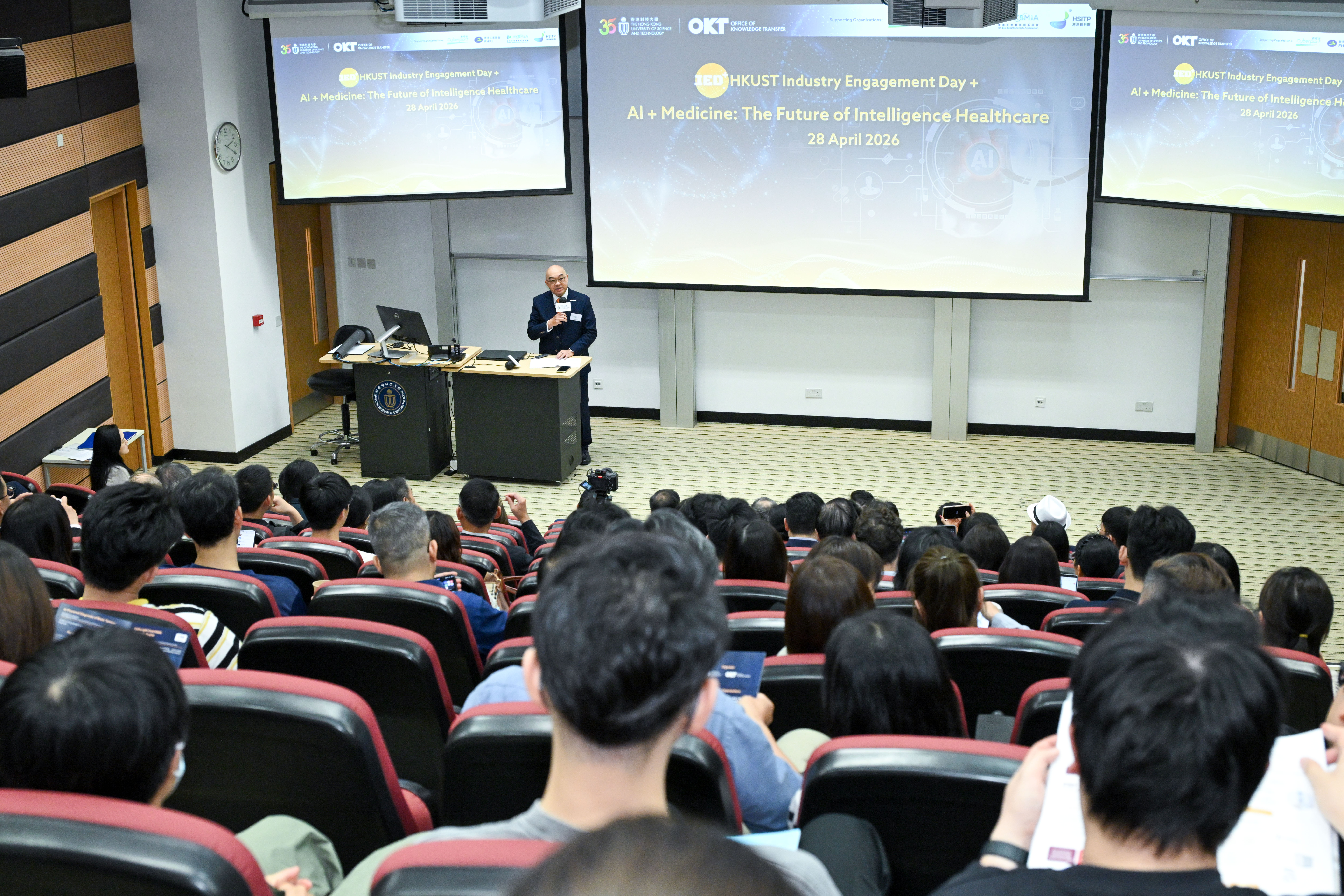
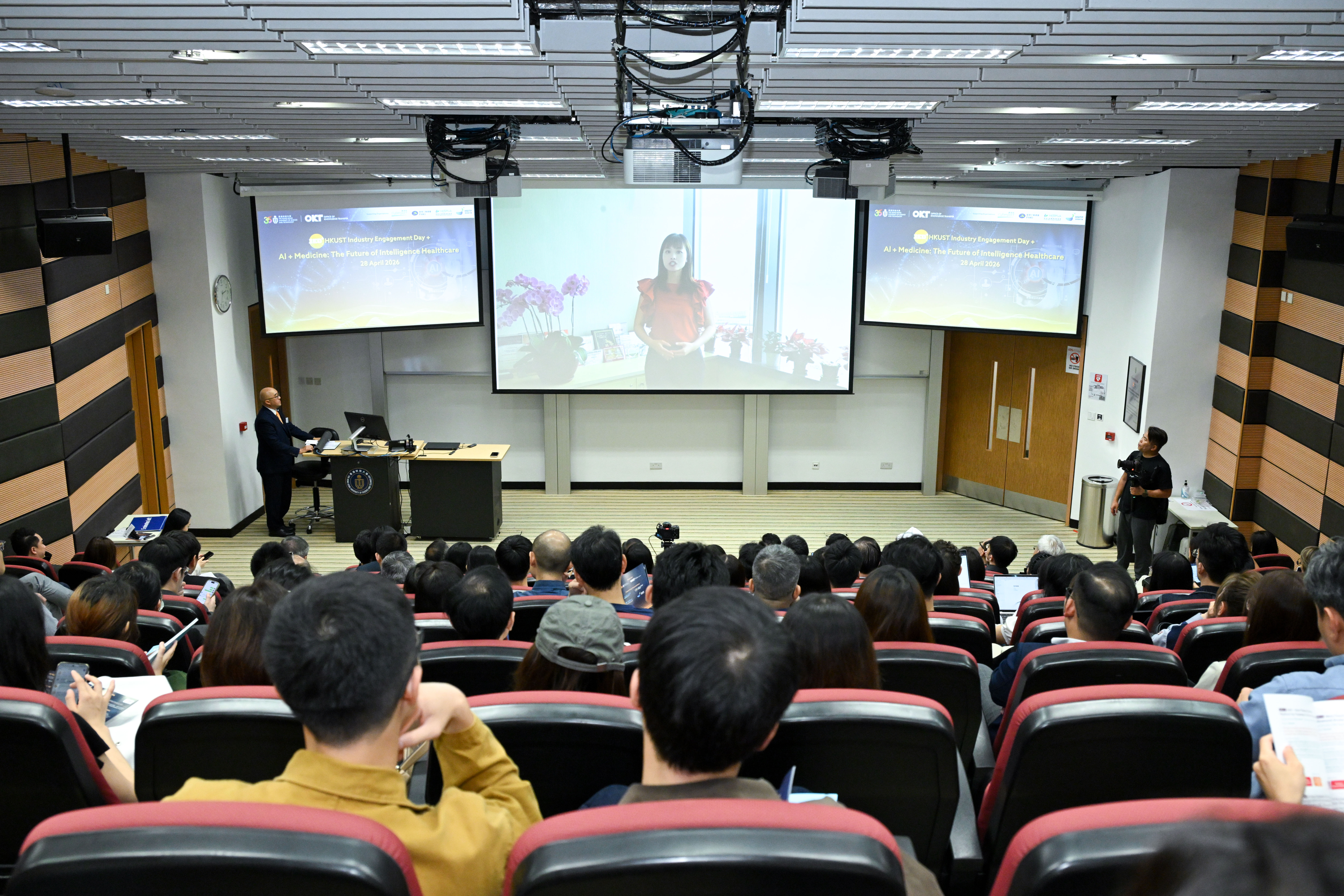
This Industry Engagement Day (IED) event, which attracted 150+ faculty members, students, alumni, and industry partners, took place on April 28 at the Kaisa Group Lecture Theater of the HKUST Jockey Club Institute for Advanced Study.
Nurturing Clinician–Scientists for the New Era
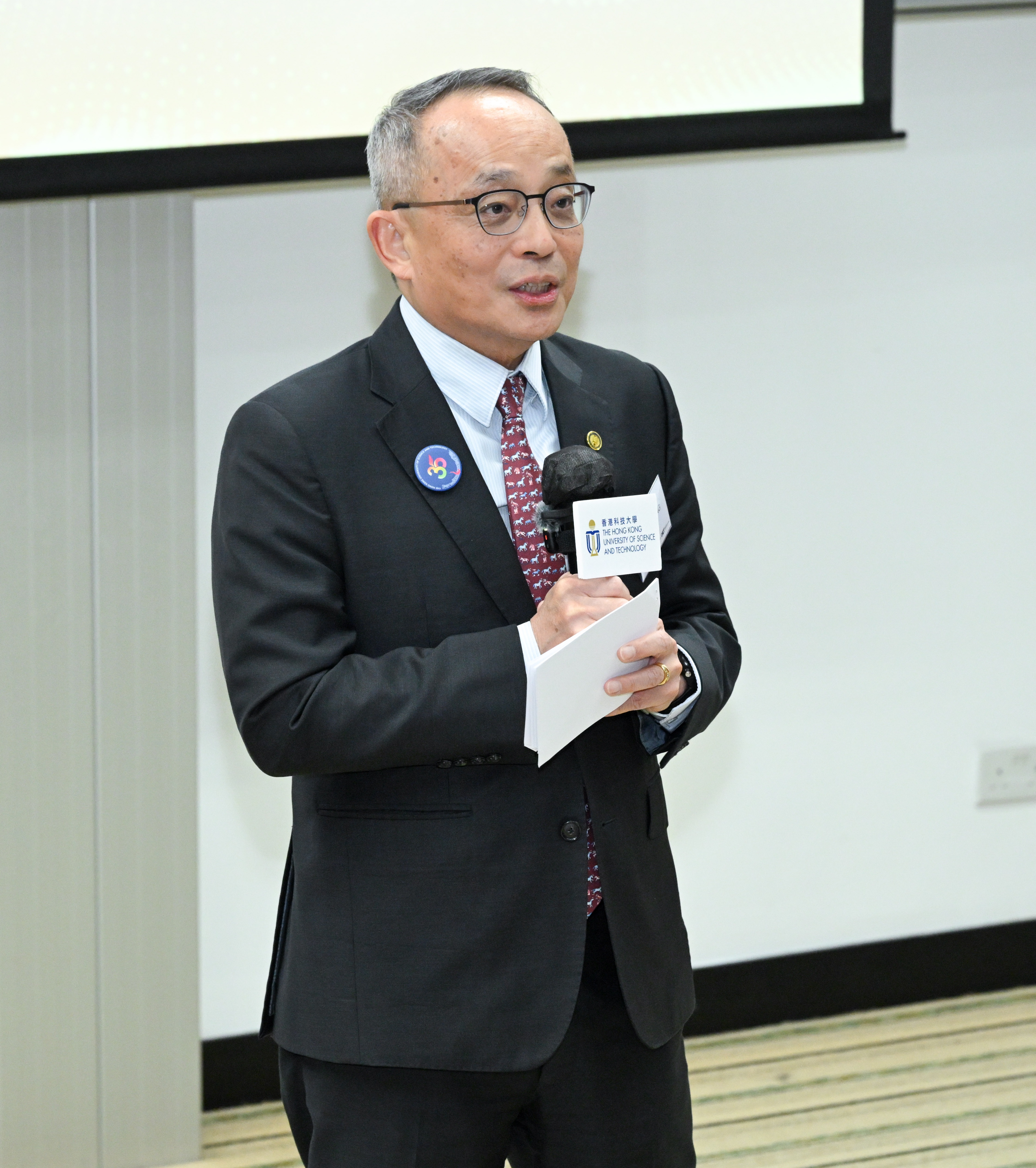
In his welcoming address, Prof. Tim Cheng, Vice-President for Research and Development at HKUST, emphasized the University’s commitment to integrating AI, data science, and engineering into medical education following the establishment of the new medical school. This intelligent healthcare future, he noted, requires a new generation of clinician–scientists who master both innovative technology and medical knowledge.
“At HKUST, we are pushing these boundaries further,” Prof. Cheng said. “We are not only asking what AI can do for medicine. We’re exploring how AI, data, and clinical practices come together to build an intelligent, integrated, and ethical healthcare system.”
He added that many opportunities exist at the intersection of technology and medicine, whether in AI diagnostics, biosensors, or biomedical devices. “These platforms are helping our researchers move forward. With strong government support and growing cross-sector collaboration, Hong Kong is well placed to become a leading hub for biomedical innovation in Asia.”
Global Medical Bub
Offering her support for the healthcare transformation, Ms. Lilian CHEONG, Undersecretary for Innovation and Technology of the HKSAR Government, highlighted Hong Kong’s potential as a global medical innovation hub in a prerecorded welcome speech.
“Building trustworthy, transparent, and human-centric AI systems is essential to realizing the full potential of intelligent healthcare,” said Miss Cheong.
“In doing so, we'll not only enhance clinical efficiency but also make healthcare more accessible, equitable, and sustainable,” she continued.
From Bench to Bedside
The application of AI is also of great importance to daily health management and medical research, especially for more accurate management of confidential data.
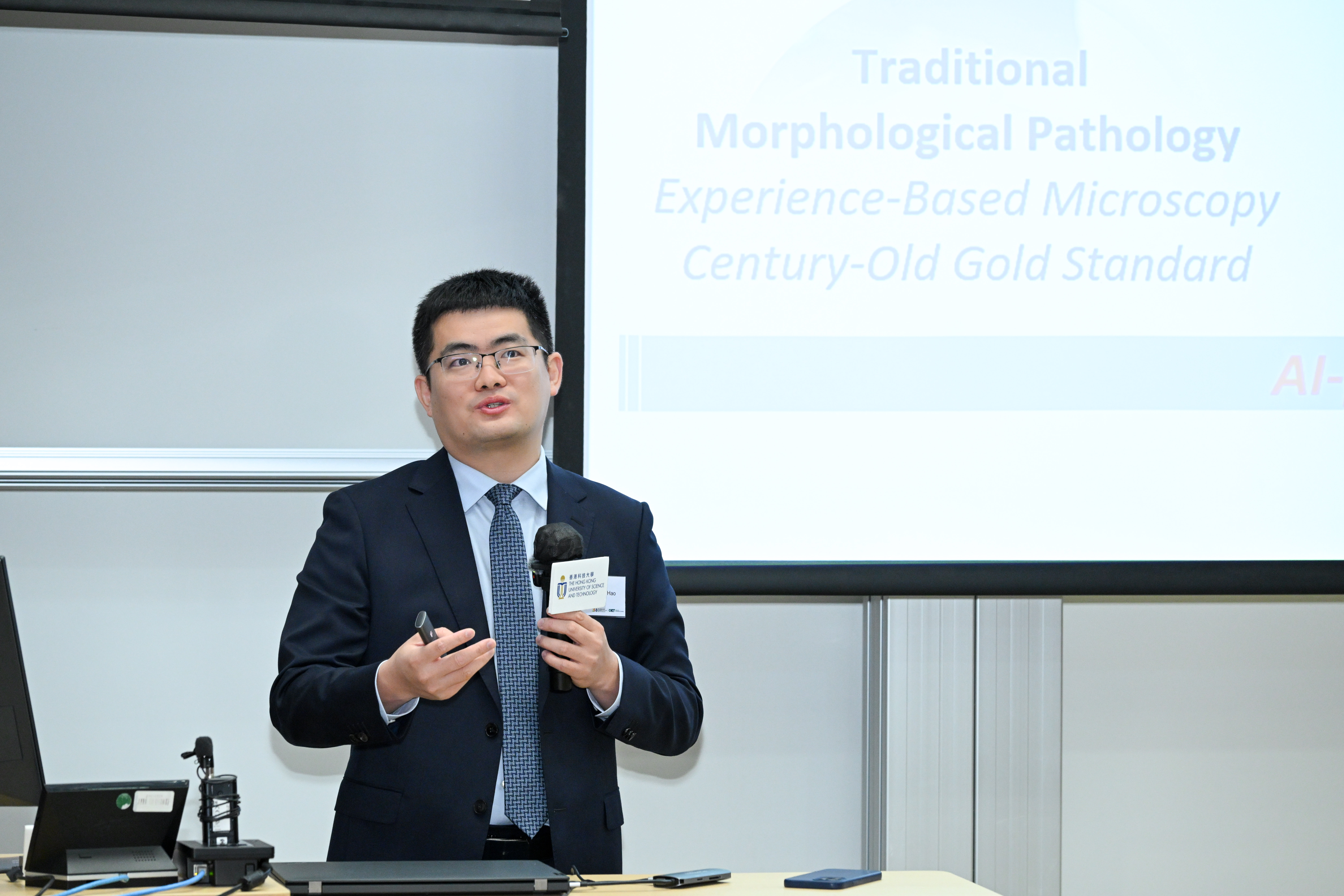
For example, Prof. CHEN Hao, Assistant Professor at HKUST’s Department of Computer Science and Engineering and Director of the Collaborative Center for Medical and Engineering Innovation, traced the evolution from traditional microscopy-based pathology to AI-driven, multimodal precision oncology in his session.
He explained that his research aims to develop foundation models, generative AI, multimodal AI, agentic AI, and explainable and efficient AI tools for bench-to-bedside use.
“The goal is to put AI tools into clinicians’ hands to improve cancer diagnosis,” he said.
From Big Data to Good Data
However, despite the proliferation of AI, discussions suggested that medical professionals remain largely conservative in the use of AI for diagnosis. Several participants noted that AI should enhance healthcare professionals' capabilities, knowledge, and performance through high-quality data.
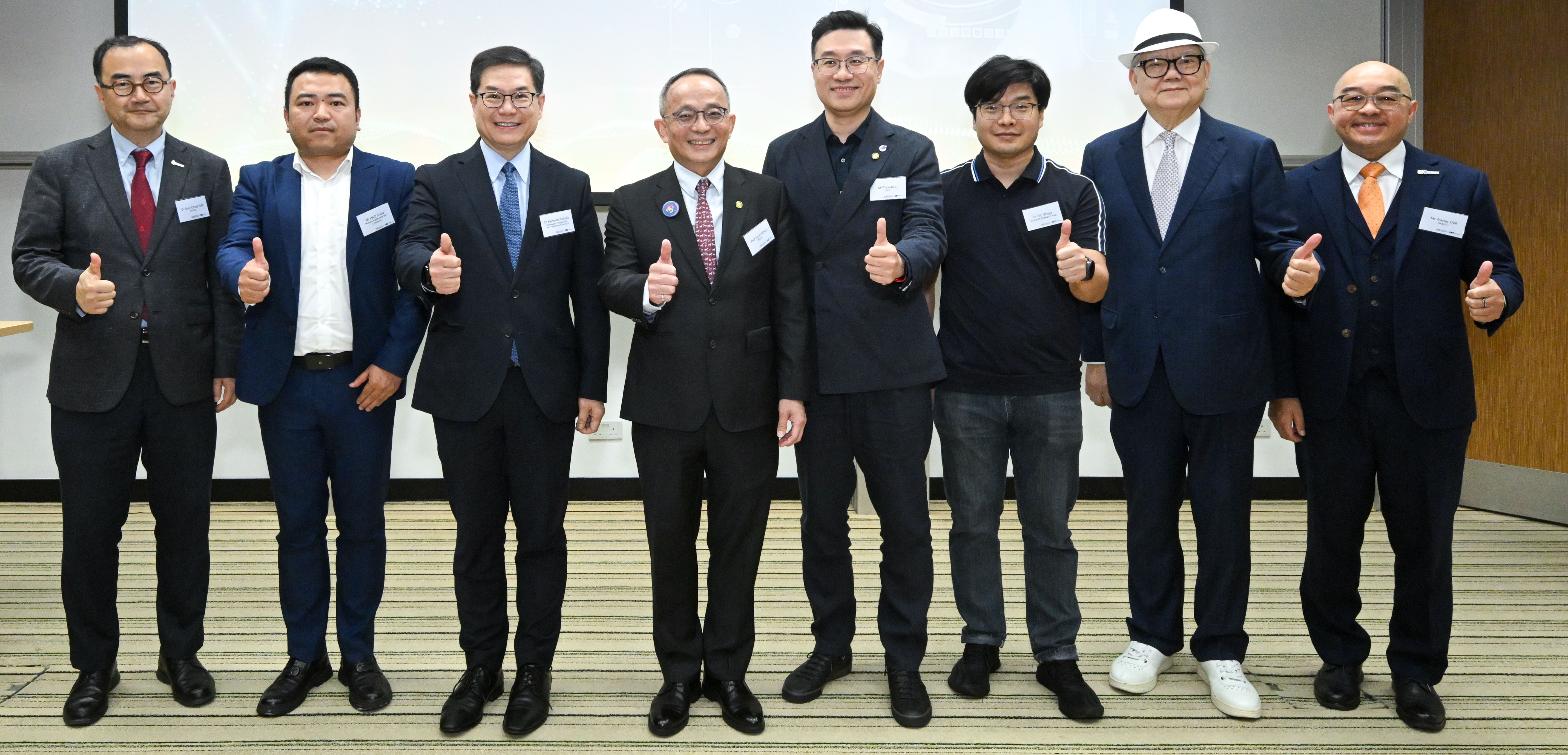
Mr. LI Tiantian, Founder and Chairman of DXY.cn, one of the Chinese Mainland’s foremost online physicians communities, Mr. HAO Shibo, Senior Industry Solution Architect at Huawei Healthcare, and Dr. LIU Shujie, Principal Researcher at Microsoft Research Asia, all emphasized the critical need for high-quality data to ensure AI is deployed effectively for the greater benefit of healthcare.
Making Healthcare More Accessible
Another focal point for discussion was that while AI may not be an immediate profit generator, it can greatly enhance patient care and services, according to Dr. Kenneth TSANG, CEO of Gleneagles Hospital Hong Kong and the Regional CEO of IHH Healthcare North Asia.
Making the point that chimes with the vision for the HKUST medical school, Dr. Tsang said even as healthcare seeks to be better, faster, and cheaper, the core priority must remain putting the patient first—understanding patient needs and improving clinical quality, especially by making medical care safer, more accurate, and delivering better outcomes and patient experiences.
Collaboration across Disciplines is Key
To conclude the IED event, the experts’ sharing reflected the full spectrum of intelligent healthcare, clinical implementations, workforce empowerment, infrastructure transformations, AI safety, and frontier foundation models. The future of healthcare will not be defined by algorithms alone, but by how effectively all sectors collaborate.
The Office of Knowledge Transfer at HKUST actively organizes thought-provoking industry engagement seminars and events. Please click here to register for future events.