






News & Stories
2026

News
HKUST Sees Strong Growth in World's Top 2% Scientists Ranking
The Hong Kong University of Science and Technology (HKUST) has once again demonstrated its global research excellence in Stanford University's latest World's Top 2% Scientists ranking. A total of 244 and 205 HKUST scholars were featured in the Single-Year Impact and Career-Long Impact lists, respectively, accounting for approximately 40% of the University's tenure-track faculty. This achievement reflects the growing global influence of HKUST scholars and the University's leadership in advancing cutting-edge research across a wide range of disciplines.

News
HKUST Develops Novel Cartilage-Inspired Polymer Nanocoating to Substantially Extend Battery Lifespan
A research team led by The Hong Kong University of Science and Technology (HKUST) has developed a biomimetic nanocoating that could significantly extend the lifespan of batteries used in smartphones, electric vehicles (EVs), and other electronic devices. Inspired by the stress-buffering function of human cartilage, the team has developed an innovative cartilage-inspired polymer nanocoating that effectively suppresses the degradation and wear of battery cathode materials at the source. The new technology not only enables batteries to retain exceptionally high capacity after thousands of charge-discharge cycles but also opens a promising new pathway toward the industrial deployment of next-generation nickel-rich lithium-ion batteries.

News
HKUST Hosts the "Future of Low Altitude Economy" Forum
The Hong Kong University of Science and Technology (HKUST), in collaboration with the Working Group on Developing the Low-altitude Economy under the HKSAR Government and the Greater Bay Area Low Altitude Economy Alliance, today hosted the forum "Future of Low Altitude Economy: An Inter-City Dialogue on Commercialization and Standardization".The forum brought together more than 300 representatives from government, academia, industry, and research organizations from Hong Kong, the Chinese Mainland, and overseas to explore opportunities and challenges in advancing the low-altitude economy (LAE). Discussions focused on commercialization, standardization, technological innovation, and cross-sector collaboration, with the shared goal of fostering a robust, sustainable, and globally connected LAE ecosystem.

News
HKUST Pioneers Novel Water Purification Technology for Selective Pollutant Polymerization
Wastewater treatment is a critical issue for global environmental protection and public health. Researchers from The Hong Kong University of Science and Technology (HKUST) have recently achieved a major breakthrough by discovering a novel oxidant-free electrocatalytic mechanism, opening up a new direction for water purification technologies. The findings are set to significantly improve pollutant identification efficiency and potentially double the economic feasibility compared with existing methods.
News
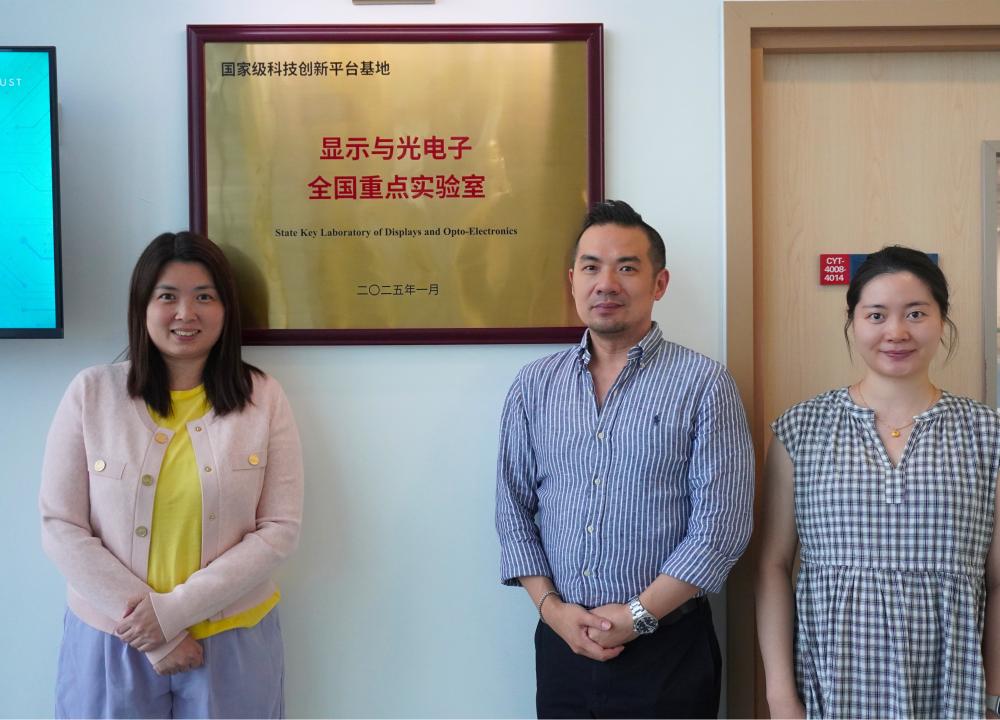
HKUST Improves Solar Cell Performance and Durability through Molecular Interface Engineering
Solar cells' efficiency and lifespan are often determined by what happens at interfaces — the microscopic boundaries where different materials meet. Researchers from The Hong Kong University of Science and Technology (HKUST) have contributed to two recently published studies that show molecular interface engineering can unlock major gains in the efficiency and durability of next-generation perovskite tandem solar cells.The two studies, published in academic journals Joule (impact factor: 37.1) and Nature Communications, focus on different tandem architectures but convey one common message: carefully designed molecular layers can do far more than connect materials. They can guide how perovskite films crystallize, suppress energy-wasting defects, promote charge transport and protect solar cells against degradation.
News
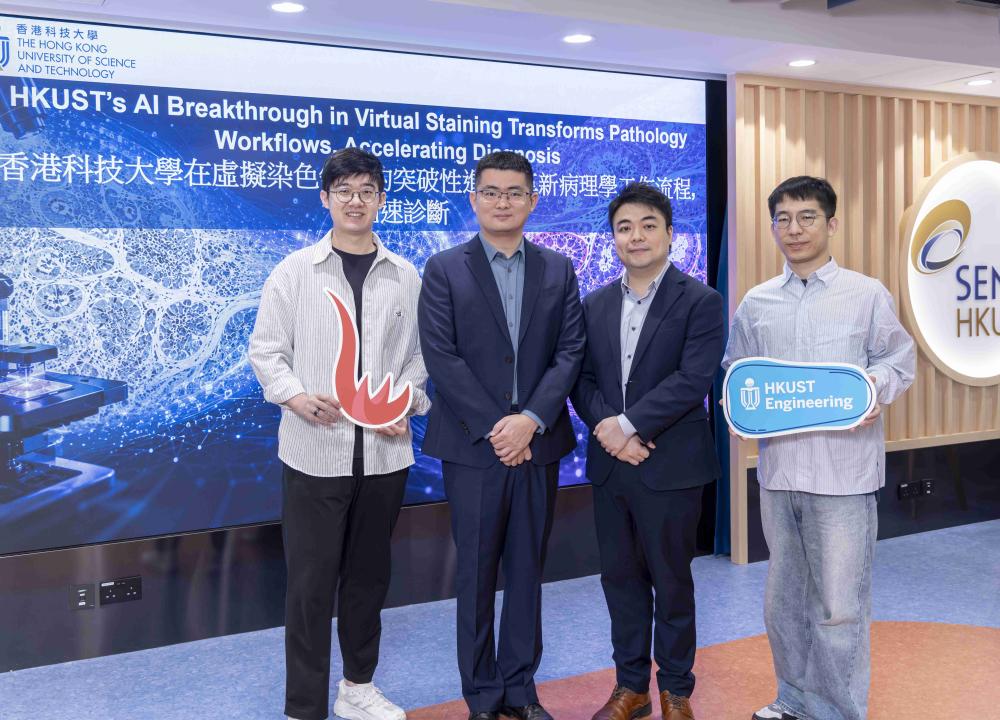
HKUST Researchers Develop GenAI Framework for Misalignment-Resistant Virtual Staining to Accelerate Histopathology Workflows
Histopathology is a cornerstone of clinical diagnosis, especially in cancer care. However, conventional chemical staining is often time-consuming and labor-intensive and may consume precious tissue samples. A research team from the School of Engineering at The Hong Kong University of Science and Technology (HKUST) has developed a novel generative AI (GenAI) framework that can produce high-fidelity virtually stained images even when training image pairs are imperfectly aligned, paving the way for faster and more tissue-saving histopathology workflows. The study titled “Generative AI for misalignment-resistant virtual staining to accelerate histopathology workflows” was recently published in the international journal Nature Communications.

Stories
HKUST Pioneers World-Leading Space Observatory for High-Resolution Greenhouse Gas Monitoring
One small machine for HKUST, one giant leap for greenhouse gas tracking.When the Tianzhou-10 robotic cargo spacecraft docked with China’s Tiangong Space Station on May 11, it successfully delivered the world’s first lightweight, high-resolution, high-precision synergistic observatory for carbon dioxide (CO₂) and methane (CH₄) emission point sources. This scientific breakthrough was steered by researchers from the School of Engineering, the Hong Kong University of Science and Technology (HKUST).The groundbreaking instrument, called the Multi-Spectral Imaging Carbon Observatory, or MUSICO for short, made history as Hong Kong’s first scientific payload on the national space station.
News
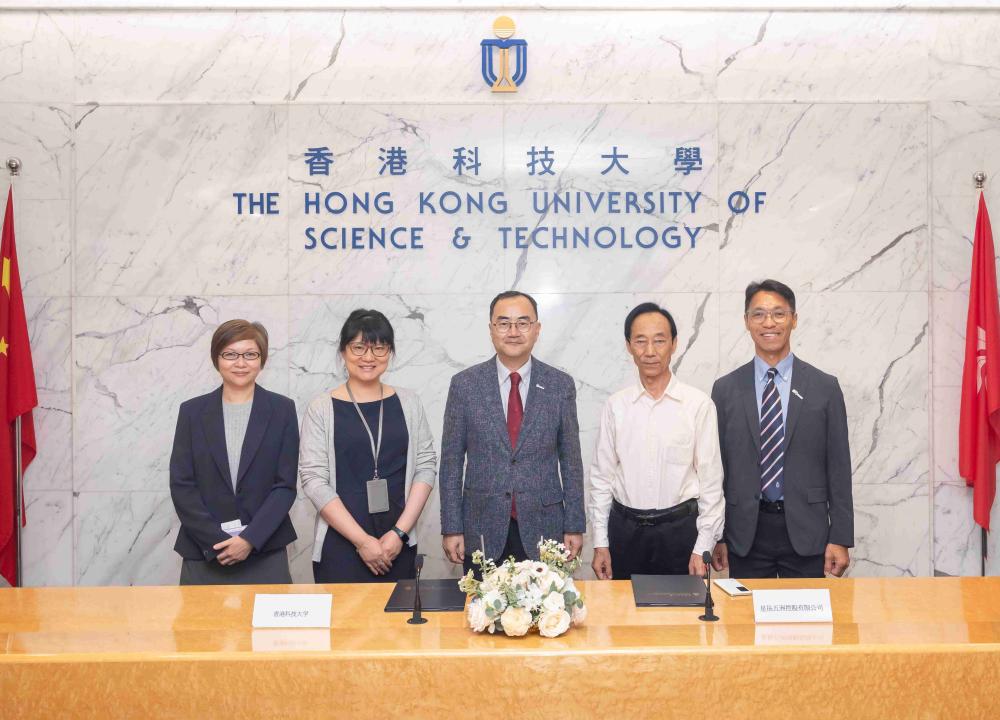
HKUST Secures Support from Stellar Rise for In-Orbit Bio-Inspired Robotic Project
The Centre for AI Robotics in Space Sustainability (CAIRSS) at The Hong Kong University of Science and Technology (HKUST) has secured HKD 46 million in funding from Stellar Rise Global Holdings Limited (Stellar Rise) to develop advanced bio-inspired robotic manipulation technologies for in-orbit operations. The project aims to support space debris removal and enable next-generation in-orbit manufacturing. With strong backing from the Chinese Academy of Sciences (CAS)’ institutions, the project targets an in-orbit demonstration by 2029, contributing to the sustainable development of space technology and the space economy, while supporting the nation's goal of advancing its position as an aerospace powerhouse.