




News & Stories
2026

News
HKUST Launches HK$100 Million RAISe+ Project Fund to Accelerate Research Commercialization
The Hong Kong University of Science and Technology (HKUST) today announced the launch of the HK$100 million RAISe+ Project Fund (RPF), a dedicated funding initiative that will provide financial backing and tailored commercialization support to HKUST research teams participating in the HKSAR Government's Research, Academic and Industry Sectors One-plus Scheme (RAISe+). The Fund will strengthen capabilities in intellectual property strategy, market development, and commercialization, accelerating the translation of breakthrough research into real-world applications. It will also support the innovation and technology (I&T) development of the Northern Metropolis and contribute to Hong Kong's development as an international innovation and technology hub.

News
HKUST Develops Embodied Robotic Arm “EmArm” with Human-Like Touch Sensing
A research team at The Hong Kong University of Science and Technology (HKUST) has developed an Embodied Sensorimotor Robotic Arm (EmArm) capable of whole-arm tactile sensing and adaptive manipulation. By embedding a soft optical tactile skin directly into a robotic skeleton and integrating it with a real-time decision-making algorithm, EmArm can perceive and analyze contact information across its upper and lower arms, enabling human-like tactile perception and adaptive object manipulation. The system can also distinguish between different touch interactions, such as tickling and patting, respond in real time, and avoid obstacles through tactile feedback, opening new possibilities for the development of embodied intelligent robots.

News
HKUST Hosts Asia Debut of Jobs and Development Conference
The Hong Kong University of Science and Technology (HKUST) has successfully concluded the "Jobs and Development Conference 2026". As one of the signature events marking HKUST’s 35th anniversary, this year’s edition of the flagship international conference was held in Asia for the first time. It brought together more than 100 leading economists, policymakers and industry practitioners globally to discuss new challenges and opportunities arising from labor markets, the demand for emerging skills and economic transformation.
News
HKUST Researchers Redraw the Boundary between Phases of Matter
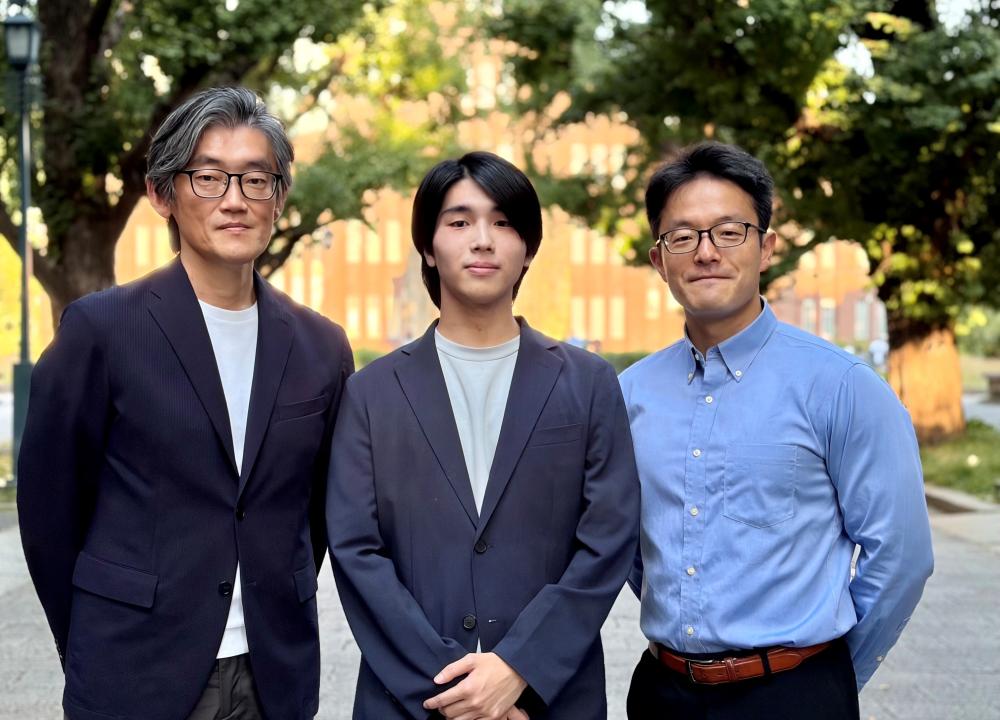
A research team led by Prof. Haruki WATANABE, Professor in the Department of Physics and the HKUST Jockey Club Institute for Advanced Study (IAS) at The Hong Kong University of Science and Technology (HKUST), in collaboration with Prof. Yukitoshi MOTOME and graduate student Sena WATANABE from the University of Tokyo, has developed a unified theory that predicts when two states of matter are genuinely distinct and when they are secretly the same. The breakthrough provides a general framework for classifying phases across magnetic systems with different spin values and resolves a long-standing debate surrounding the behavior of water ice under extreme pressure.

News
HKUST-SINO One Million Dollar Entrepreneurship Competition 2026 Concludes
Co-organized by The Hong Kong University of Science and Technology (HKUST) and Sino Group, the HKUST-SINO One Million Dollar Entrepreneurship Competition 2026 Final and Award Ceremony was held today at Shaw Auditorium, HKUST. During the ceremony, HKUST and Sino Group also announced the launch of the HKUST InnoBay 1M PLUS program, extending the competition beyond a one-off contest into an ongoing platform for start-up incubation and technology commercialization. The initiative will provide promising teams with access to real-world application scenarios, industry networking, partnership matching and proof-of-concept opportunities, helping innovative solutions progress from technology validation to market adoption, while creating greater opportunities for commercialization and scalable growth.
News
Kellogg-HKUST EMBA Ranked No. 1 in the World in the Financial Times Executive MBA Ranking 2026
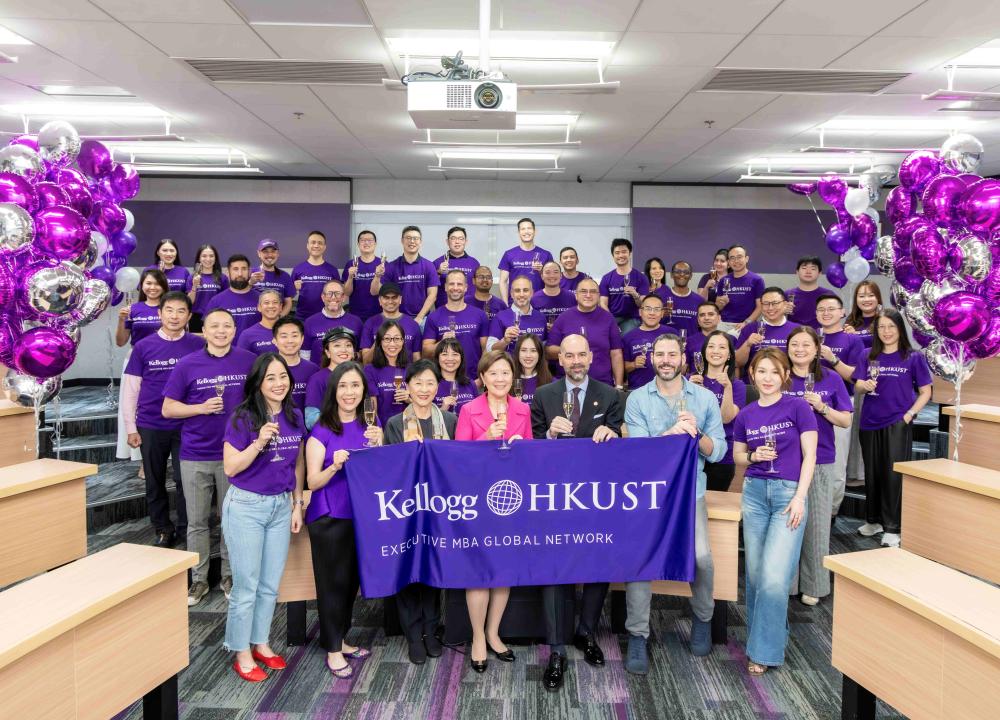
The Kellogg-HKUST Executive MBA (KH EMBA) Program has secured the No. 1 position globally in the Financial Times Executive MBA Ranking 2026, released today, marking an unprecedented 13th time the program has attained the top position. Jointly offered by the HKUST Business School and the Kellogg School of Management at Northwestern University, the program has consistently been recognized among the world's leading Executive MBA programs for its outstanding impact on participants' careers, leadership development, and global business perspectives.

News
HKUST Convenes Global Leaders at CARE2026 to Drive Climate Adaptation and Urban Resilience
Turning climate science and early warnings into practical action to protect people, strengthen infrastructure and finance resilience is the focus of the Climate Adaptation and Resilience Conference 2026 (CARE2026) at The Hong Kong University of Science and Technology (HKUST). Running from 8 to 10 October, the conference opened with calls to connect scientific knowledge with better preparedness and decisions that make cities more resilient.The conference brought together over 500 policymakers, scientists, infrastructure experts, finance and insurance leaders, industry stakeholders and community representatives from around the world. Discussions examined how forecasting and early warning systems can inform decisions about housing, infrastructure, biodiversity, nature-based solutions and finance, drawing on Hong Kong’s experience alongside regional and international perspectives.

News
HKUST Sees Strong Growth in World's Top 2% Scientists Ranking
The Hong Kong University of Science and Technology (HKUST) has once again demonstrated its global research excellence in Stanford University's latest World's Top 2% Scientists ranking. A total of 244 and 205 HKUST scholars were featured in the Single-Year Impact and Career-Long Impact lists, respectively, accounting for approximately 40% of the University's tenure-track faculty. This achievement reflects the growing global influence of HKUST scholars and the University's leadership in advancing cutting-edge research across a wide range of disciplines.