


HKUST-led HKSREC Hosts Space Intelligence Event
Uniting Beijing-Shanghai-Hong Kong Research Strengths to Launch Space Intelligence Innovation Hub

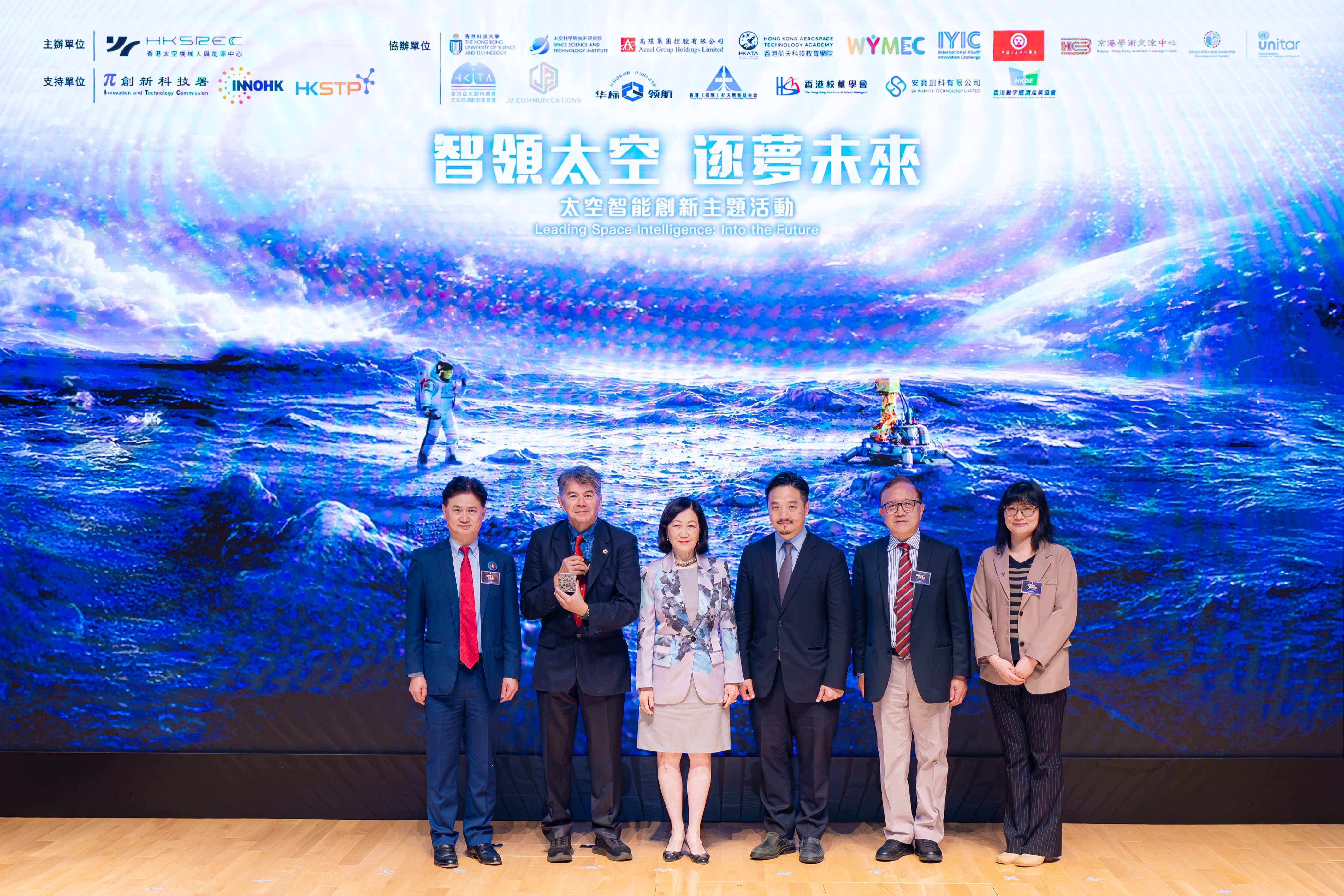
Led by The Hong Kong University of Science and Technology (HKUST) and established under the InnoHK research clusters of the Government of the Hong Kong Special Administrative Region (HKSAR), the Hong Kong Space Robotics and Energy Centre (HKSREC) today hosted the event themed "Leading Space Intelligence: Into the Future." The full-day event brought together representatives from government, industry, academia, research institutions, and the investment community from Hong Kong, the Chinese Mainland and overseas, providing a platform for in-depth exchange on space technology research, cross-regional collaboration, and commercial aerospace applications.
Officiating guests included the Honourable Mrs. Regina IP LAU Suk-Yee, Convenor of the Non-official Members of the Executive Council of the HKSAR Government; Dr. Stephen WONG Yuen-Shan, Head of the Chief Executive’s Policy Unit of the HKSAR Government; Prof. WU Ji, President of the Chinese Society of Space Research; Prof. Bernard FOING, Executive Director of the COSPAR International Lunar Exploration Working Group and Chairman of the Lunar Explorers Society; as well as Prof. Charles NG Wang-Wai, HKUST Vice-President for Institutional Advancement.
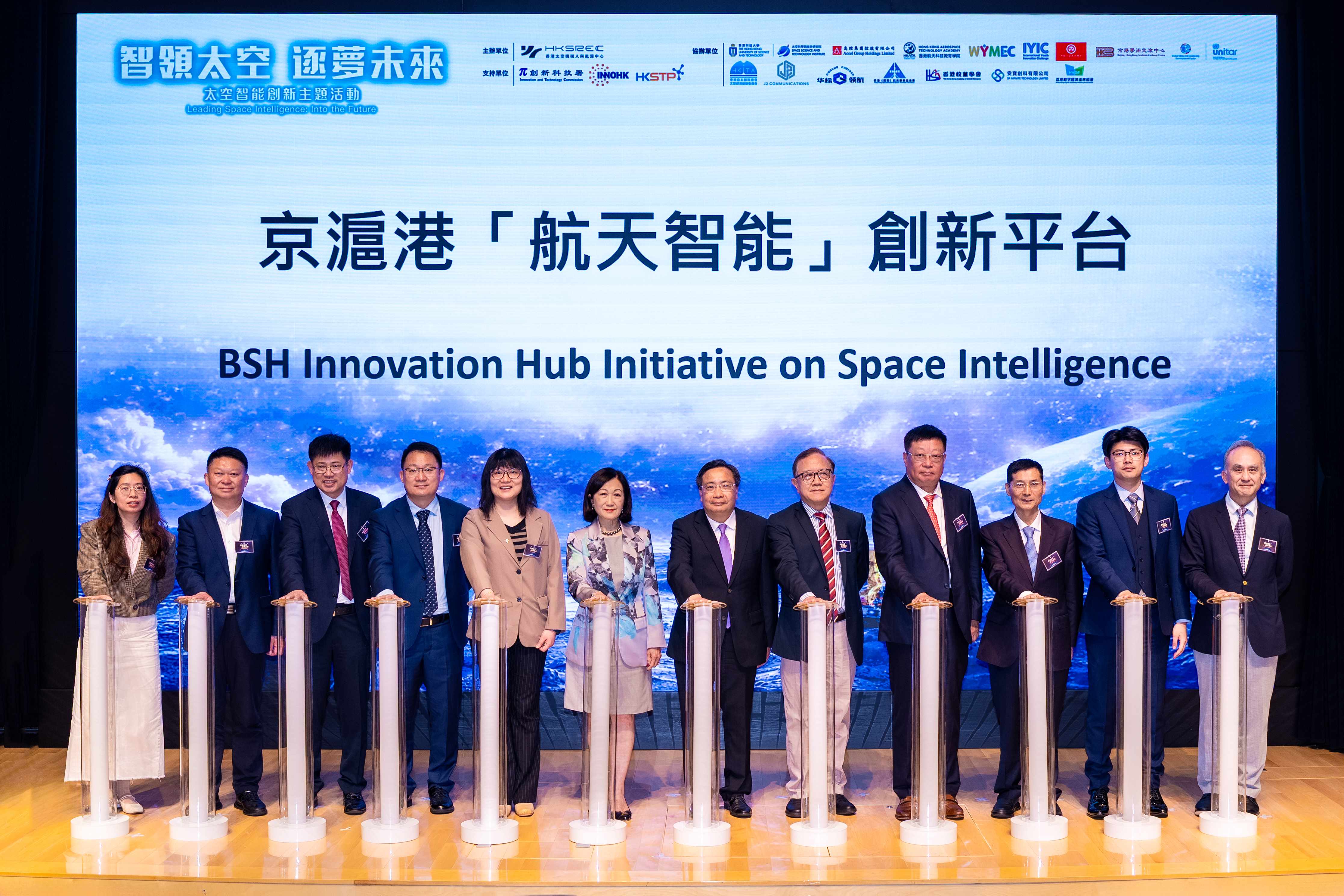
The closing ceremony was officiated by Mr. Ivan LEE Kwok-Bun, Commissioner for Innovation and Technology of the HKSAR Government, and witnessed the official launch of the Beijing-Shanghai-Hong Kong Innovation Hub Initiative on Space Intelligence, marking the commencement of in-depth cross-regional research collaboration in the field of space intelligence.
Prof. Charles Ng emphasized the strategic and economic significance of space development, reaffirming China’s goal of becoming a "space powerhouse" and Hong Kong’s role in that vision. Highlighting HKUST’s contributions, he said, "At HKUST, we are not merely watching from the sidelines; instead we are actively forging that chapter ourselves," citing the launch of Hong Kong’s first higher education environmental remote sensing satellite in 2023, leadership of the Chang'E‑8 "Hong Kong Operation Robot" project, and the development of the world’s first lightweight, high-precision carbon dioxide and methane synergistic observatory payload. "These prove that HKUST’s strengths in AI, robotics, materials science, and thermal engineering can make tangible contributions to our nation's aerospace ambitions," he added.
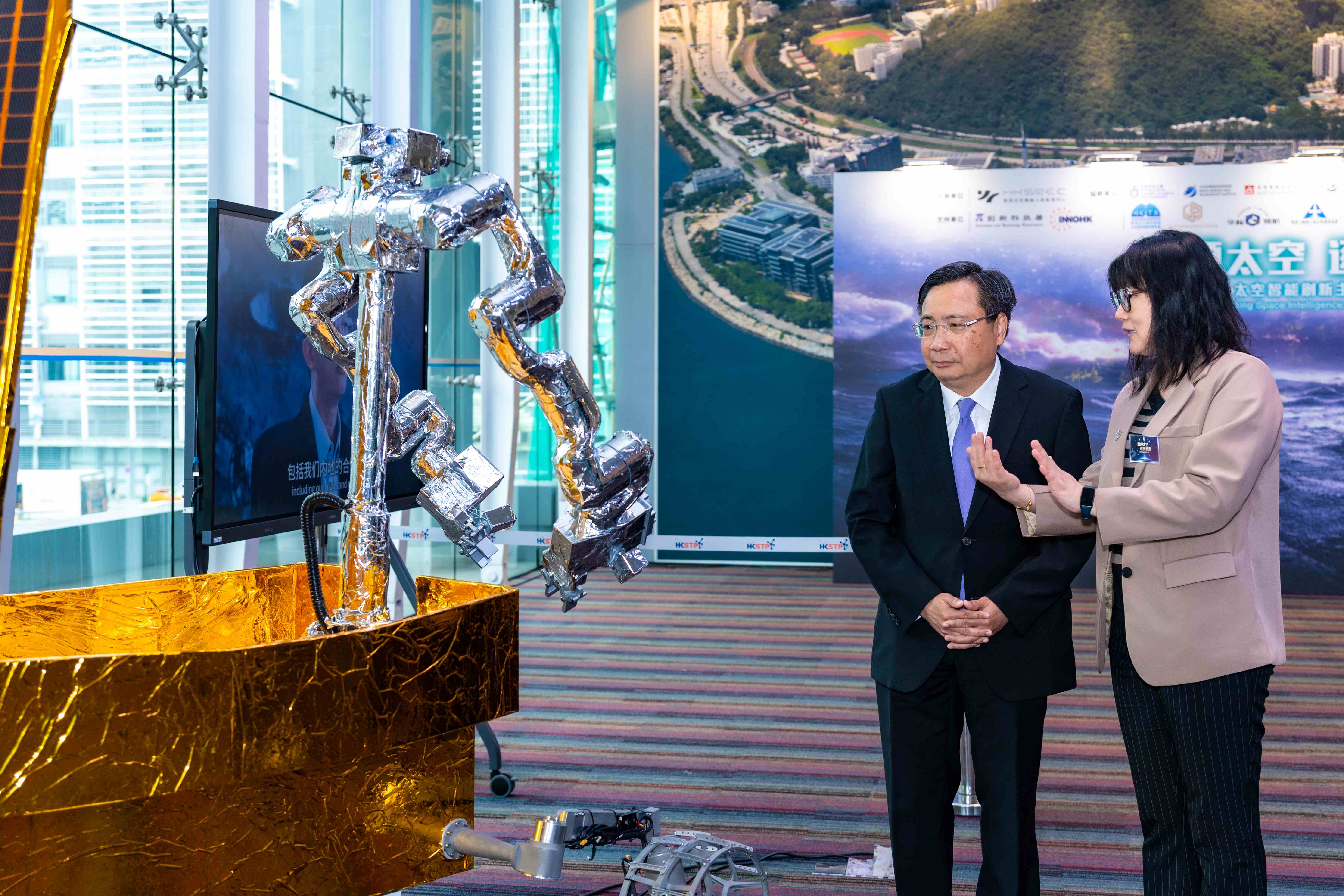
In the keynote address, Prof. GAO Yang, Director of HKSREC, Co-Director of the Space Science and Technology Institute, and Professor in the Department of Mechanical and Aerospace Engineering at HKUST, introduced the research work of the "Hong Kong Operation Robot" in China's Chang'E‑8 lunar mission.
She said, "Our work for China's Chang'E‑8 lunar mission focuses on embodied intelligence and operations in extreme environments. The robot is equipped with a mobile charging station and capable of dexterous operations, with technologies being progressively developed to meet mission needs and support future deployment and industrial applications. We are grateful to the HKSAR Government for supporting our research through the InnoHK platform, which has enabled Hong Kong research teams to contribute to national missions and collaborate closely with mainland and international experts. Aerospace research relies on cross-sectoral, cross-disciplinary and cross-industry collaboration. Therefore, while actively contributing to national projects, our Centre is also committed to facilitating industry engagement through diverse exchange activities and driving the translation of cutting-edge technologies, injecting new momentum into the development of Hong Kong's aerospace industry."
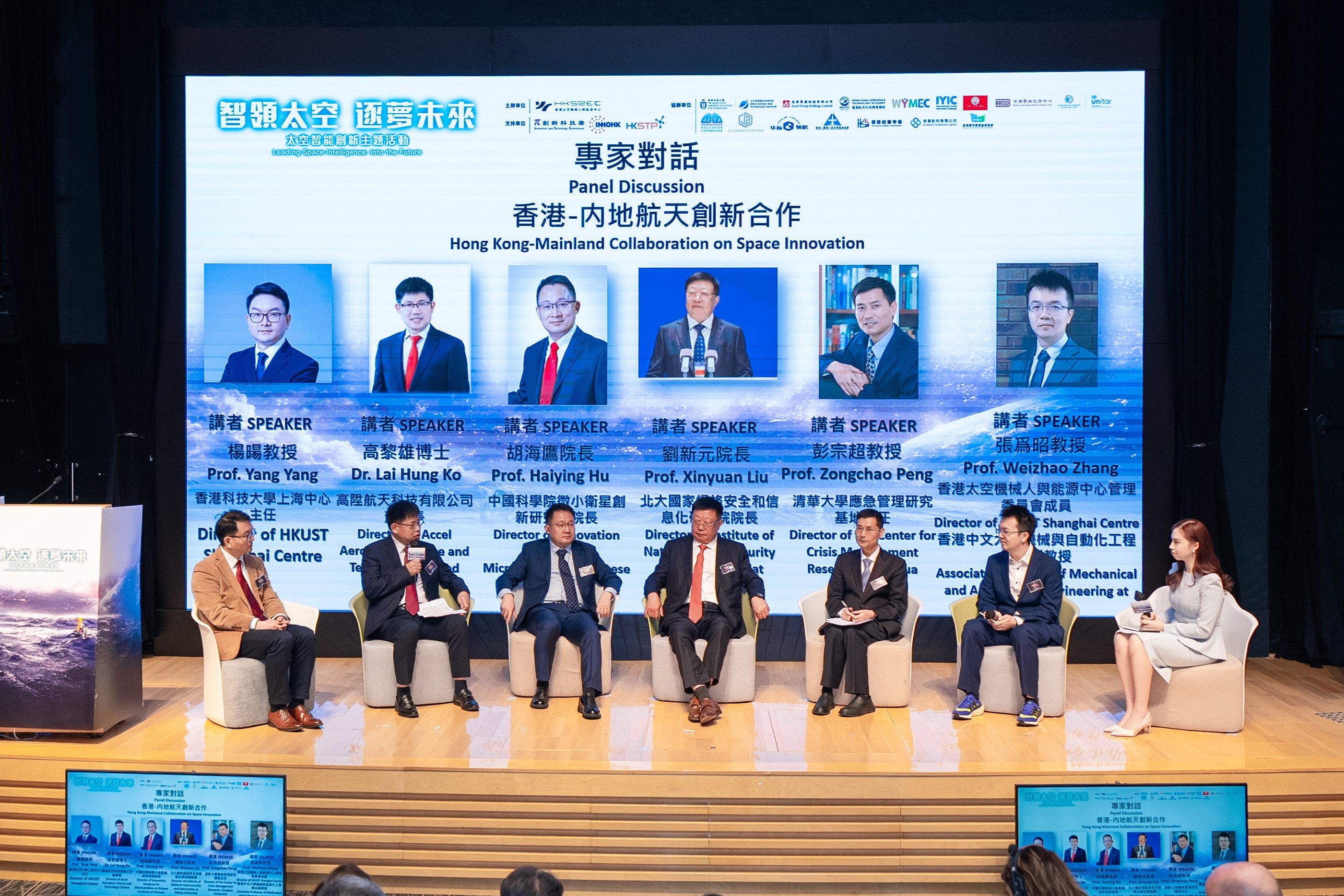
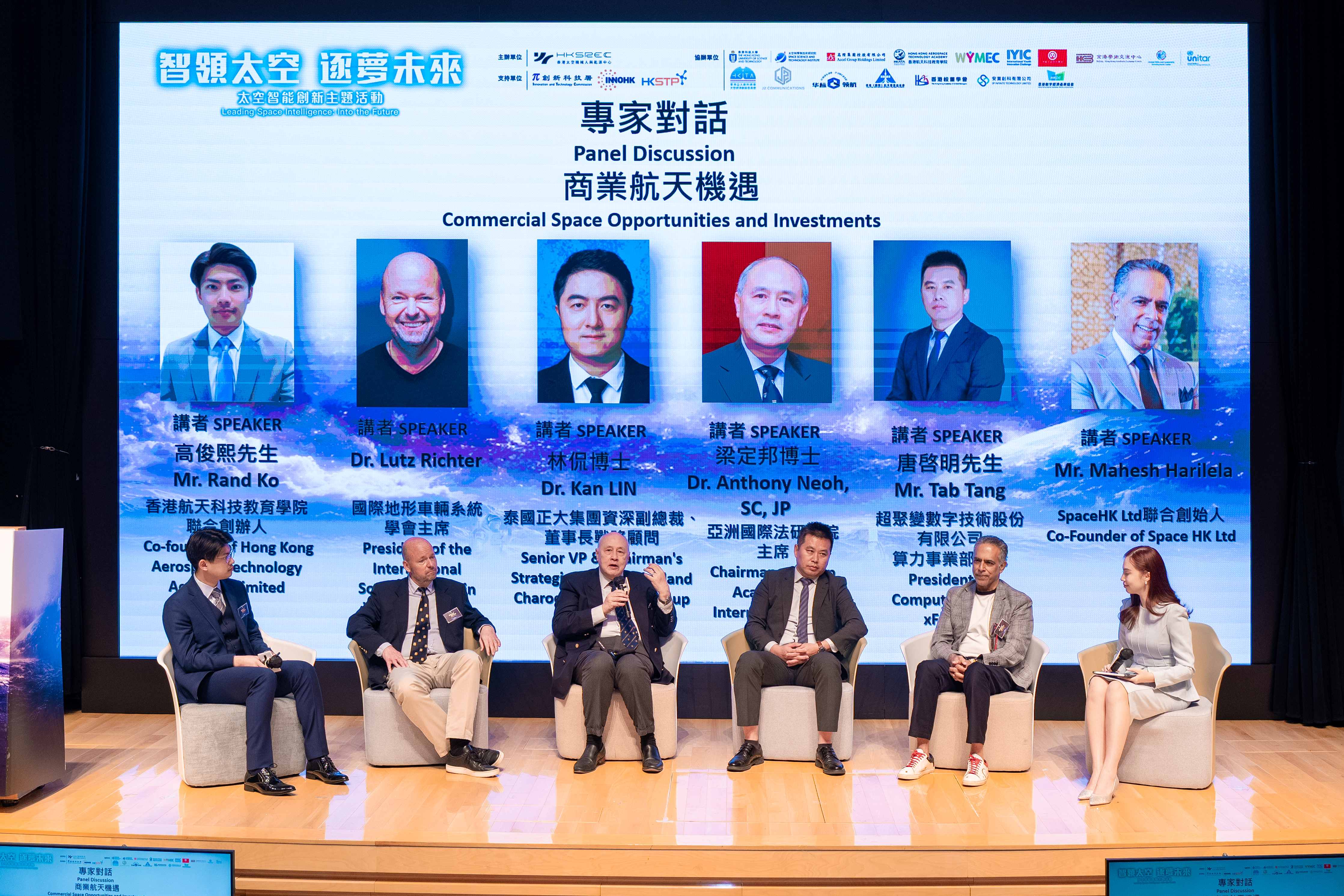
The event also featured two expert panel discussions focusing on "Hong Kong-Mainland Collaboration on Space Innovation" and "Commercial Space Opportunities and Investments." The first forum brought together experts from leading institutions, including the Chinese Academy of Sciences, Peking University, Tsinghua University, HKUST, and The Chinese University of Hong Kong. Panelists exchanged views on research collaboration mechanisms, conditions for technology transfer, and regulatory and industrial development issues.
The second forum featured international and local industry leaders and representatives from the investment community, who shared insights into investment trends in commercial aerospace and examined Hong Kong's important role in related financial and professional services, as well as the practical applications of commercial space technologies beyond the research domain.
The Honorable Mrs. Regina Ip Lau Suk-Yee said, "China's commercial aerospace sector has made giant strides in the past decade. As a global financial and professional services center with deep experience in space research at its top universities, Hong Kong is well positioned to function as a hub for servicing China's aerospace companies and develop new aerospace-related industries."
Prof. Bernard Foing remarked, "The Chang'E‑8 Hong Kong Operation Robot project, led by HKSREC, has achieved notable technological breakthroughs. The project is poised to become a key scientific research platform on the Moon, offering critical opportunities for technology validation and supporting the assessment of lunar resource exploration and development potential. It will also help lay a strong foundation for future economic growth and long‑term human lunar exploration missions."
Prof. Wu Ji stated, "Our country is providing full support for Hong Kong's integration into the overall national space development strategy. We place great emphasis on the city's unique strengths in areas such as space robotics, intelligent algorithms, and international talent. In particular, the HKUST-led HKSREC is injecting new momentum into the nation's aerospace development through its outstanding research capabilities and achievements in talent development."
In 2024, HKUST was appointed by the China National Space Administration (CNSA) to lead the international "Hong Kong Operation Robot" project for the Chang'E‑8 mission, uniting global aerospace scholars and experts to develop a multi-functional lunar surface operation robot designed to make significant contributions to the nation's lunar exploration missions.
HKUST team in the “Hong Kong Operation Robot” project: The team includes Prof. SUN Qingping, Chair Professor of the Department of Mechanical and Aerospace Engineering; Prof. SHI Ling, Professor in both the Department of Electronic and Computer Engineering and the Department of Chemical and Biological Engineering; Prof. Walter WANG Zhe, Associate Professor of the Department of Civil and Environmental Engineering; and Prof. DUAN Molong, Assistant Professor of the Department of Mechanical and Aerospace Engineering.
About The Hong Kong University of Science and Technology
The Hong Kong University of Science and Technology (HKUST) (https://hkust.edu.hk/) is a world-class university known for its innovative education, research excellence, and impactful knowledge transfer. With a holistic and interdisciplinary pedagogy approach, HKUST was ranked 6th in the QS Asia University Rankings 2026, 3rd in the Times Higher Education’s Young University Rankings 2024, and 19th globally and 1st in Hong Kong in the Times Higher Education’s Impact Rankings 2025. Eleven HKUST subjects were ranked among the world’s top 50 in the QS World University Rankings by Subject 2026. In addition, in the Times Higher Education World University Rankings by Subject 2026, HKUST’s Computer Science discipline which encompasses areas such as artificial intelligence and machine learning, has been ranked No. 1 in Hong Kong for ten consecutive years. Our graduates are highly competitive, consistently ranking among the world’s top 30 most sought-after employees. In terms of research and entrepreneurship, over 80% of our work was rated “internationally excellent” or “world leading” in the Research Assessment Exercise 2020 of the Hong Kong’s University Grants Committee. As of January 2026, HKUST members have founded over 1,900 active start-ups, including 10 Unicorns and 21 exits (IPO or M&A).
For media enquiries, please contact:
PR and Media Team, Global Engagement and Communications Office
Email: media@ust.hk
Sign Up for Our Latest News
Latest News

The Hong Kong University of Science and Technology (HKUST) has recently received a generous donation from distinguished alumnus Dr. Joseph CHEUNG Wang Ngai to establish the Dr Joseph W N Cheung Research Excellence Award, a new initiative designed to recognize and support outstanding research achievements at the University. The gift will be designated for HKUST's new School of Medicine and HKUST Business School, underscoring Dr.

The Hong Kong University of Science and Technology (HKUST) today announced the launch of the HK$100 million RAISe+ Project Fund (RPF), a dedicated funding initiative that will provide financial backing and tailored commercialization support to HKUST research teams participating in the HKSAR Government's Research, Academic and Industry Sectors One-plus Scheme (RAISe+).
