







HKUST Team Co-Pioneers a “Slow-Release Solvent” Strategy to Advance Large-Area Perovskite Photovoltaic Modules

Researchers at The Hong Kong University of Science and Technology (HKUST) have discovered that in perovskite solar cells, conventional passivation strategies mainly act on the film surface and struggle to reach buried interfaces, much like a superficial “external dressing” that cannot repair deep microstructural defects formed during film growth. In particular, the rapid evaporation of solvents during film formation inevitably leads to voids and nanoscale grain-boundary grooves at the bottom interface of perovskite films. These long-overlooked defects severely hinder charge transport and trigger interfacial failure during device scaling and operation, becoming a critical bottleneck for efficiency, stability, and large-area manufacturing.
To address this challenge, the team proposed a crystal-solvate (CSV) seeding strategy with a slow-release solvent function. In this approach, solvent molecules are “encapsulated” within the crystal lattice and are gradually released during film annealing, enabling gentle and well-controlled interfacial crystallization. This strategy reconstructs the microstructure of the buried bottom interface from the very origin of crystallization, leading to perovskite solar cells with higher efficiency, enhanced stability, and scalability.
Perovskite solar cells are widely regarded as one of the most disruptive next-generation photovoltaic technologies, showing great potential to replace conventional silicon solar cells in grid-scale power generation, portable electronics, and space photovoltaics. They offer not only higher power conversion efficiencies but also advantages in materials cost, low-temperature processing, and device aesthetics. However, as solar cell areas increase, rapid efficiency loss and poor stability continue to hinder commercialization.
The researchers found that the root cause lies in the hydrophobic nature of self-assembled monolayer (SAM) substrates used in p-i-n device architectures, which induces non-wetting crystallization of perovskite precursors at the early stage of film formation. This inevitably generates interfacial voids and nanoscale grain-boundary grooves at the film bottom. These microstructural defects disrupt continuous grain growth and introduce severe electronic and mechanical mismatch, leading to device degradation and failure. While conventional bottom-seeding strategies can provide nucleation sites, they are limited to “point-like” nucleation control and cannot reconstruct the overall microstructure and functionality of the buried interface.
To overcome this structural limitation, the team designed and synthesized a series of low-dimensional CSV materials as buried-interface nucleation layers. These rod-like nanocrystals significantly improve the wetting and nucleation behavior of the perovskite precursor on SAM substrates. Unlike traditional methods, CSV crystals encapsulate solvent molecules within their lattice, turning the solvent from a processing parameter into part of the material itself. During annealing, the lattice-confined solvent is released slowly and controllably, creating a slow-release interfacial regulation process at the film bottom. This process eliminates interfacial voids, substantially flattens grain-boundary nanogrooves, and introduces stable halide passivation phases at the buried interface, thereby synergistically reconstructing the interfacial energy landscape.
Using this strategy, the team achieved inverted perovskite solar cells with a power conversion efficiency of 26.13% and a high fill factor of 86.75%, along with significantly enhanced operational stability under light and heat stress. More importantly, when the device area was scaled up to 49.91 cm2, the efficiency remained at 23.15%, demonstrating minimal trans-scale efficiency loss and strong potential for scalable manufacturing.
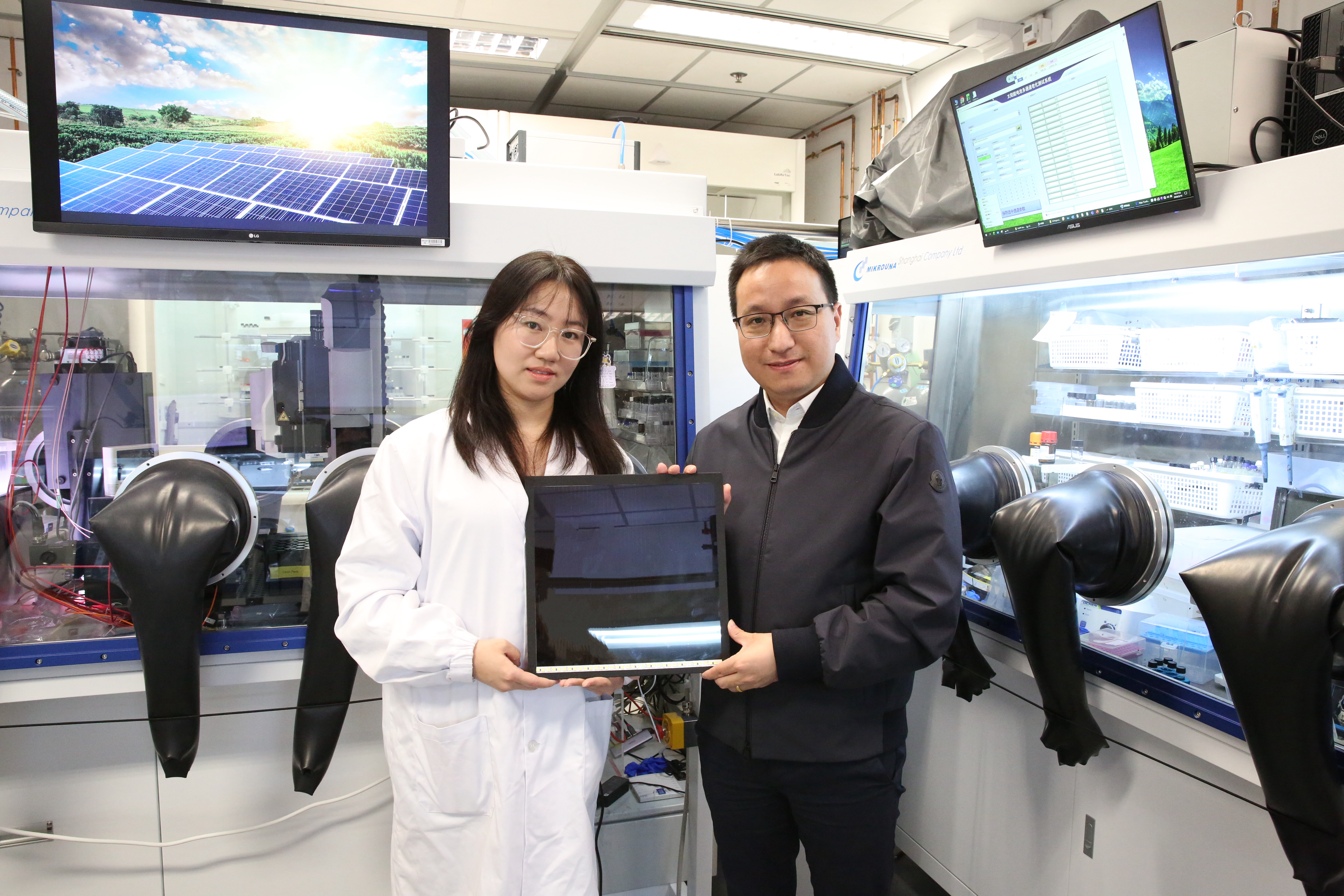
“Although perovskite solar cell efficiencies have continued to set new records, the real barrier to commercialization lies in the lack of control over buried interfacial microstructures during upscaling,” said Prof. ZHOU Yuanyuan, Associate Professor in the Department of Chemical and Biological Engineering at HKUST and the corresponding author of the study. “The core of our CSV strategy is to ‘encapsulate’ solvent molecules within the material and release them slowly, transforming interfacial crystallization from a violent and uncontrolled process into a gentle and programmable one, thereby enabling simultaneous optimization of microstructure, charge transport, and device stability.”
“Perovskites are typical soft-lattice materials whose crystallization is extremely sensitive to the local environment,” said Dr. HAO Mingwei, co-first author of the study and currently Research Assistant Professor in the Department of Chemical and Biological Engineering at HKUST. “By introducing a slow-release regulation mechanism through CSV seeding, we not only improved the interfacial morphology but also opened a new pathway for understanding and designing interfaces in soft-lattice materials.” Dr. Hao was previously a PhD student in Prof. Zhou’s group under the Hong Kong PhD Fellowship Scheme.
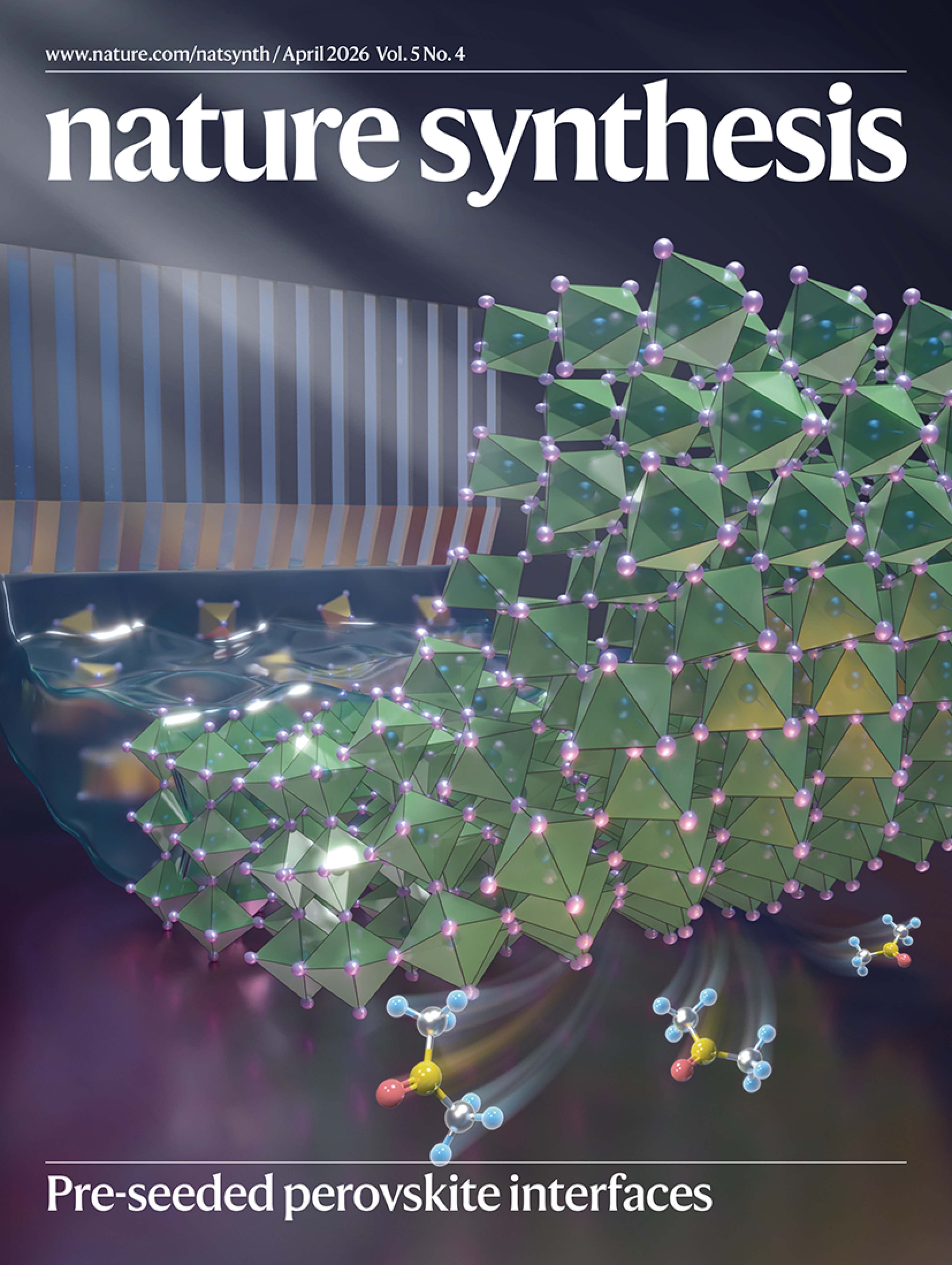
The research, entitled “Crystal-solvate pre-seeded synthesis for scalable perovskite solar cell fabrication”, has been published in the top-tier journal Nature Synthesis. It was featured as the journal’s cover article in April 2026 (Volume 5, Issue 4) and highlighted in a contemporaneous Research Briefing entitled “Scalable crystal-solvate seeding strategy for the fabrication of perovskite photovoltaics”, further underscoring its significant academic value in the scalable fabrication of perovskite photovoltaics.
The work was co-led by the HKUST team and Prof. Shuping Pang’s research team from the Qingdao Institute of Bioenergy and Bioprocess Technology, Chinese Academy of Sciences, and other partners. The related technology has also received industrial support from China Merchants Group, a central state-owned enterprise and Fortune Global 500 company, through associated patent development.
Sign Up for Our Latest News
Latest News
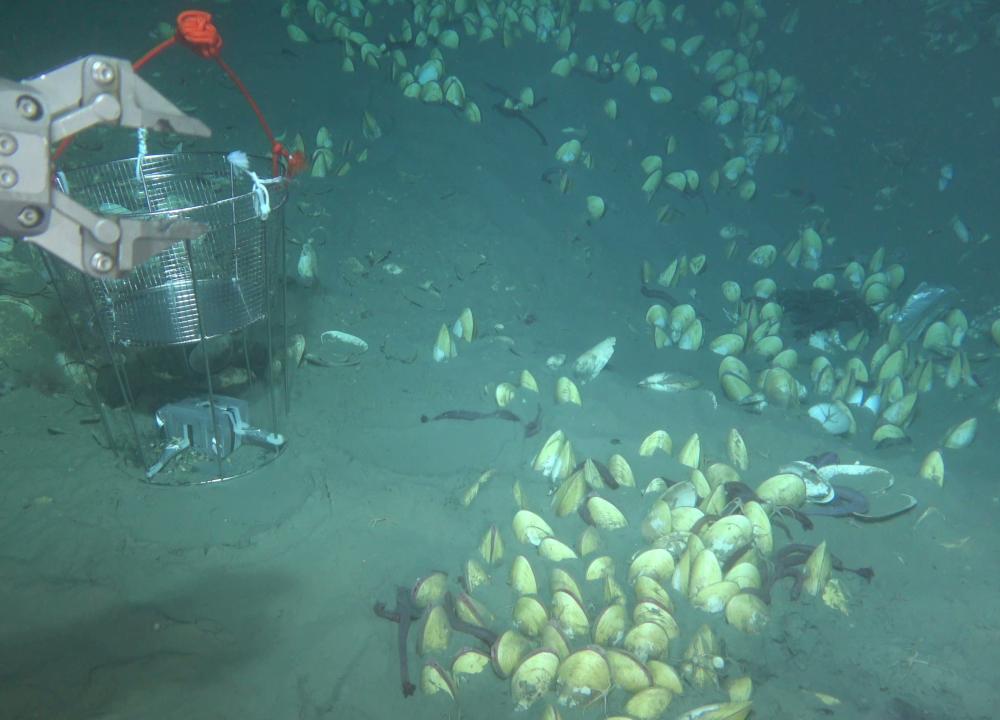
A research team led by Prof. QIAN Peiyuan, Chair Professor of the Department of Ocean Science at The Hong Kong University of Science and Technology (HKUST), in collaboration with international partners, has made significant progress in uncovering how deep-sea chemosynthetic symbioses cope with environmental change.
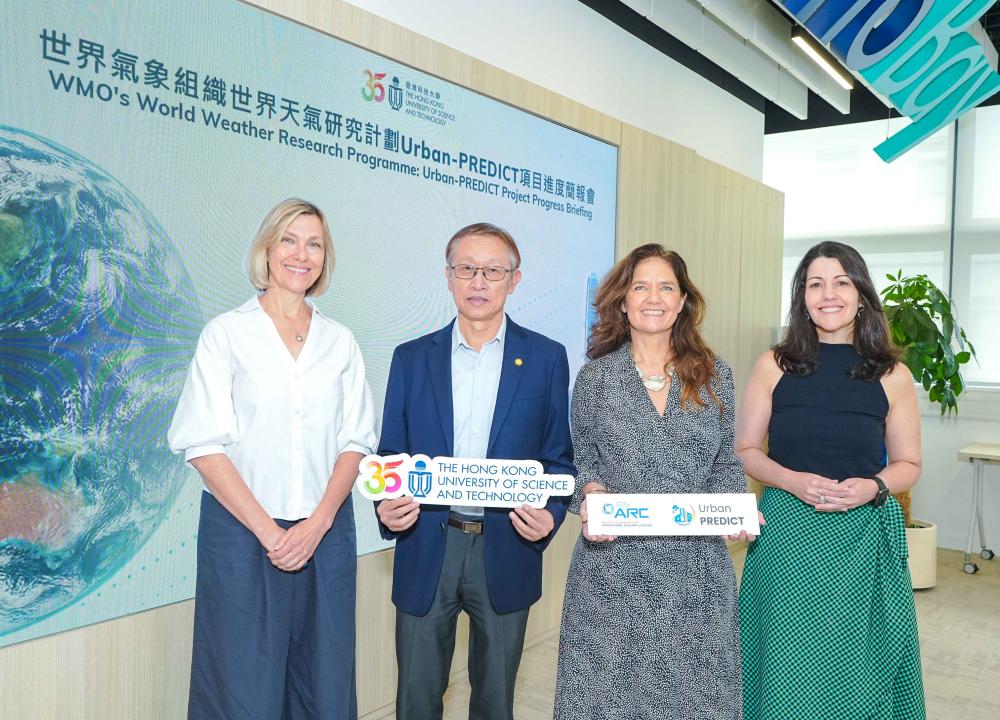
As climate change continues to intensify the frequency and severity of extreme weather events worldwide, a recent United Nations Environment Programme report warns that global temperatures are likely to exceed the 1.5°C threshold within the coming years, posing increasing risks to cities and communities around the world.
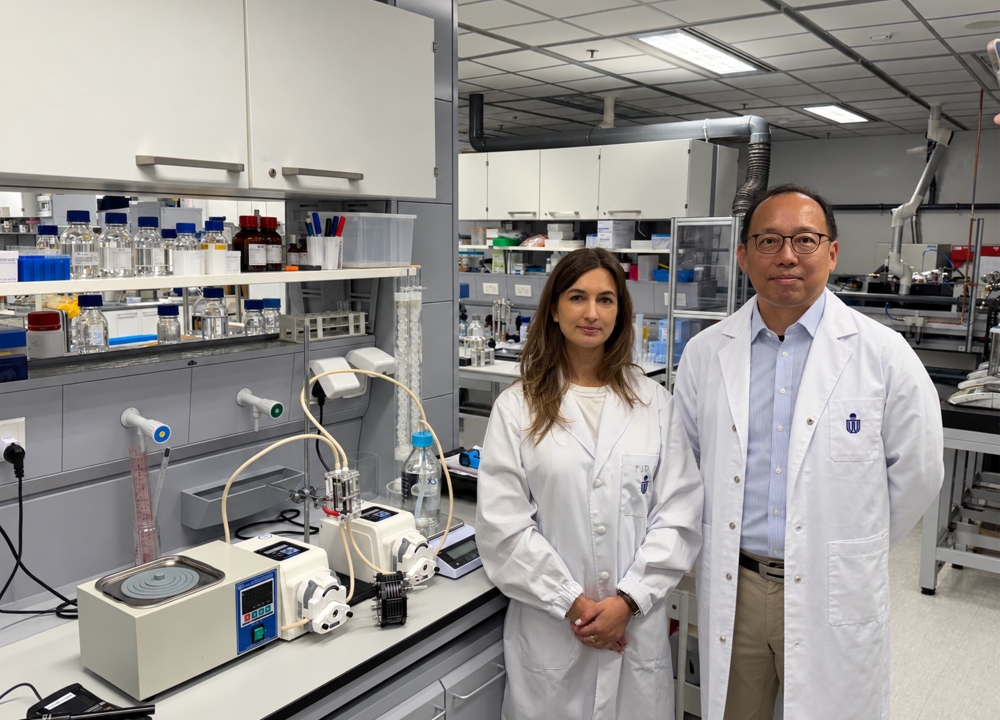
A research team from The Hong Kong University of Science and Technology (HKUST), in collaboration with Arizona State University (ASU) and The Hong Kong Polytechnic University (PolyU), has developed a sustainable integrated seawater-to-hydrogen system that can produce hydrogen directly from seawater while converting waste heat from electrolysis into a resource for producing the purified water required for hydrogen production. By integrating hydrogen pr