





News & Stories
2026

News
HKUST researchers reveal the pathogenesis of a rare respiratory disease through super-resolution microscopy
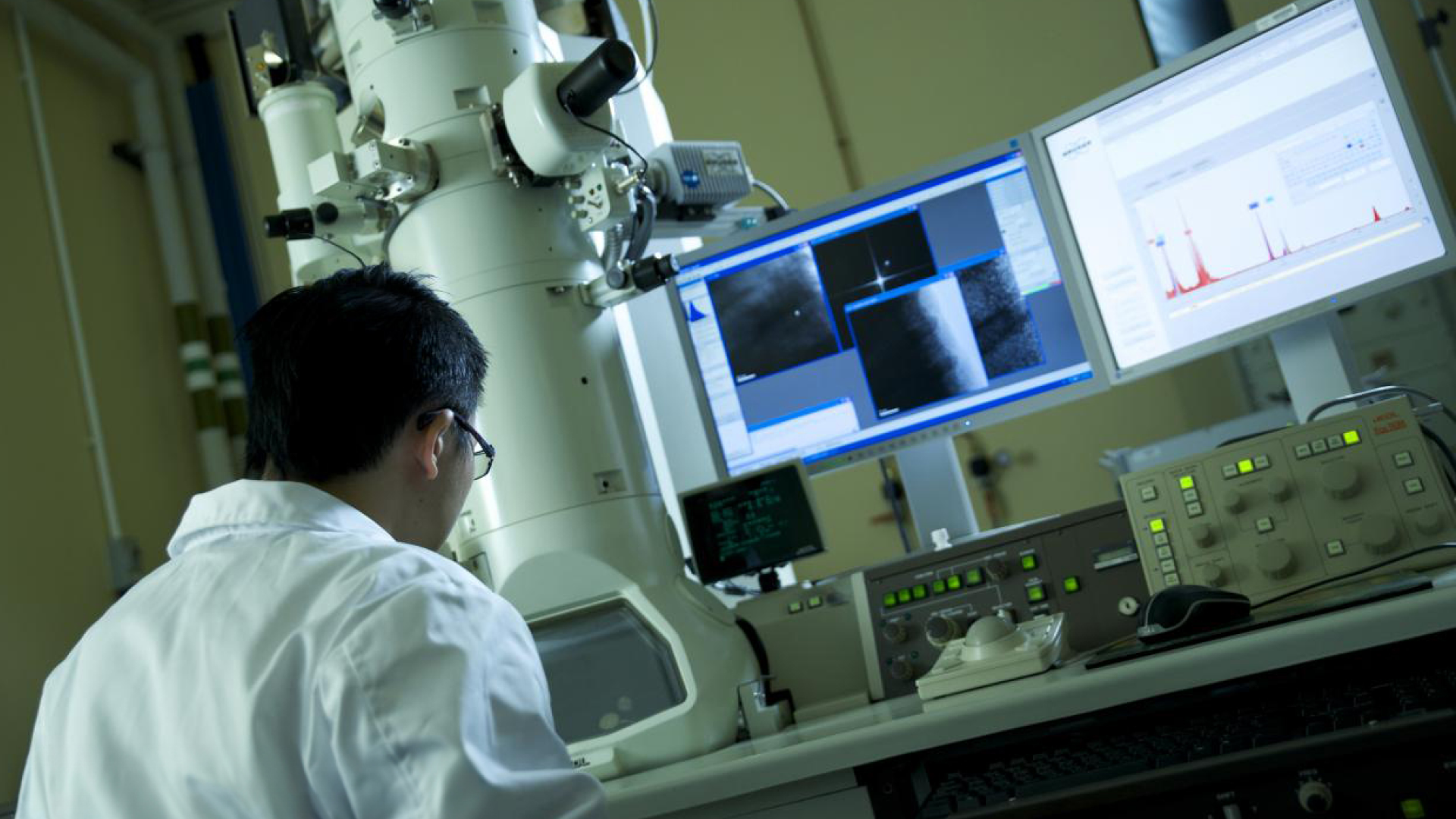
Researchers at The Hong Kong University of Science and Technology (HKUST) have uncovered how mutations in a specific gene can trigger a rare respiratory disease, shedding light on the critical role played by cellular structures known as cilia. Cilia are tiny and hair-like organelles extruding from the surface of most cell types, serving either sensory or motile functions. In the eyes, photoreceptor cells possess sensory cilia that are important for vision. Meanwhile, motile cilia align along the surface of the respiratory tract and function in airway clearance of mucus and inhaled pathogens.
News
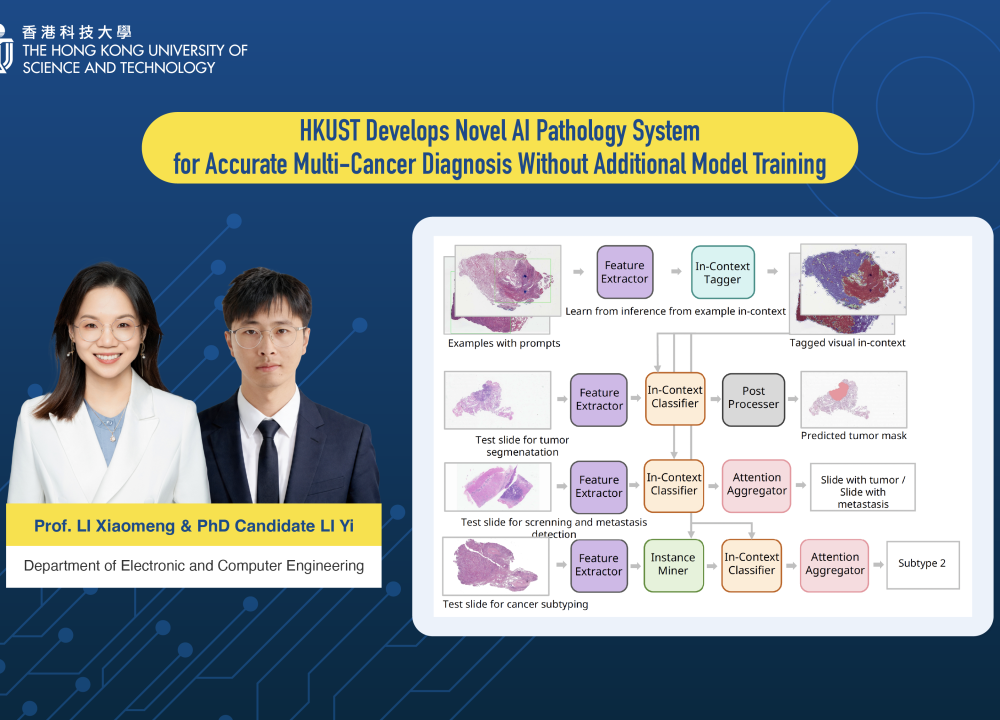
HKUST Develops Novel AI Pathology System for Accurate Multi-Cancer Diagnosis Without Additional Model Training
A research team led by The Hong Kong University of Science and Technology (HKUST) has developed a pioneering artificial intelligence (AI) pathology analysis system that can accurately recognize multiple types of cancer using only a minimal number of samples—without requiring any additional training. This breakthrough significantly enhances the flexibility and efficiency of AI-assisted medical care, marking a major step forward toward the widespread adoption of intelligent pathology.

Stories
Nobel Heroes Meet Future Innovators at HKUST
What do the eggs of sea urchins, car exhaust, sticky tape, and risk and reward have in common? Each sparked a discovery that secured a Nobel Prize.Four Nobel laureates shared fascinating stories from their decades of research experience at a fireside chat with over 400 students, faculty, and members of the public. The event, Nobel Heroes@HKUST, was part of HKUST’s 35th anniversary celebrations.The laureates were:Prof. Tim HUNT (2001 Nobel Prize in Physiology or Medicine)Prof. Louis J. IGNARRO (1998 Nobel Prize in Physiology or Medicine)Prof. Robert C. MERTON (1997 Nobel Memorial Prize in Economic Sciences)Prof. Konstantin NOVOSELOV (2010 Nobel Prize in Physics)

Stories
Early Detection of Alzheimer’s Through HKUST’s Community-based Scheme
With the rapid aging of Hong Kong's population, it is projected that by 2039, individuals aged 65 or above will account for over 30% of the total population, making early intervention for cognitive health an urgent necessity. This demographic shift highlights the critical need for effective strategies to address cognitive decline in the elderly.One of these strategies is to promote the detection of Alzheimer's disease at the community level. But this approach faces numerous obstacles. High testing costs, invasive procedures, and a lack of public awareness about the importance of early detection have hindered accessibility. Caring for our communityRecognizing these challenges, the NeuroCare Community Project was launched to bridge this gap. This project supports early and proactive intervention at the community level to delay the symptoms of Alzheimer’s disease, thus alleviating pressure on caregivers and society at large.
News
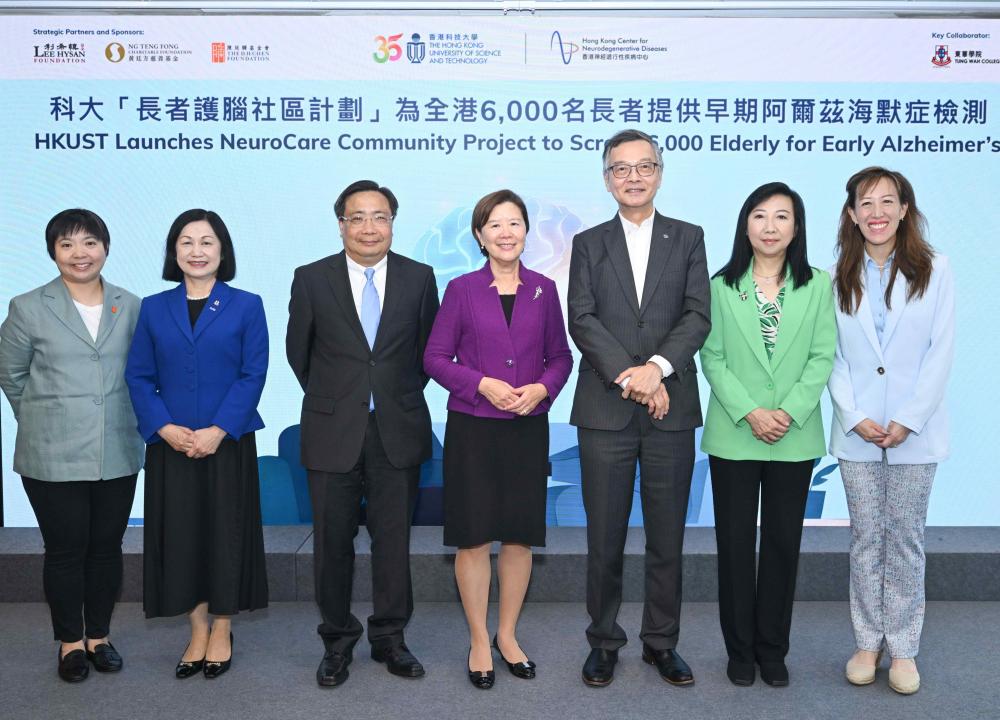
HKUST Launches NeuroCare Community Project to Screen 6,000 Elderly for Early Alzheimer’s
The Hong Kong University of Science and Technology (HKUST) today launched the NeuroCare Community Project (the Project), a five-year initiative to enhance early detection of Alzheimer’s risk for Hong Kong’s elderly who need support. Working with over 40 community centers under more than a dozen non-governmental organizations (NGOs), and in collaboration with Tung Wah College (TWC), the Project aims to screen 6,000 community-dwelling elderly aged 60-75, shifting the focus from late-stage diagnosis to proactive, community-based care.With the rapid aging of Hong Kong’s population, it is projected that by 2039, individuals aged 65 or above will account for over 30% of the total population, making early intervention for cognitive health an urgent necessity.
2025
News
HKUST Researchers Uncover Key Transport Mechanisms in Cells, Shedding Light on Causes of Genetic Diseases
A research team led by Prof. GUO Yusong, Associate Professor of the Division of Life Science at The Hong Kong University of Science and Technology (HKUST) has made a significant breakthrough in understanding how cells manage the intricate internal transport of proteins, a process fundamental to life and implicated in several hereditary diseases. By employing an innovative vesicle proteomics platform, the team has systematically identified new cargo proteins and key accessory factors for two critical cellular transport complexes, AP-1 and AP-4. The findings, published in Proceedings of the National Academy of Sciences (PNAS), combine innovative vesicle reconstitution techniques with quantitative mass spectrometry-based proteomics to unveil a comprehensive map of previously unknown cargo proteins and regulatory factors.
News
HKUST Commences Preparations for New Medical School
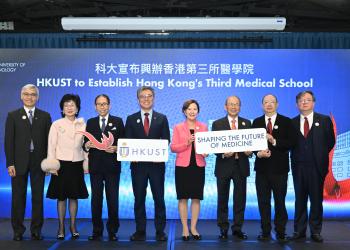
With the support of the HKSAR Government, The Hong Kong University of Science and Technology (HKUST) has commenced preparations to establish a new medical school. Dedicated to training a new generation of tech-savvy doctors, the School will bolster the future readiness of the local healthcare system and advance Hong Kong's development as an international hub for medical training, research, and innovation.

News
HKUST AI System Delivers Comprehensive Cancer Diagnosis
The Hong Kong University of Science and Technology (HKUST) today launched SmartPath, a comprehensive artificial intelligence (AI) system designed to transform the entire pathology workflow for cancer care. The system was developed by an HKUST research team led by Prof. CHEN Hao, Director of Collaboration Center for Medical and Engineering Innovation, and Assistant Professor of the Department of Computer Science and Engineering and Department of Chemical and Biological Engineering. SmartPath provides integrated support for clinical diagnosis, subtyping, biomarker quantification, treatment response assessment, and prognostic follow-up across a wide spectrum of cancers, aiming to accelerate turnaround times and enhance the personalization of treatment plans.