


HKUST Researchers Uncover Key Transport Mechanisms in Cells, Shedding Light on Causes of Genetic Diseases
A Novel Proteomics Approach Identifies New Cargo Proteins and Essential Cellular Factors for Adaptor Complexes AP-1 And AP-4
Offering New Pathways for Understanding Hereditary Conditions
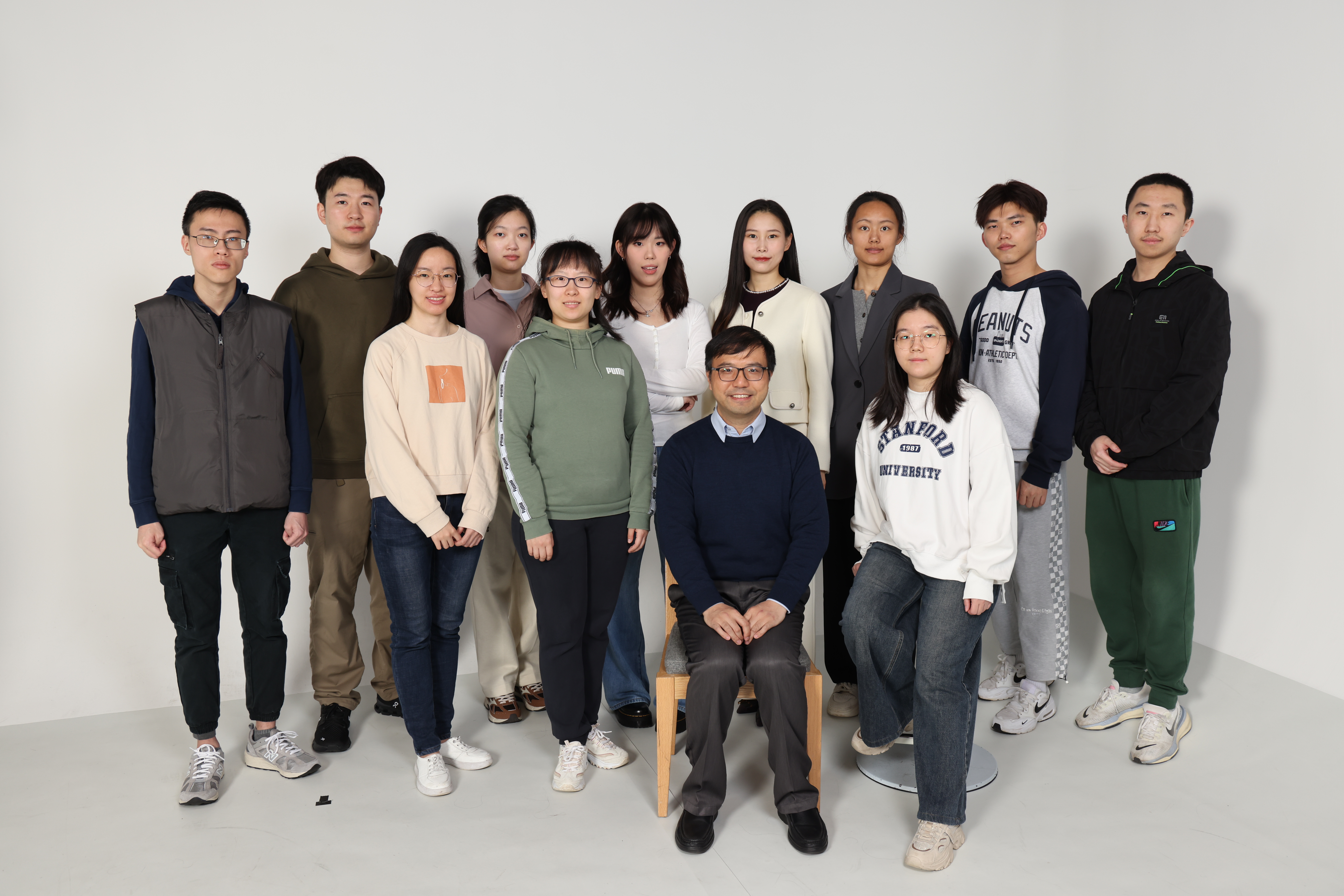
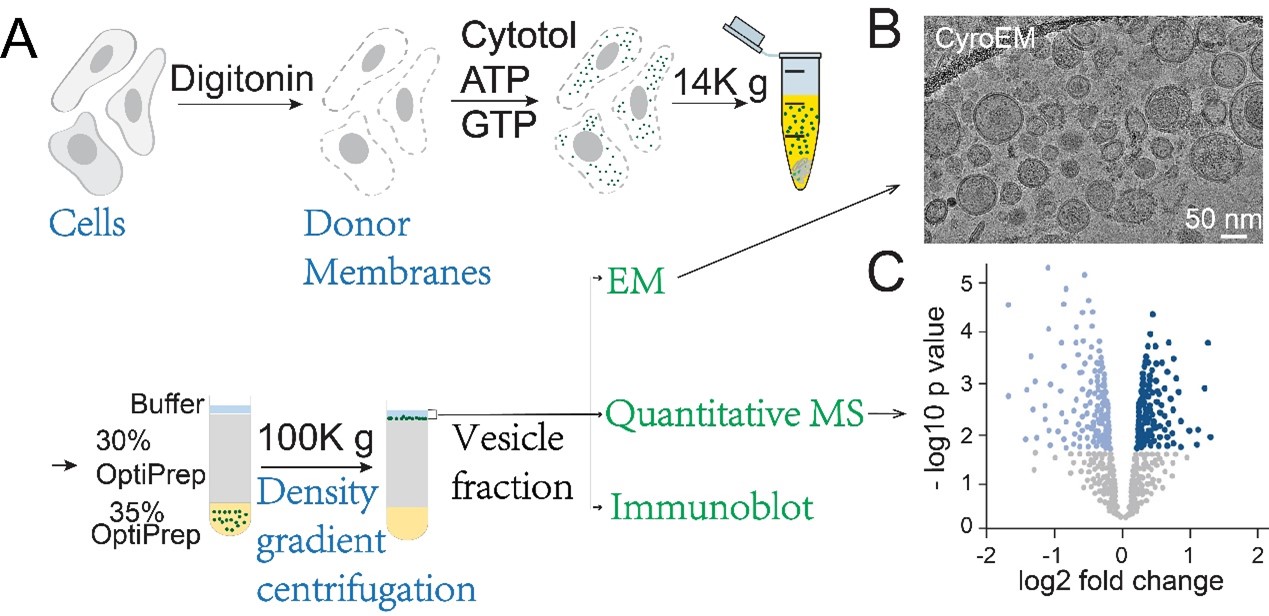
A research team led by Prof. GUO Yusong, Associate Professor of the Division of Life Science at The Hong Kong University of Science and Technology (HKUST) has made a significant breakthrough in understanding how cells manage the intricate internal transport of proteins, a process fundamental to life and implicated in several hereditary diseases. By employing an innovative vesicle proteomics platform, the team has systematically identified new cargo proteins and key accessory factors for two critical cellular transport complexes, AP-1 and AP-4. The findings, published in Proceedings of the National Academy of Sciences (PNAS), combine innovative vesicle reconstitution techniques with quantitative mass spectrometry-based proteomics to unveil a comprehensive map of previously unknown cargo proteins and regulatory factors.
The secretory pathway acts as a cell's postal service, ensuring that proteins are accurately delivered to their correct destinations to maintain cellular function. Errors in this system can lead to severe physiological defects.
“For years, the field has struggled to comprehensively map the cargo repertoire of adaptor complexes like AP-1 and AP-4, whose malfunctions are directly linked to serious human conditions such as MEDNIK syndrome, X-linked intellectual disability, and AP-4 deficiency syndrome,” said Prof. Guo. “However, the full list of proteins they transport has remained elusive.”
He added, “Our study breaks new ground through its approach of reconstituting the transport process in vitro and applying quantitative proteomics. This allowed us to directly identify which proteins require AP-1 or AP-4 for packaging into vesicles, moving from a piecemeal understanding to a more global view of their cargo landscape. It revealed both new clients and the unexpected cellular machinery that AP-4 relies on.”
The team’s innovative strategy integrates in vitro vesicle reconstitution with quantitative mass spectrometry. This powerful combination allows researchers to create transport vesicles in a controlled environment and then perform a comprehensive analysis of their protein composition. The work was done in collaboration with Prof. YAO Zhong-Ping from The Hong Kong Polytechnic University (PolyU).
Using this method, the researchers identified specific cargo proteins that depend on AP-1 or AP-4 for their transport from the trans-Golgi network, a central sorting hub in the cell. They confirmed that the protein CAB45 is an AP-1-dependent cargo, while ATRAP is a novel cargo for AP-4.
A key finding of the study addresses a long-standing puzzle: how AP-4 forms transport vesicles without the well-known protein clathrin. The team discovered that two cytosolic factors, WDR44 and PRRC1, are critical accessories for AP-4-mediated trafficking. When these factors were depleted, key AP-4 cargoes like ATG9A and ATRAP failed to leave their organelles, leading to defects in cellular processes such as autophagy.
“Our findings not only reveal new cargo clients and essential co-factors for AP-1 and AP-4 but also provide a powerful toolkit for the scientific community to dissect the mechanisms of vesicular trafficking,” Prof. Guo added. “This opens new avenues for researching the pathological mechanisms of related diseases and potentially identifying new therapeutic targets.”
The co-corresponding authors of the study are Prof. Guo Yusong of HKUST and Prof. Yao Zhong-Ping of PolyU. Dr. PENG Ziqing, a postdoctoral researcher at HKUST, is the first author.
About The Hong Kong University of Science and Technology
The Hong Kong University of Science and Technology (HKUST) (https://hkust.edu.hk/) is a world-class university known for its innovative education, research excellence, and impactful knowledge transfer. With a holistic and interdisciplinary pedagogy approach, HKUST was ranked 6th in the QS Asia University Rankings 2026, 3rd in the Times Higher Education’s Young University Rankings 2024, and 19th globally and 1st in Hong Kong in the Times Higher Education’s Impact Rankings 2025. Thirteen HKUST subjects were ranked among the world’s top 50 in the QS World University Rankings by Subject 2025, with “Data Science and Artificial Intelligence” coming in 17th worldwide and first in Hong Kong. Our graduates are highly competitive, consistently ranking among the world’s top 30 most sought-after employees. In terms of research and entrepreneurship, over 80% of our work was rated “internationally excellent” or “world leading” in the Research Assessment Exercise 2020 of the Hong Kong’s University Grants Committee. As of July 2025, HKUST members have founded over 1,900 active start-ups, including 10 Unicorns and 17 exits (IPO or M&A).
For media enquiries, please contact:
PR and Media Team, Global Engagement and Communication Office
Email: media@ust.hk
Sign Up for Our Latest News
Latest News

The Hong Kong University of Science and Technology (HKUST) MBA Program and HKUST Entrepreneurship Center, in collaboration with two leading European student organizations, Erasmus AI Society and MAIN (Maastricht AI & Tech Network), recently concluded the AI Hackathon and Symposium. The event was strongly supported by Hong Kong Talent Engage under the Labour and Welfare Bureau of the HKSAR Government and featured as a flagship event of the Hong Kong AI Summit 2026.

The Hong Kong University of Science and Technology (HKUST) has recently received a generous donation from distinguished alumnus Dr. Joseph CHEUNG Wang Ngai to establish the Dr Joseph W N Cheung Research Excellence Award, a new initiative designed to recognize and support outstanding research achievements at the University. The gift will be designated for HKUST's new School of Medicine and HKUST Business School, underscoring Dr.
