



Learning Chinese Characters in the Digital Age
At a recent HKUST seminar, scholars highlighted how combining the ancient "Six Principles" of character formation with modern cognitive science offers the most effective path to mastering the language today.
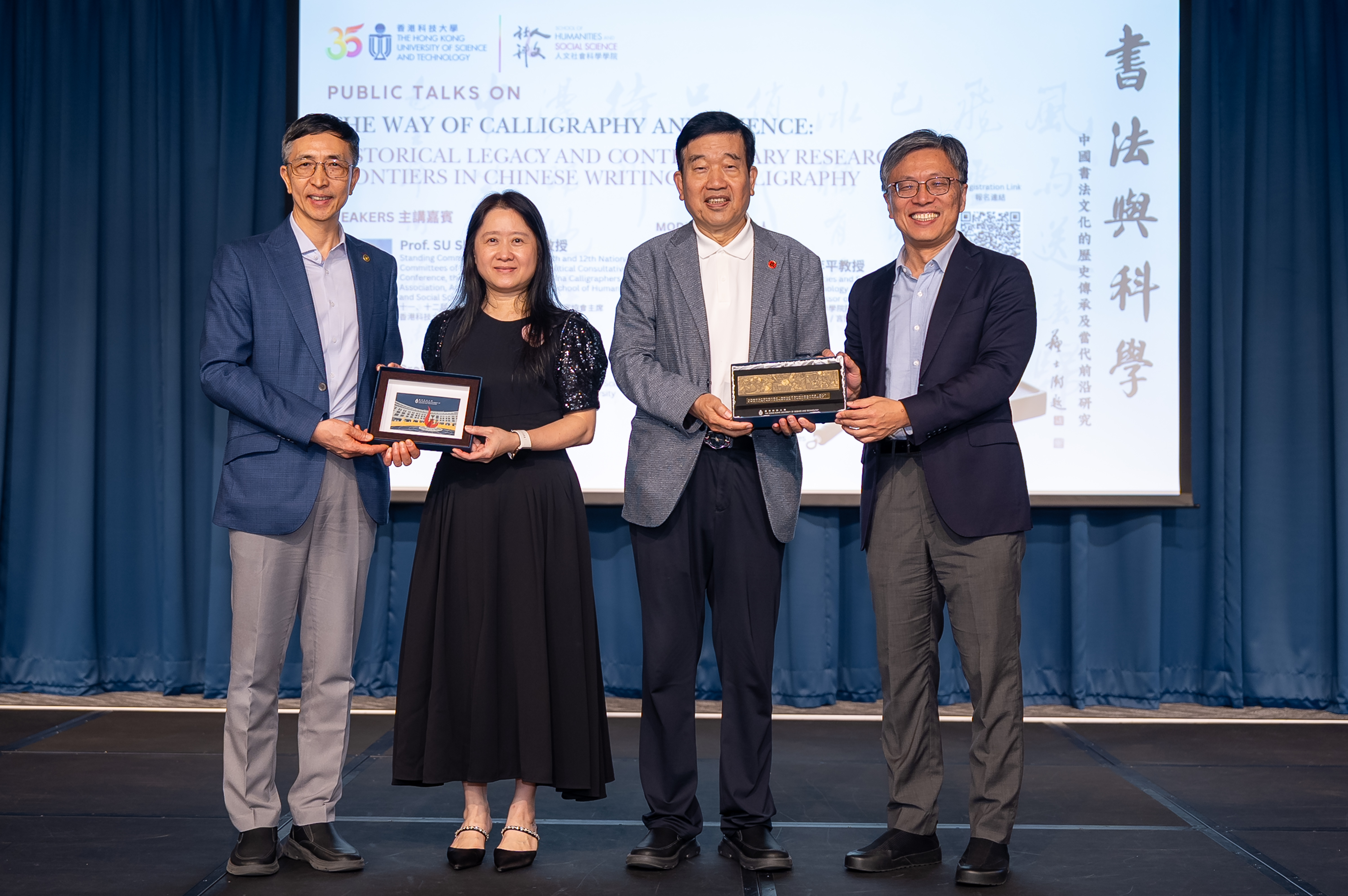
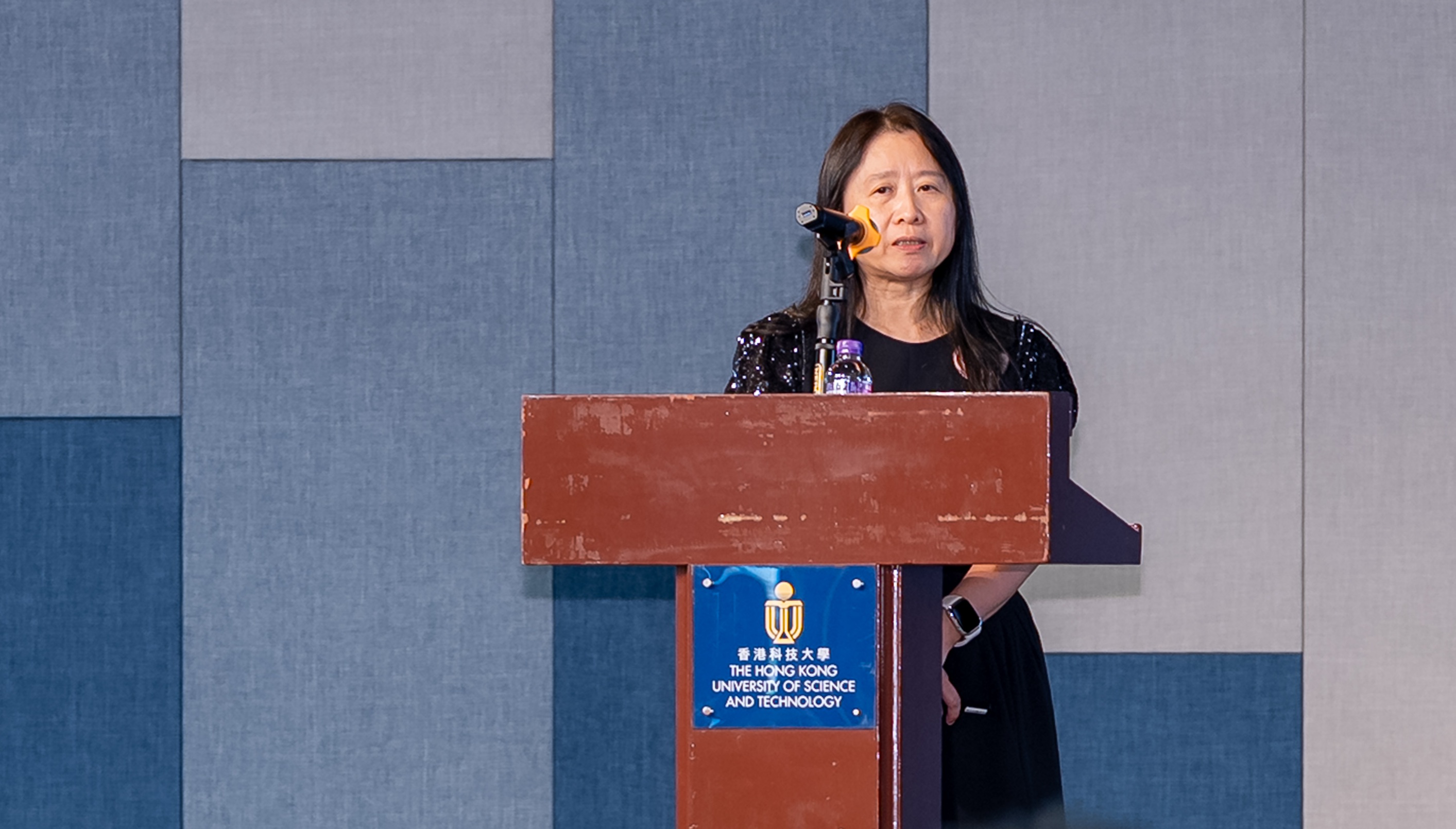
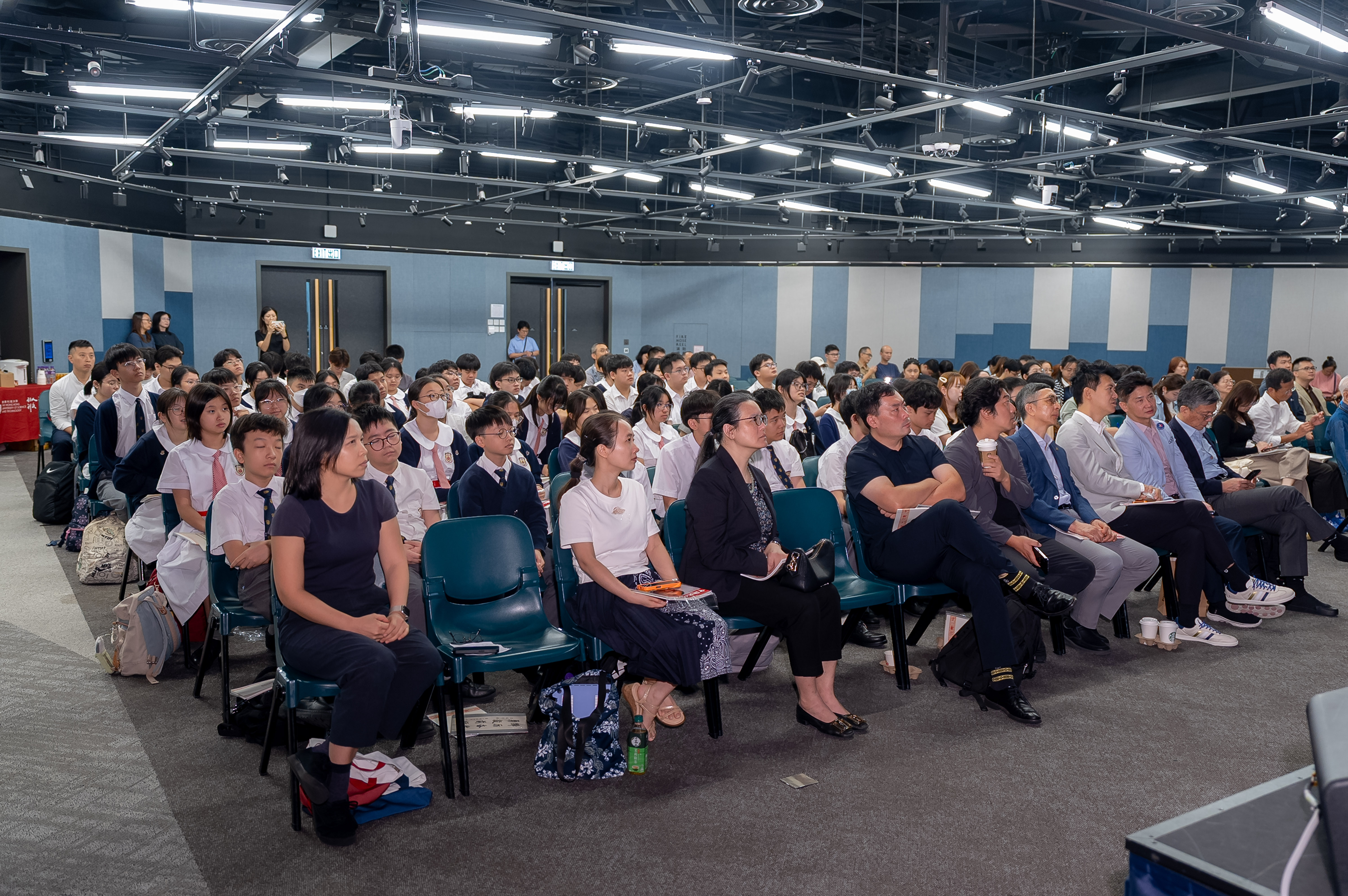
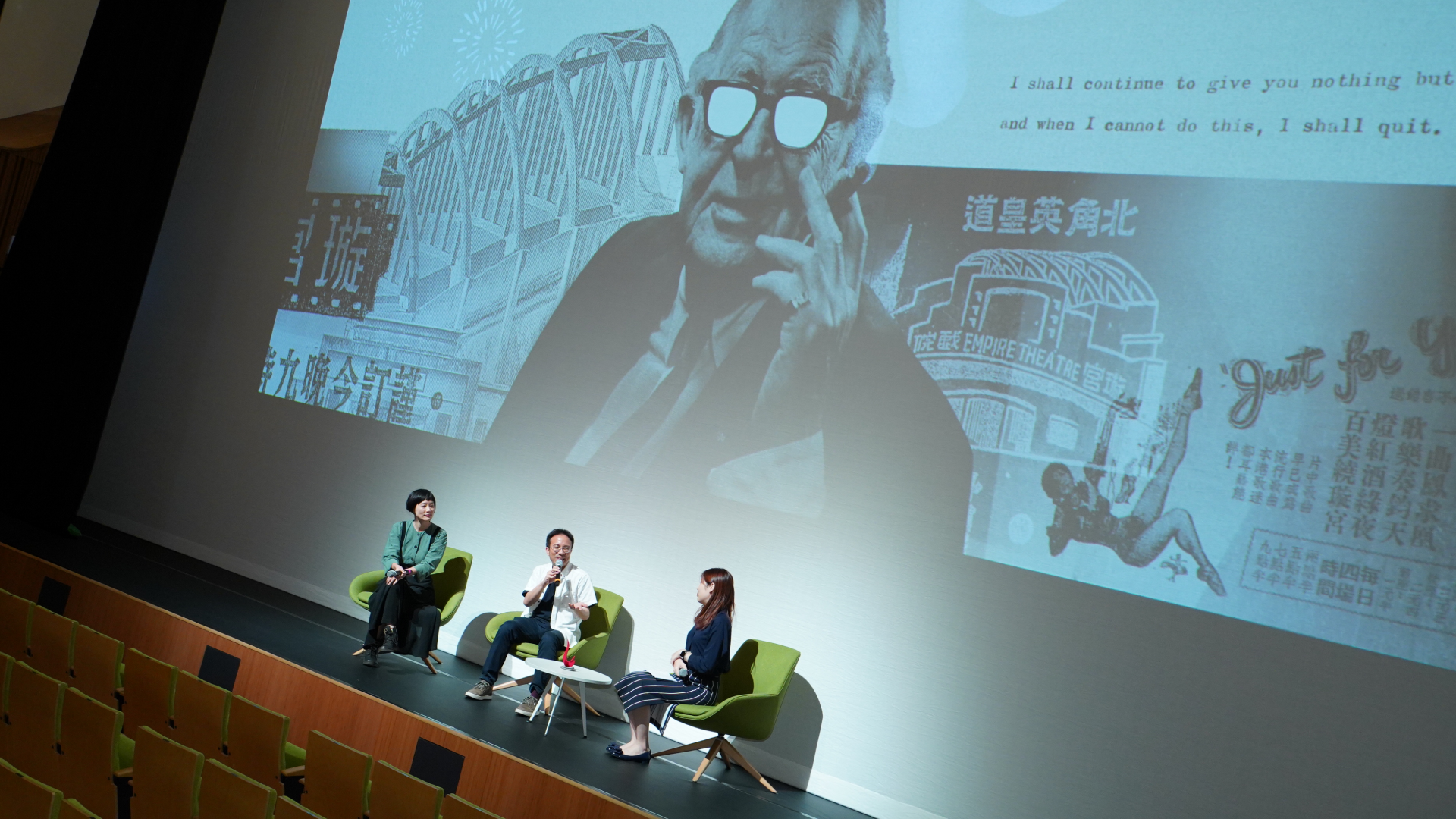
The unique, component-based structure of Chinese characters is the key to both their historical survival and their effective mastery in the modern digital age, according to both speakers at a recent public seminar hosted by the School of Humanities and Social Science (SHSS) on September 3.
During the event, titled “The Way of Calligraphy and Science: Historical Legacy and Contemporary Research Frontiers in Chinese Writing and Calligraphy,” the speakers argued that learners should focus on understanding the connection between character forms and their underlying meanings (the "Six Principles") rather than treating characters as arbitrary symbols to be memorized or typed on digital devices.
Combining this structural understanding with foundational handwriting is the most effective way to learn the language and preserve its cultural legacy for future generations, they said. For students, pairing visual learning with extensive handwriting exercises can strengthen both reading and writing skills, which, the speakers suggested, is even more important in an era dominated by digital input on electronic devices.
Character Building Challenge
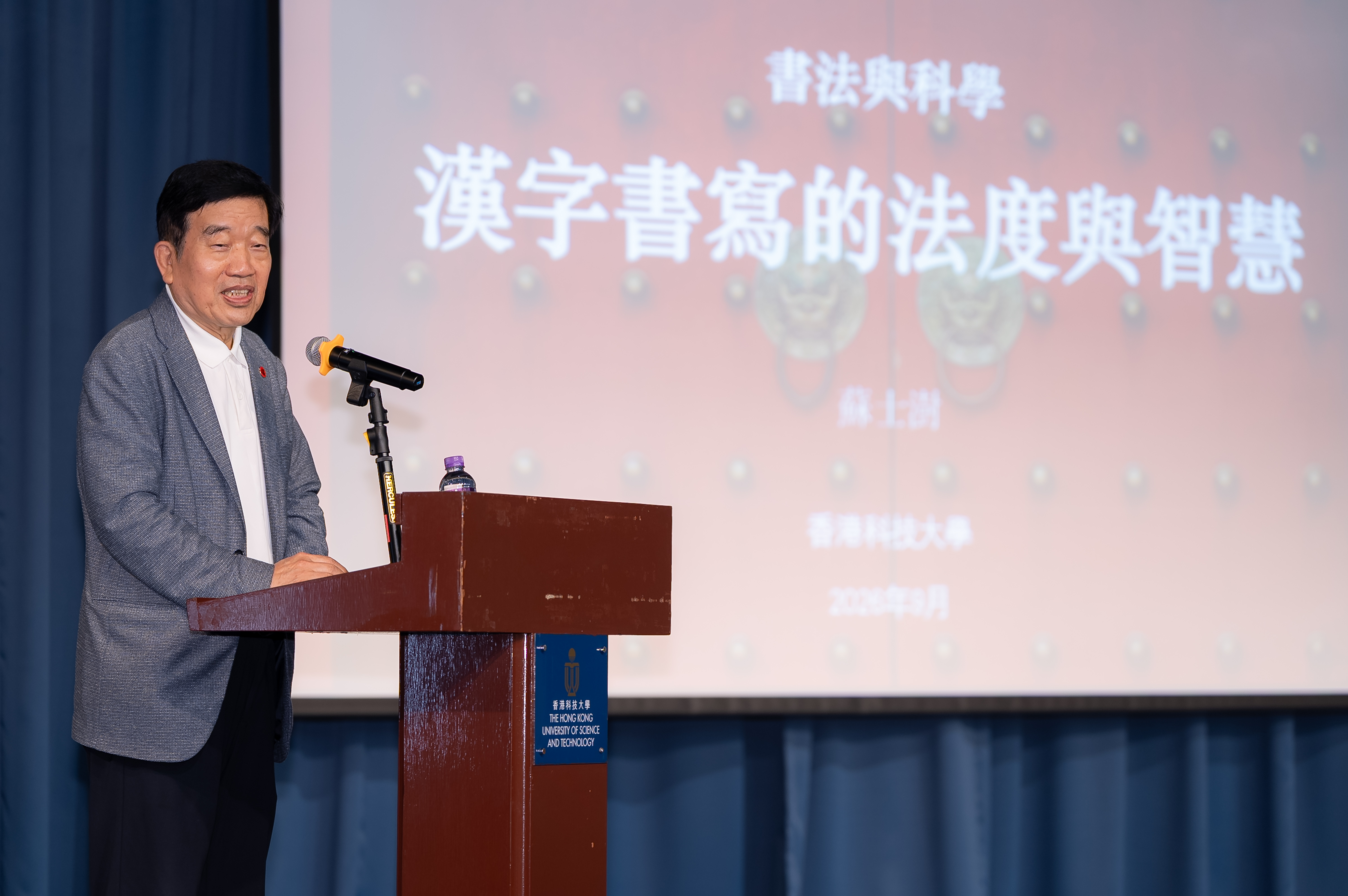
While learning Chinese characters is generally acknowledged to be a formidable challenge, strategically deployed learning techniques are highly useful, according to Prof. SU Shishu, Adjunct Professor at SHSS and an esteemed artist and calligrapher.
“Learning Chinese characters doesn’t mean you have to memorize every obscure character at the outset,” he said. “The best strategy is to start with high-use character sets, then gradually build up your knowledge by exploring their components and meanings, learning key phrases and reading.”
In fact, according to Prof. Su, 2,000 characters can satisfy 98% of daily usage. So, while the Kangxi Dictionary, an authoritative volume on the Chinese language, includes 47,035 characters, the List of Commonly Used Characters in Modern Chinese, issued by the China State Language Commission, lists 2,500 characters used in day-to-day contexts. a number considered sufficient for modern society,
Visual Memory for Writing
Adding a scientific dimension to this discussion, Prof. SIOK Wai Ting, Professor and Head of the Department of Language Science and Technology at The Hong Kong Polytechnic University (PolyU), offered her perspective on Chinese learning from a cognitive angle.
Handwriting and digital input are not necessarily mutually exclusive in today’s technology-driven age, she noted. By learning to recognize characters visually and understand their structure, one can see that Chinese remains very much alive.
“Ideally, Chinese learning should draw on different tools at different stages of learning,” Prof. Siok said. “Beginners should have ample opportunities to recognize and copy characters by hand, building lasting connections between visual memory and the movements involved in writing. Once learners have a firm grasp of character forms, phonetic input methods and digital tools can be introduced in moderation to help them use Chinese more efficiently in everyday contexts.”
Prof. Siok also stressed that copying out characters for learning is more than mere mechanical repetition. Teachers can guide students to explore the roles of the components that make up a character, compare similar-looking characters, examine the elements that convey meaning and sound, and describe a character's stroke order. These exercises help students connect a character’s written form with its pronunciation, meaning and usage.
Preserving Heritage in the Digital Age
From the rich history of calligraphy to scientific research into how characters are learned, Chinese writing emerges as both a bearer of cultural heritage and a bridge between tradition and contemporary life.
Preserving that heritage in the digital age doesn’t necessarily imply choosing between brush and ink or modern technology. Instead, the experience of writing by hand, the ability to recognize character forms, and the use of digital tools can support and complement each other.
Related link:
HKUST Presents "Ode to Chinese Characters" Calligraphy Exhibition by Su Shishu