


News & Stories
2026
News
HKUST Researchers Reveal a Tiered Adaptation Strategy in Deep-Sea Chemosynthetic Symbiosis
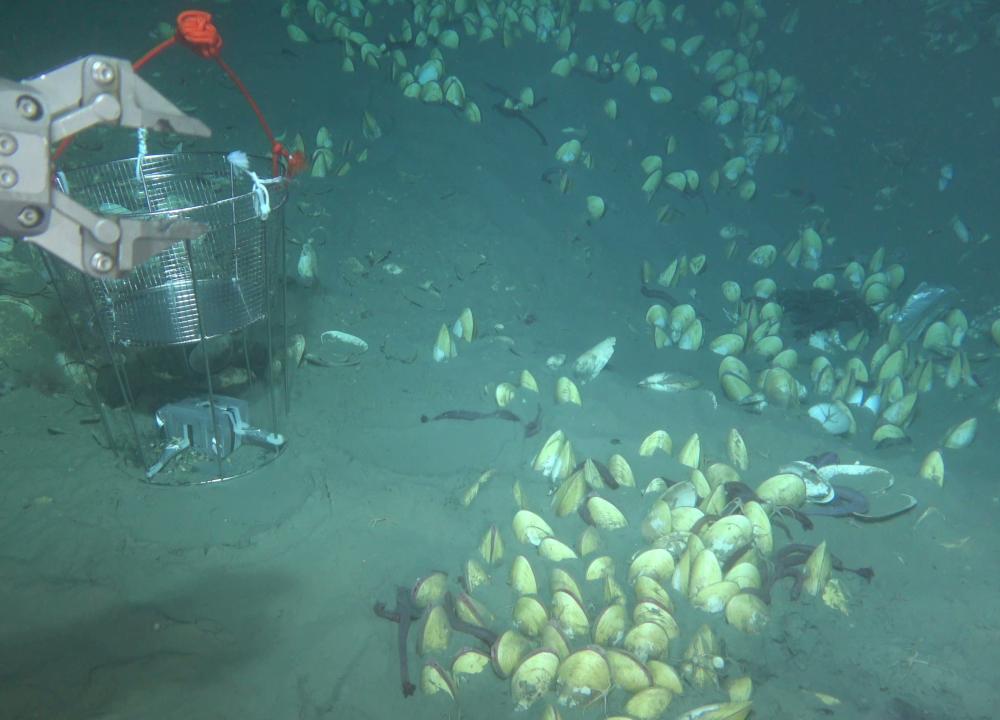
A research team led by Prof. QIAN Peiyuan, Chair Professor of the Department of Ocean Science at The Hong Kong University of Science and Technology (HKUST), in collaboration with international partners, has made significant progress in uncovering how deep-sea chemosynthetic symbioses cope with environmental change. The findings reveal that metabolic flexibility in the symbionts, coupled with the host’s finely regulated population of bacterial symbionts, mutually sustains the host’s energy stability. This provides important in situ evidence of how chemosynthetic holobionts at deep-sea cold seeps remain resilient when energy supplies fluctuate and highlights the key role of a tiered adaptation strategy in sustaining the stability of cold seep ecosystems.

News
HKUST Launches Next-Generation Interactive WavyOcean 3.0 Platform
The Hong Kong University of Science and Technology (HKUST) has launched the new WavyOcean Digital Twin Earth System Version 3.0, making its online platform available to the public for the first time. Built around the concept of "Taohai" – a Chinese term meaning "searching or discovering from the sea", the platform transforms ocean data from research-focused resources into shared knowledge accessible to all.By enhancing the visibility and interpretability of marine ecosystems, the platform promotes deeper public understanding of the ocean and encourages informed actions to support marine conservation and safeguard valuable marine ecosystems.

News
HKUST Researchers Reveal Carbon Storage Potential and Biological Mediations on Carbon Cycling in South China Sea Coral Reef Ecosystems
A collaborative research team led by The Hong Kong University of Science and Technology (HKUST), the Institute of Zoology at the Chinese Academy of Sciences (IOZ-CAS) and the Southern Marine Science and Engineering Guangdong Laboratory (Guangzhou) (GML) has revealed the long-overlooked carbon storage potential of coral reef ecosystems and how reef-dwelling fish, corals, and surface sediments jointly shape reef carbon reservoirs.

News
HKUST Secures Dual UNESCO Endorsements for Two International Deep-Sea Research Programs
Two international deep-sea research initiatives, led by the Southern Marine Science and Engineering Guangdong Laboratory (Guangzhou) (GML) with significant contributions from The Hong Kong University of Science and Technology (HKUST), have received official endorsement from the United Nations Educational, Scientific and Cultural Organization (UNESCO). Both initiatives are designed to address critical gaps in climate science by investigating seabed methane seeps' role in global warming and exploring biodiversity in extreme deep-sea ecosystems. The two programs are poised to strengthen global collaboration and deliver scientific insights essential for tackling future climate challenges.
News
HKUST Study Reveals Why Tropical Cyclones Rainfall Surges Before Landfall
A research team at The Hong Kong University of Science and Technology (HKUST) has analyzed 40 years of data covering around 1,500 tropical cyclones and discovered that average rain rates surge by more than 20% in the 60 hours before landfall. The study is also the first to clearly identify the physical mechanisms behind this increase, showing that rising humidity over coastal areas and enhanced land-sea frictional contrasts strengthen convection, intensifying rainfall ahead of landfall. The results provide valuable insights for improving coastal disaster preparedness and early‑warning systems.
2025
News
HKUST Researchers Develop Novel Model to Unveil Deep-Sea Black Coral Symbiotic System
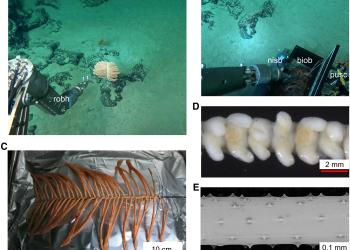
A research team led by Prof. QIAN Peiyuan, Chair Professor of the Department of Ocean Science at The Hong Kong University of Science and Technology (HKUST), in collaboration with the Southern Marine Science and Engineering Guangdong Laboratory (Guangzhou), and the Yellow Sea Fisheries Research Institute of the Chinese Academy of Fishery Sciences (CAFS), has achieved a significant breakthrough in understanding the adaptive strategies of the deep-sea black coral Bathypathes pseudoalternata (B. pseudoalternata) and its symbiotic microbiome. The study has been published in the top international journal Cell Host & Microbe.
News
HKUST Launches World's First Deep-Sea Multi-Omics Resource Platform Empowering Global Research into Biological Adaptation in Extreme Environments
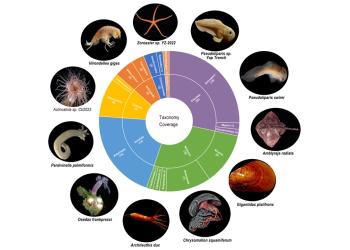
The Hong Kong University of Science and Technology (HKUST), in collaboration with the Southern Marine Science and Engineering Guangdong Laboratory (Guangzhou), has launched the world's first Deep Ocean Omics (DOO) database (https://DeepOceanOmics.org/). As the largest platform of its kind, DOO integrates and analyzes multi-omics data from organisms thriving in the ocean's most extreme environments, alongside customized analytical tools to support cross-species comparative and evolutionary studies. By facilitating the utilization of deep-sea biological resources, the platform aims to advance scientific understanding of deep-sea biodiversity and ecosystems, and to foster global research and applications related to biological adaptation in extreme environments.
News
HKUST Unites International Experts in CliMetS Initiative to Tackle Climate Threat of Seabed Methane Seeps
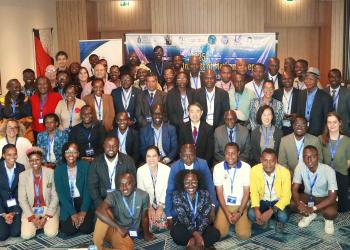
The Hong Kong University of Science and Technology (HKUST) has successfully launched the Global Climate Impact of Methane Seeps (CliMetS) Initiative through a pivotal collaboration with the Southern Marine Science and Engineering Guangdong Laboratory (Guangzhou) (GML) and over 200 experts worldwide. Endorsed as a UN Ocean Decade Action, CliMetS is dedicated to mapping seabed methane seeps across the world’s oceans and quantifying their impact on global climate systems. Recently, HKUST co-led two milestone workshops in South America and Africa, galvanizing global efforts to address methane seep research gaps and fostering cross-continental partnerships.