


HKUST Researchers Reveal a Tiered Adaptation Strategy in Deep-Sea Chemosynthetic Symbiosis
A research team led by Prof. QIAN Peiyuan, Chair Professor of the Department of Ocean Science at The Hong Kong University of Science and Technology (HKUST), in collaboration with international partners, has made significant progress in uncovering how deep-sea chemosynthetic symbioses cope with environmental change. The findings reveal that metabolic flexibility in the symbionts, coupled with the host’s finely regulated population of bacterial symbionts, mutually sustains the host’s energy stability. This provides important in situ evidence of how chemosynthetic holobionts at deep-sea cold seeps remain resilient when energy supplies fluctuate and highlights the key role of a tiered adaptation strategy in sustaining the stability of cold seep ecosystems.
Apart from HKUST, the research was conducted in collaboration with the Southern Marine Science and Engineering Guangdong Laboratory (Guangzhou) (Guangzhou Marine Laboratory), Ocean University of China (OUC), the Institute of Oceanology, Chinese Academy of Sciences (IOCAS), and the University of Calgary in Canada. It represents an important outcome within the framework of two UN Decade Programmes namely “CliMetS” and “MOCSI”. The research was recently published in the leading international journal Science Advances, titled “In situ evidence of tiered adaptations buffering a chemosynthetic clam holobiont against environmental sulfide fluctuations”.
In chemosynthetic ecosystems, such as deep-sea hydrothermal vents and methane seeps, hydrogen sulfide is a crucial chemical energy source for supporting biological communities. However, its concentration can fluctuate substantially due to tectonic activity, seepage intensity, and processes such as the anaerobic oxidation of methane in sediments. Direct evidence has long been lacking on how deep-sea symbiotic organisms adapt to such dynamic environments and how hosts and symbionts work together to maintain system stability.
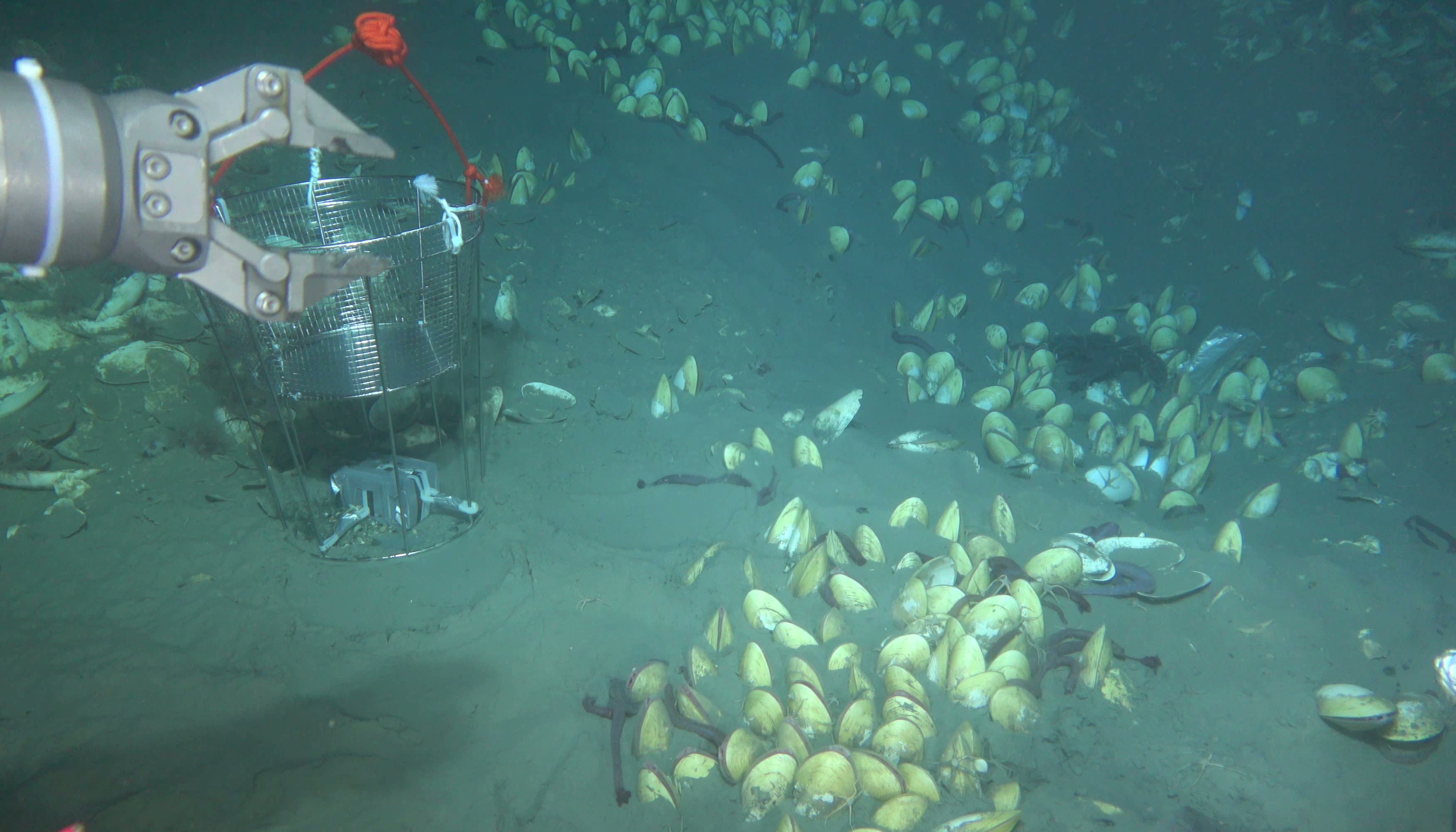
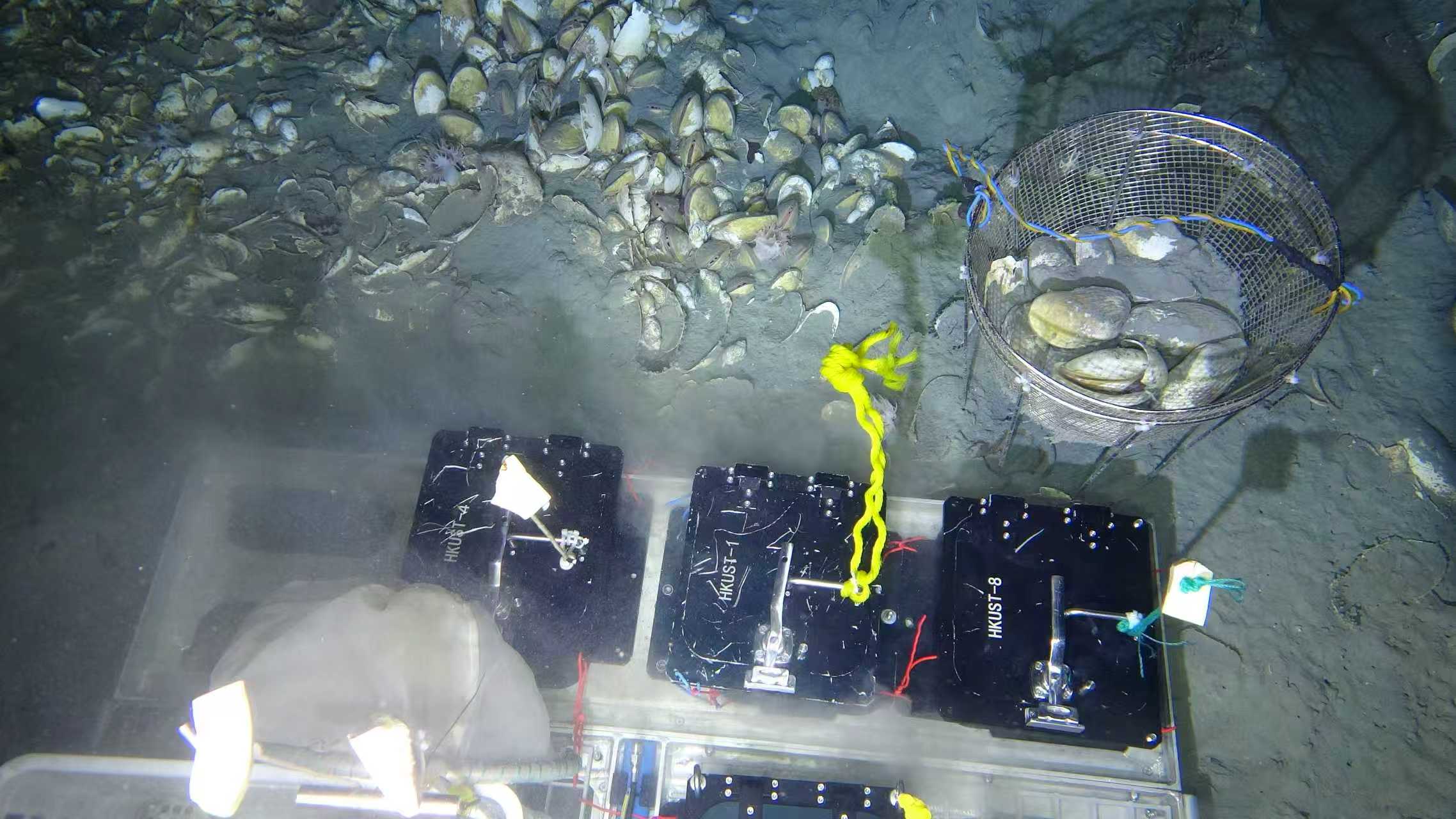
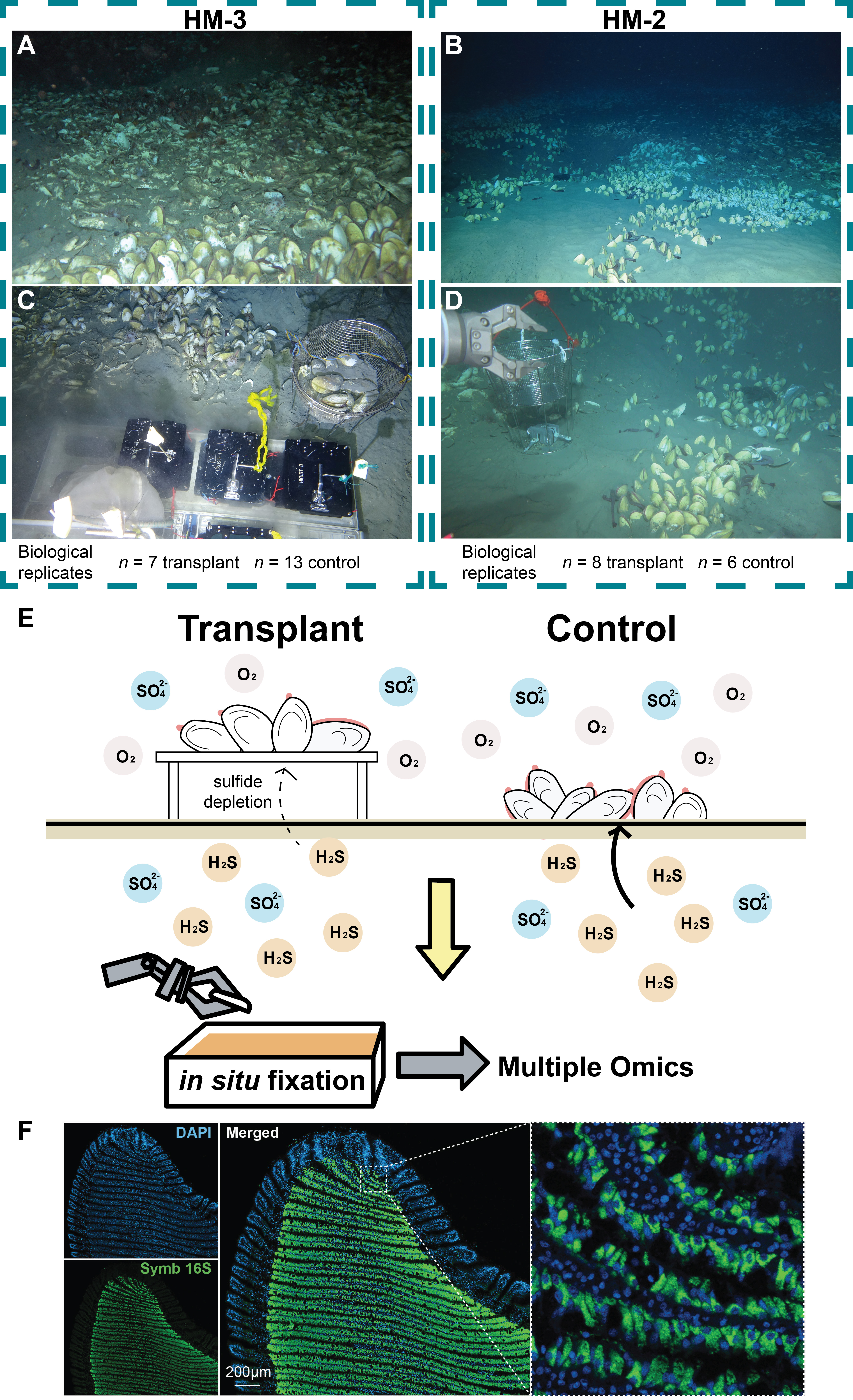
The Haima cold seep comprises seep sites at different developmental stages, providing a “natural laboratory” for studying biological responses to environmental change. The research team focused on a dominant species of deep-sea clam (Archivesica marissinica) at the Haima cold seep and its sulfur-oxidizing bacterial symbionts. By combining deep-sea in situ transplant experiments with in situ sample fixation, the research team conducted deep-sea in situ transplantation studies at two sites HM-3 and HM-2 respectively. The clams were moved from their native sediments into transplantation cages positioned approximately 0.5 m above the seafloor, preventing them from accessing hydrogen sulfide-rich sediment. This setup simulates decreased hydrogen sulfide availability, leading to reduced energy and nutrient acquisition: HM-2 represents severe hydrogen sulfide limitation, whereas HM-3 represents relatively moderate limitation.
By integrating metagenomics, transcriptomics, proteomics, quantitative PCR, in situ hybridization, transmission electron microscopy, and protein structure prediction, the research team elucidated a tiered adaptation strategy in holobiont, encompassing symbiont metabolism, host regulation of symbiosis, and resource transportation.
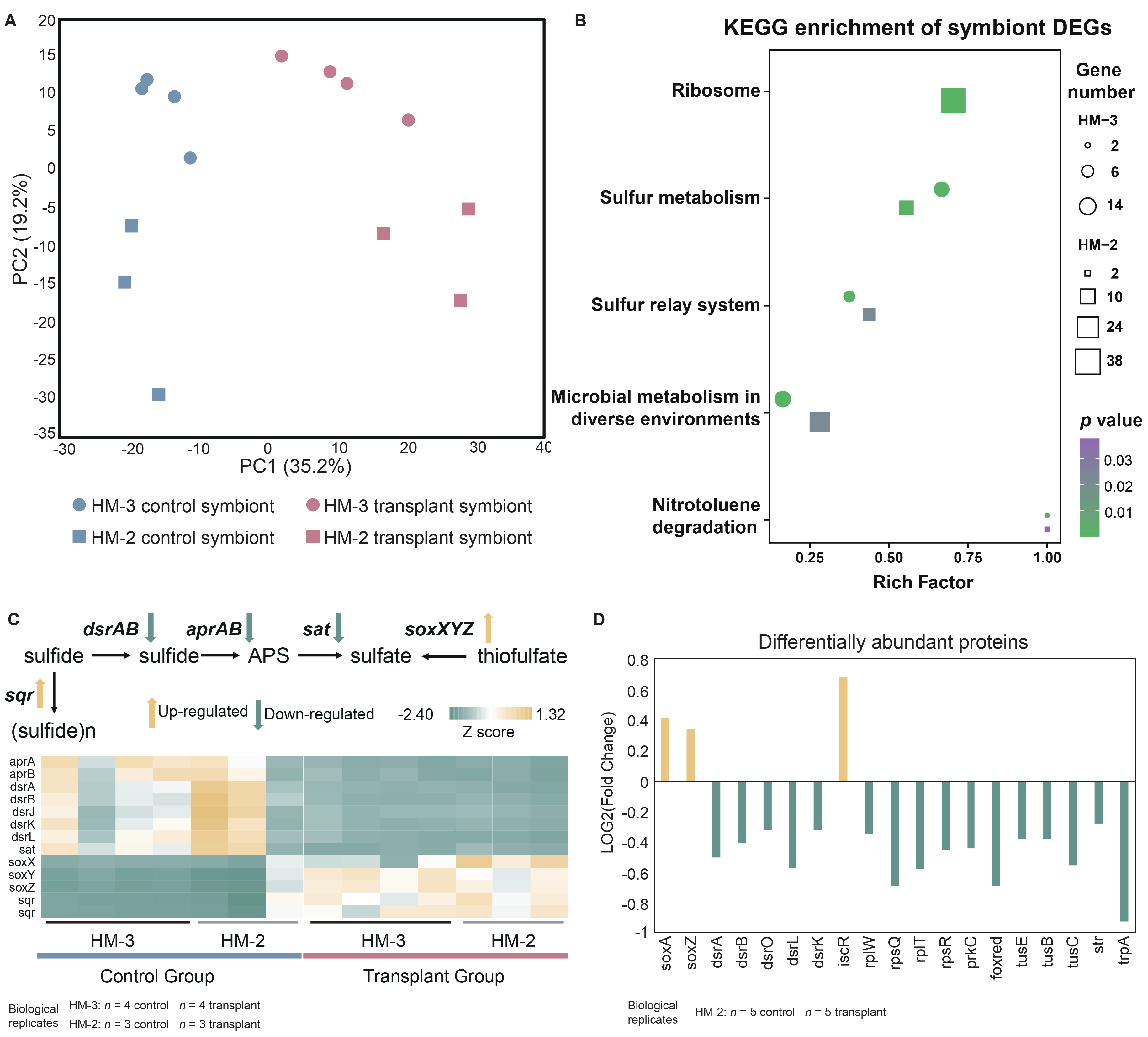
The study revealed that reduced hydrogen sulfide availability first triggered pronounced metabolic reprogramming in the bacterial symbionts. Transcriptomic and proteomic analyses showed that pathways involved in sulfide oxidation, including dsrAB, aprAB, and sat, were suppressed, whereas the soxXYZ gene cluster associated with thiosulfate oxidation was upregulated. These results indicate that when hydrogen sulfide becomes limiting, the bacterial symbionts can adjust their sulfur-oxidation strategies and potentially enhance their capacity to utilize thiosulfate, thereby maintaining energy metabolism and carbon fixation. This metabolic plasticity may represent the first line of defense for holobiont in coping with short-term hydrogen sulfide limitation.
The study further demonstrated that host regulation of symbionts changes with the severity of hydrogen sulfide limitation. Under the relatively moderate hydrogen sulfide limitation at HM-3, the abundance of bacterial symbionts remained stable. Meanwhile, pathways associated with endosomal maturation and endosome–lysosome fusion in the hosts were suppressed, suggesting that the host may reduce intracellular degradation and turnover of bacterial symbionts to help maintain the symbiont population. This reflects that the host preferentially maintains symbiosis under relatively moderate hydrogen sulfide restriction. Under the severe hydrogen sulfide limitation at HM-2, however, symbiont abundance decreased significantly, and transmission electron microscopy revealed the digestion of symbionts by lysosomes. This indicates that hosts facing severe resource constraints might enhance their survival by increasing symbiont turnover to access limited nutrients.
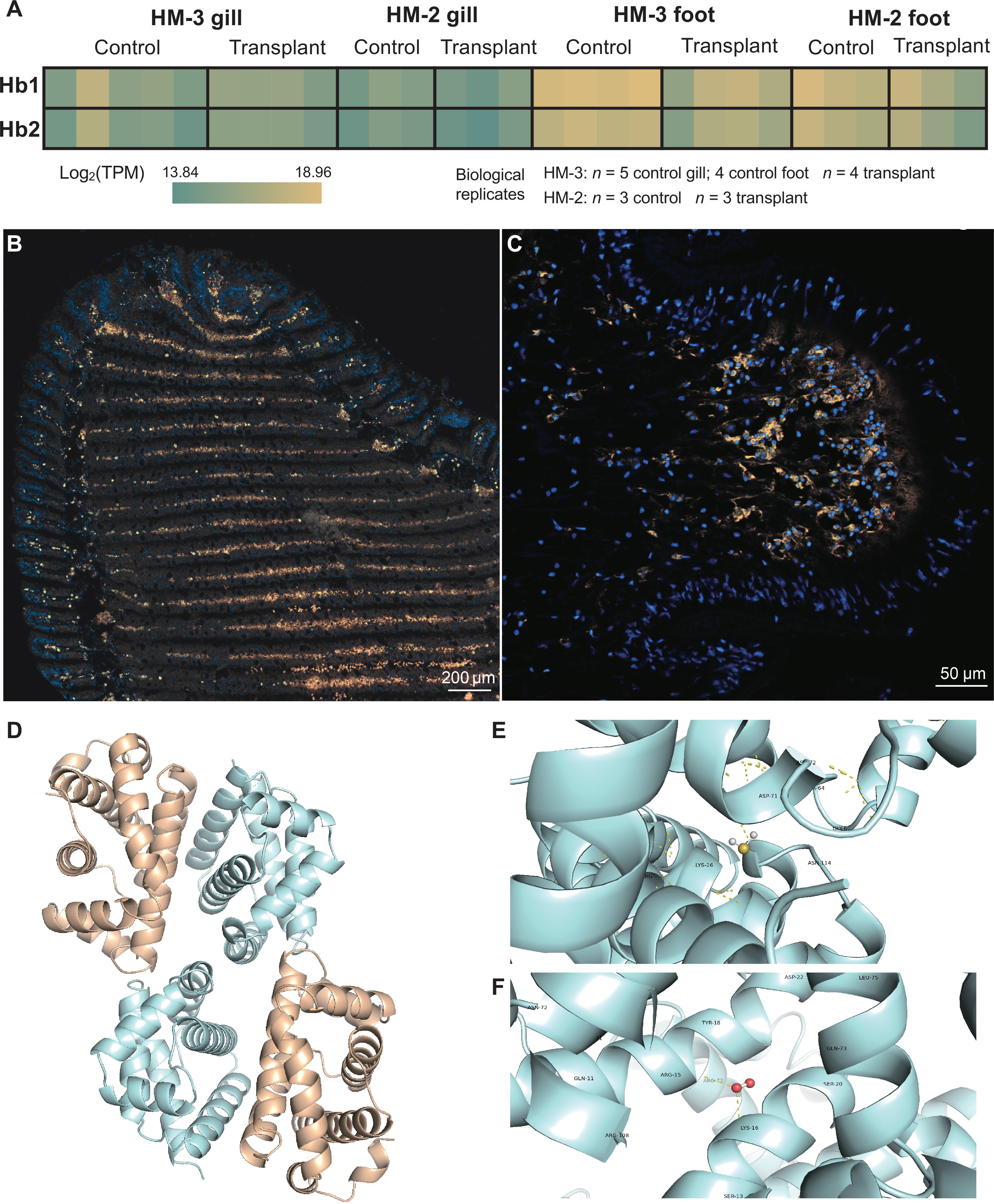
The gill tissue of Archivesica marissinica also possesses a strong sulfur-metabolic capacity and highly expresses key enzymes such as thiosulfate sulfurtransferase (TST). TST participates in the conversion of toxic hydrogen sulfide into thiosulfate, which is then utilized by bacterial symbionts for sulfur oxidation. Coupled with the observed upregulation in the symbiotic soxXYZ gene cluster, these findings suggest that thiosulfate generated during host hydrogen sulfide detoxification may serve as an alternative energy substrate for the symbionts. This establishes a potential metabolic synergy between host detoxification and symbiont utilization, offering new insights into how hosts and symbionts achieve metabolic complementarity under resource-limited conditions.
Additionally, the research team investigated the potential role of Archivesica marissinica hemoglobins in gas transport. The two hemoglobin subunits, Hb1 and Hb2, are primarily localized in blood cells and highly expressed in the foot and gill tissues. Both protein structural prediction and molecular docking results revealed that the hemoglobin complex exhibits a slightly higher binding affinity for hydrosulfide than for oxygen. These findings suggest that the hemoglobin complex may mediate the binding and transport of hydrogen sulfide and oxygen, providing new molecular insights into the mechanisms underlying gas transport in vesicomyid clams.
Prof. QIAN Peiyuan, co-corresponding author of this study, said: “Taken together, we believe that Archivesica marissinica and its symbionts form a multi-layered, tiered adaptation strategy. This enables the deep-sea chemosynthetic holobiont to maintain normal functions and survive while adjusting resource allocation according to the severity of environmental stress. The in situ experimental framework established by this research provides a new approach for investigating the authentic molecular responses of organisms inhabiting extreme deep-sea environments to natural environmental changes. It also offers new scientific evidence for understanding how global deep-sea cold seep ecosystems respond to environmental change and maintain ecological functions and biodiversity.”
The co-corresponding authors of this paper include Prof. QIAN Peiyuan (HKUST, Guangzhou Marine Laboratory), Prof. SUN Jin (OUC), and Prof. Casey HUBERT (University of Calgary in Canada). The co-first authors include Dr. LAN Yi (HKUST, Guangzhou Marine Laboratory, University of Calgary in Canada), Dr. YAN Guoyong (HKUST, Guangzhou Marine Laboratory) and Dr. WANG Hao (Guangzhou Marine Laboratory, IOCAS).
Sign Up for Our Latest News
Latest News
As climate change continues to intensify the frequency and severity of extreme weather events worldwide, a recent United Nations Environment Programme report warns that global temperatures are likely to exceed the 1.5°C threshold within the coming years, posing increasing risks to cities and communities around the world.
A research team from The Hong Kong University of Science and Technology (HKUST), in collaboration with Arizona State University (ASU) and The Hong Kong Polytechnic University (PolyU), has developed a sustainable integrated seawater-to-hydrogen system that can produce hydrogen directly from seawater while converting waste heat from electrolysis into a resource for producing the purified water required for hydrogen production. By integrating hydrogen pr

The Center for Technology and Business Ecosystem (CTBE) of the School of Business and Management at The Hong Kong University of Science and Technology (HKUST Business School), HKUST Shanghai Alumni Chapter, and Tencent Research Institute have successfully concluded the “NOVA: National AI Creativity Competition”.