




HKUST Develops World's First AI Slide-Free Pathology Imaging System
Generates Histological Images in Just Three Minutes to Support Rapid Intraoperative Diagnosis

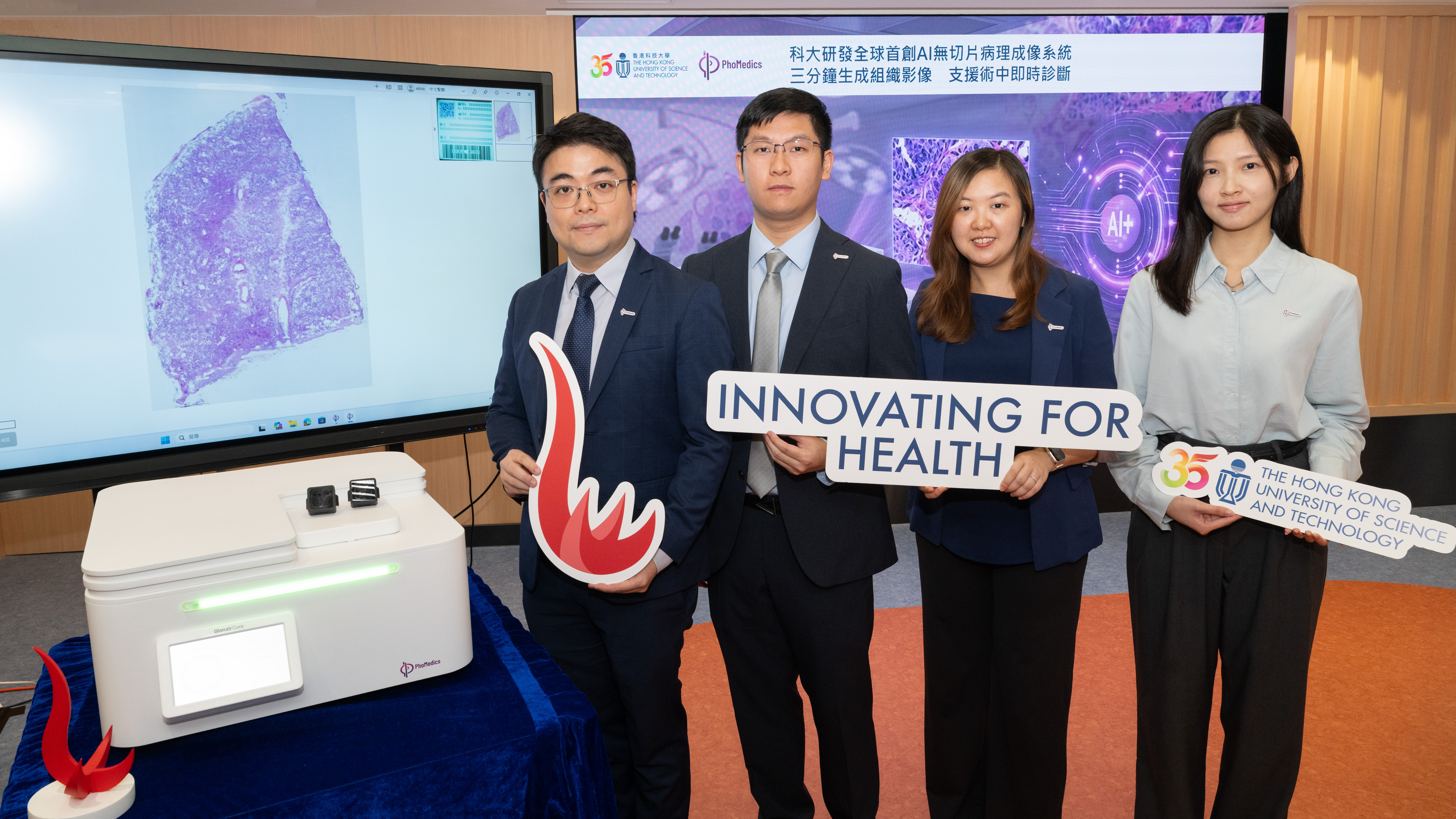
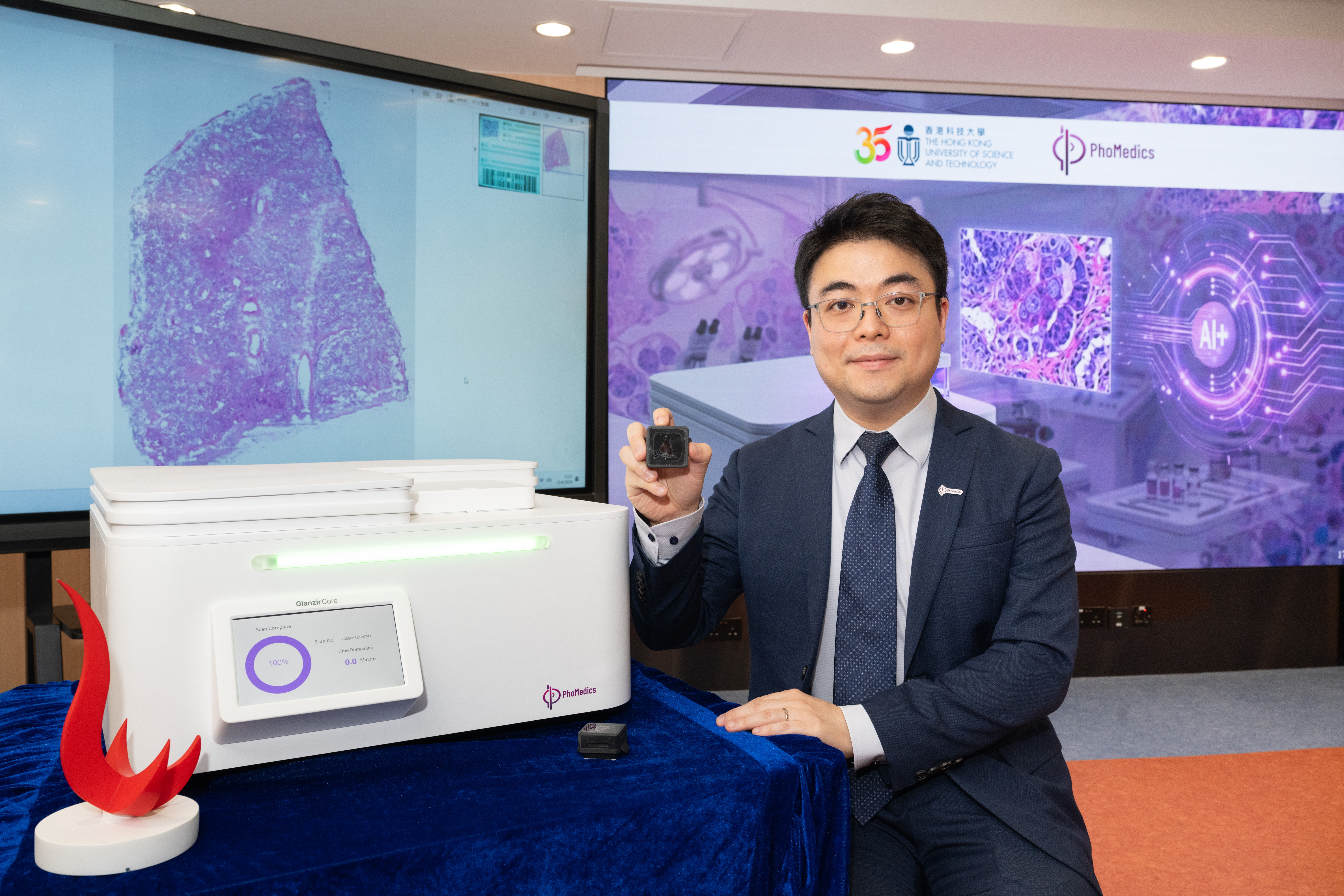
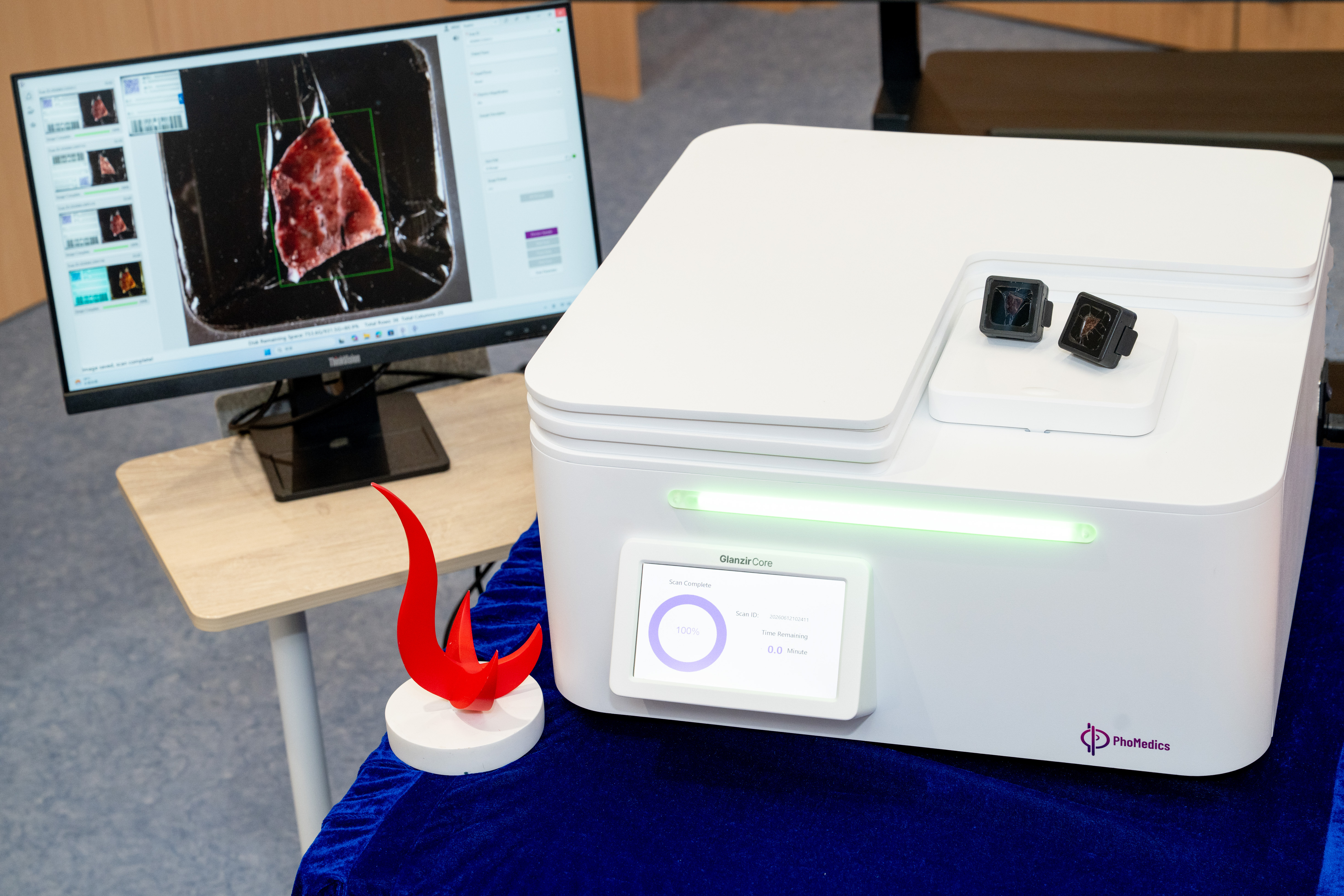
A research team from The Hong Kong University of Science and Technology (HKUST), together with an HKUST-incubated medtech startup, PhoMedics Limited, has developed Glanzir®, the world's first artificial intelligence (AI)-enabled, slide-free pathology imaging system. The system enables direct imaging of fresh tissue without the need for conventional procedures such as freezing, sectioning, and staining, producing histological images in approximately three minutes in an operating room setting for intraoperative assessment.
Compared with using formalin-fixed and paraffin-embedded (FFPE) tissue, which is widely regarded as the gold standard in pathology, Glanzir® has demonstrated approximately 85% or higher diagnostic concordance. Upon completion of large-scale clinical trials, the team expects this concordance to improve further to around 95%. The technology has the potential to shorten intraoperative diagnostic time while preserving intact tissue for downstream analyses. The team plans to collaborate with public and private hospitals to advance clinical adoption, with the goal of improving overall diagnostic workflow efficiency.
With an aging population and rising cancer rates, demand for pathology services continues to grow. Histopathology remains fundamental to cancer diagnosis. In current clinical practice, two primary techniques are used for tissue assessment: FFPE and frozen section analysis. While FFPE is considered the gold standard due to its high accuracy, it typically requires several days to a week to complete. Frozen section analysis, by contrast, can provide preliminary results within 30 to 45 minutes during surgery, but its diagnostic accuracy is suboptimal compared to FFPE, occasionally necessitating repeat surgery for patients.
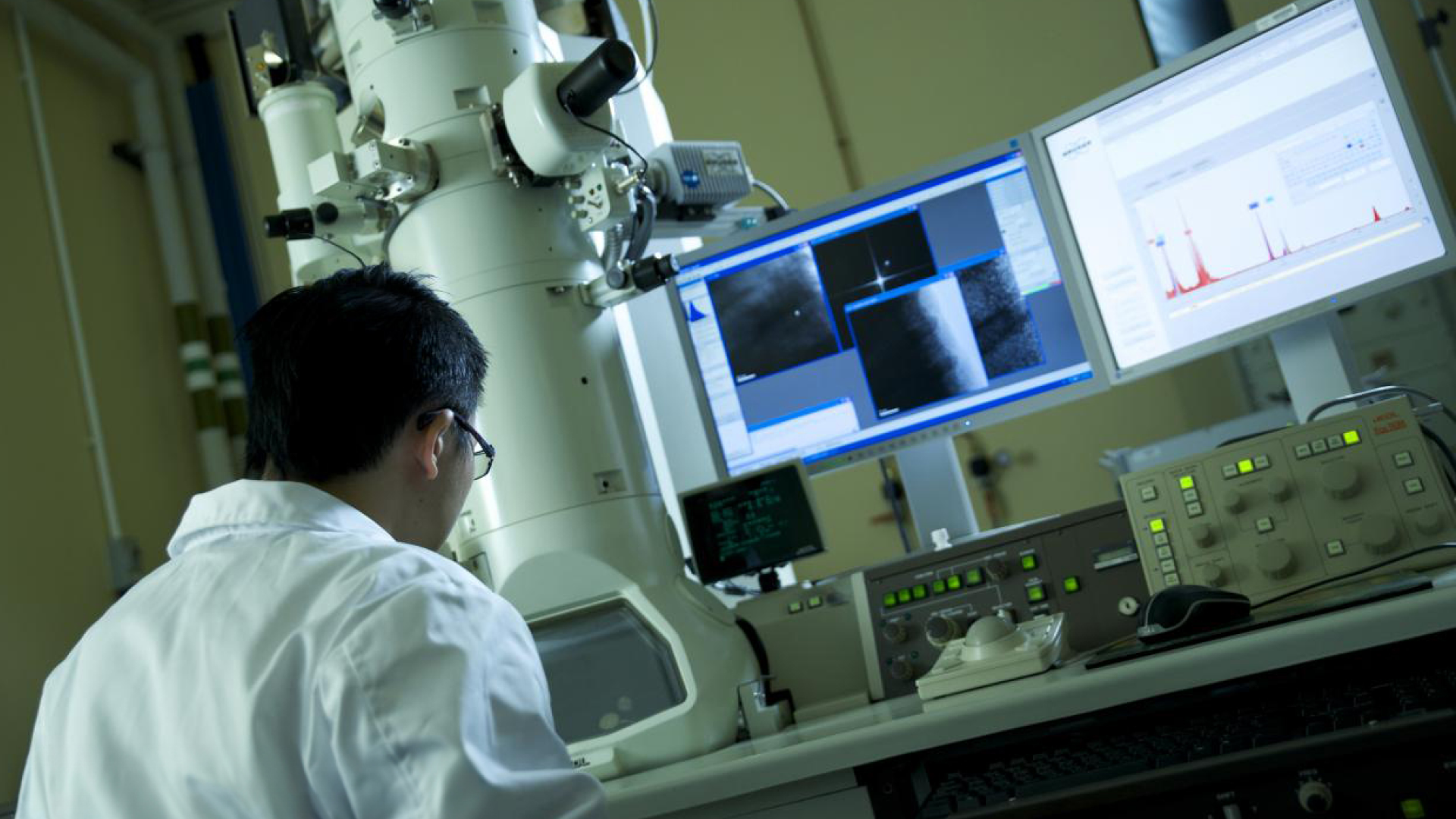
To address these constraints, a research team led by Prof. Terence WONG Tsz-Wai, Associate Head and Associate Professor in the Department of Chemical and Biological Engineering at HKUST, together with his medtech startup PhoMedics Limited, has developed Glanzir®. The system operates based on autofluorescence imaging (AFI) using specific wavelengths of light to excite naturally occurring fluorophores within the tissue. These signals are then processed through a deep learning-based virtual staining algorithm to generate images comparable to those produced by conventional hematoxylin and eosin (H&E) staining.
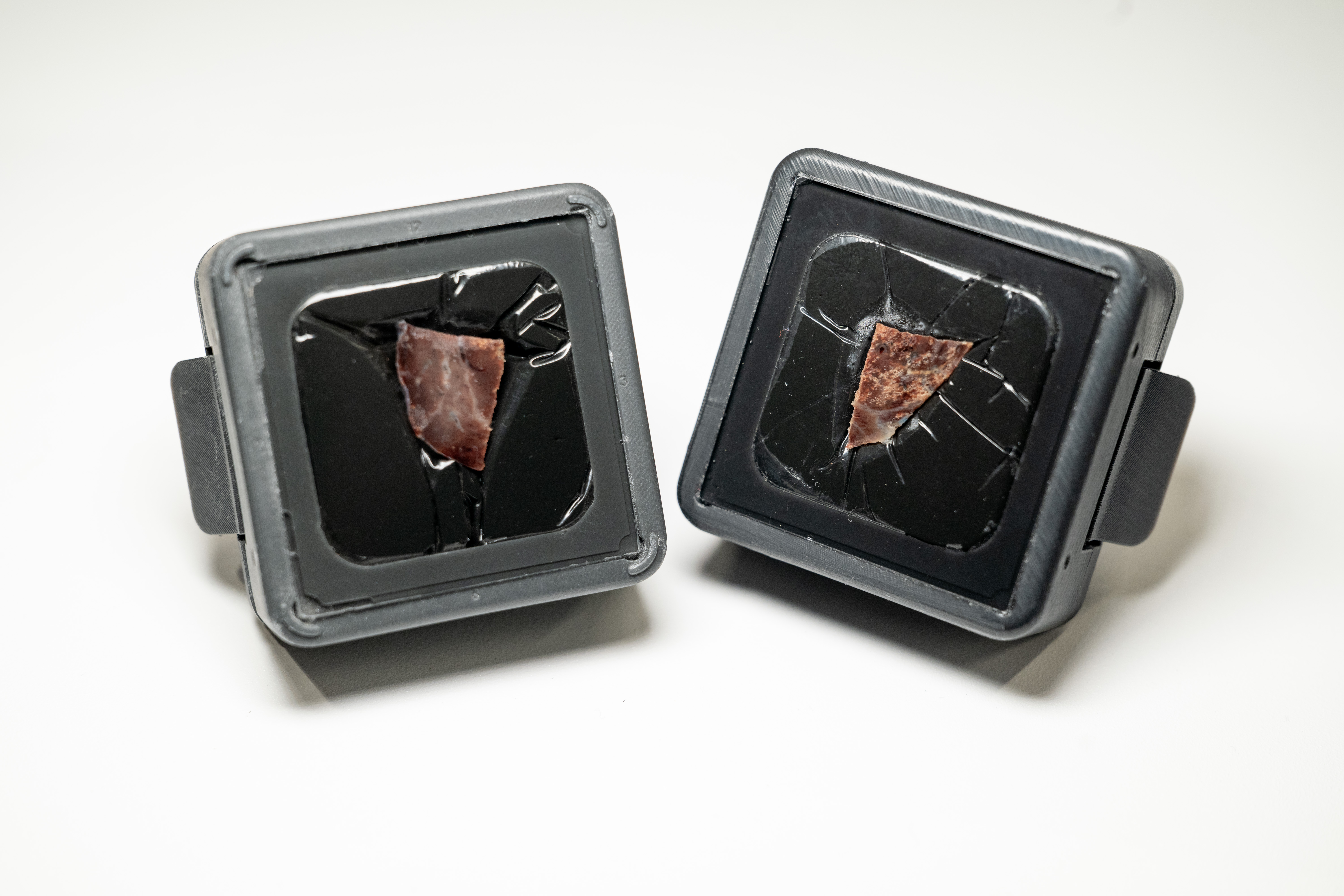
In practice, healthcare professionals only need to place fresh tissue samples into a dedicated holder and insert them into the system to initiate scanning. The device automatically performs region of interest (ROI) selection, point-by-point focusing and scanning, followed by real-time image processing and virtual staining. A built-in progress display allows clinicians to monitor scanning status and align the process with surgical workflows.
Key Advantages of Glanzir®
Compact for operating room use: Measuring only 56 cm (L) × 56 cm (W) × 30 cm (H), with a total weight of 30 kg.
Rapid, consistent imaging: Completes the imaging process in approximately three minutes, which is around ten times faster than frozen section, while achieving diagnostic concordance comparable to FFPE (~85%) which is expected to be improved to 95% after the large-scale clinical trials.
Streamlined operation: One-click scanning with automated image acquisition and processing, helping to shorten intraoperative turnaround time.
Non-destructive analysis with downstream compatibility: Eliminates the need for sectioning while preserving intact tissue structure, allowing samples to remain available for immunohistochemistry (IHC), fluorescence in situ hybridization (FISH), and other molecular analyses.
The technology was developed by Prof. Wong, an expert in histological imaging. His earlier work on the Computational High-throughput Autofluorescence Microscopy by Pattern Illumination (CHAMP) secured funding under the first batch of the Innovation and Technology Commission's Research, Academic and Industry Sectors One-plus (RAISe+) Scheme, laying the foundation for subsequent development.
Prof. Wong said, "In cancer surgery, incomplete tumour resection may lead to the need for repeat operations. Clinical data suggest that around 10‒20% of cases require a second operation. Our imaging technology is designed to provide timely reference during surgery. By generating histological images within about three minutes, it helps clinicians assess whether residual malignant cells remain. This may reduce the risk of repeat surgery, while also improving surgical workflow and supporting more effective use of healthcare resources."
The team has been collaborating with major public and private hospitals and healthcare institutions in Hong Kong and the Chinese Mainland, including Queen Mary Hospital, Prince of Wales Hospital, and Hong Kong Sanatorium & Hospital, as well as Tongji Hospital at Tongji Medical College of Huazhong University of Science and Technology and Sun Yat-sen Memorial Hospital of Sun Yat-sen University. To date, more than 2,000 lung and breast cancer patient samples have been collected for system training and validation. In the coming three months, the team will conduct large-scale clinical trials to further advance the system towards clinical deployment.
About The Hong Kong University of Science and Technology
The Hong Kong University of Science and Technology (HKUST) (https://hkust.edu.hk/) is a world-class university known for its innovative education, research excellence, and impactful knowledge transfer. With a holistic and interdisciplinary pedagogy approach, HKUST was ranked 6th in the QS Asia University Rankings 2026, 3rd in the Times Higher Education’s Young University Rankings 2024, and 19th globally and 1st in Hong Kong in the Times Higher Education’s Impact Rankings 2025. Eleven HKUST subjects were ranked among the world’s top 50 in the QS World University Rankings by Subject 2026. In addition, in the Times Higher Education World University Rankings by Subject 2026, HKUST’s Computer Science discipline which encompasses areas such as artificial intelligence and machine learning, has been ranked No. 1 in Hong Kong for ten consecutive years. Our graduates are highly competitive, consistently ranking among the world’s top 30 most sought-after employees. In terms of research and entrepreneurship, over 80% of our work was rated “internationally excellent” or “world leading” in the Research Assessment Exercise 2020 of the Hong Kong’s University Grants Committee. As of May 2026, HKUST members have founded over 1,900 active start-ups, including 11 Unicorns and 22 exits (IPO or M&A).
For media enquiries, please contact:
PR and Media Team, Global Engagement and Communications Office
Email: media@ust.hk
Sign Up for Our Latest News
Latest News

The Hong Kong University of Science and Technology (HKUST) has successfully concluded the "Jobs and Development Conference 2026". As one of the signature events marking HKUST’s 35th anniversary, this year’s edition of the flagship international conference was held in Asia for the first time.
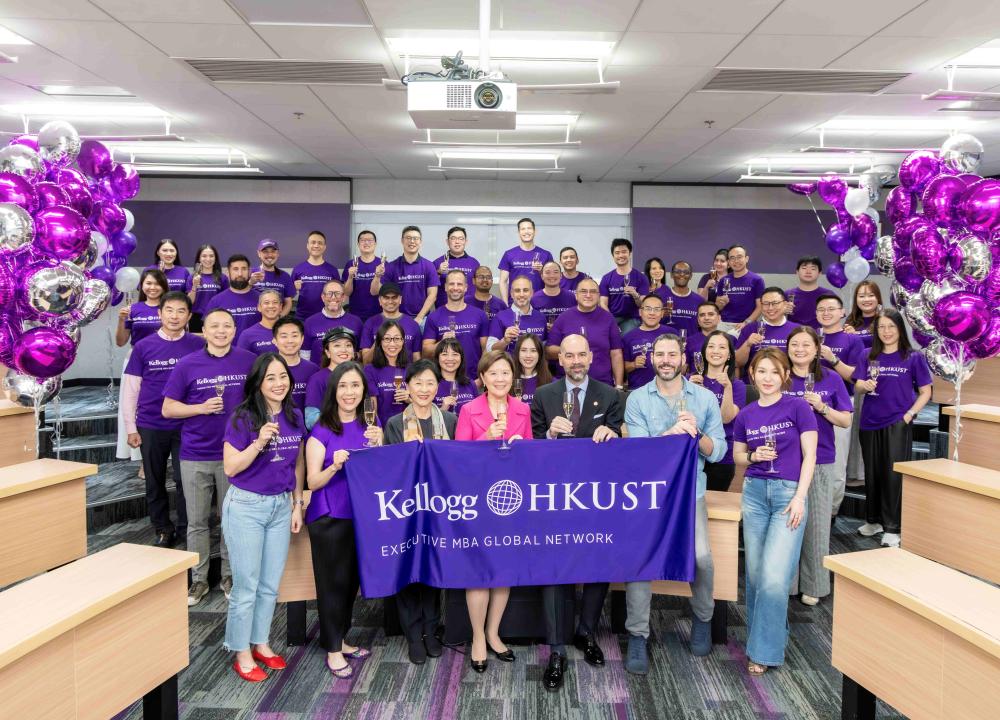
The Kellogg-HKUST Executive MBA (KH EMBA) Program has secured the No. 1 position globally in the Financial Times Executive MBA Ranking 2026, released today, marking an unprecedented 13th time the program has attained the top position.

The Hong Kong University of Science and Technology (HKUST) has once again demonstrated its global research excellence in Stanford University's latest World's Top 2% Scientists ranking. A total of 244 and 205 HKUST scholars were featured in the Single-Year Impact and Career-Long Impact lists, respectively, accounting for approximately 40% of the University's tenure-track faculty.