


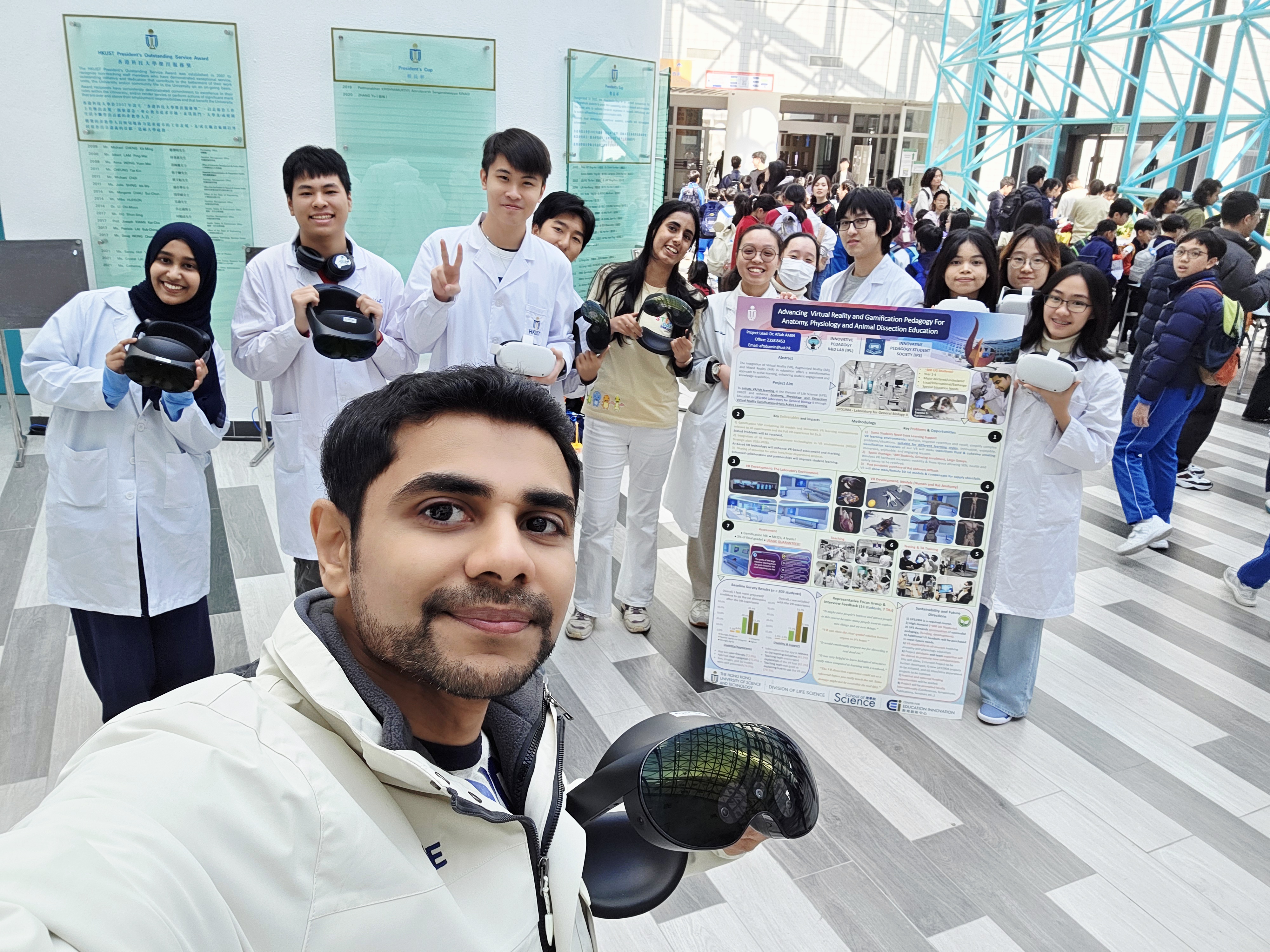
Dissecting a rat is perhaps not everyone’s most relished activity in biology class, especially if you are a bit squeamish. But innovative teaching tools developed in the Division of Life Science (LIFS) offer a complementary approach to essential dissection activities and much more through this interactive, multimodal learning environment.
It’s a new platform that is creating highly engaging classes for young scientists-in-training at HKUST.
“Our Gamification VR platform functions offer immersive simulations across genetics, forensics, dissections, and biochemistry to support active, inquiry-driven learning,” said the designer of this technology, Dr. Aftab AMIN from LIFS.
Transforming the science learning experience
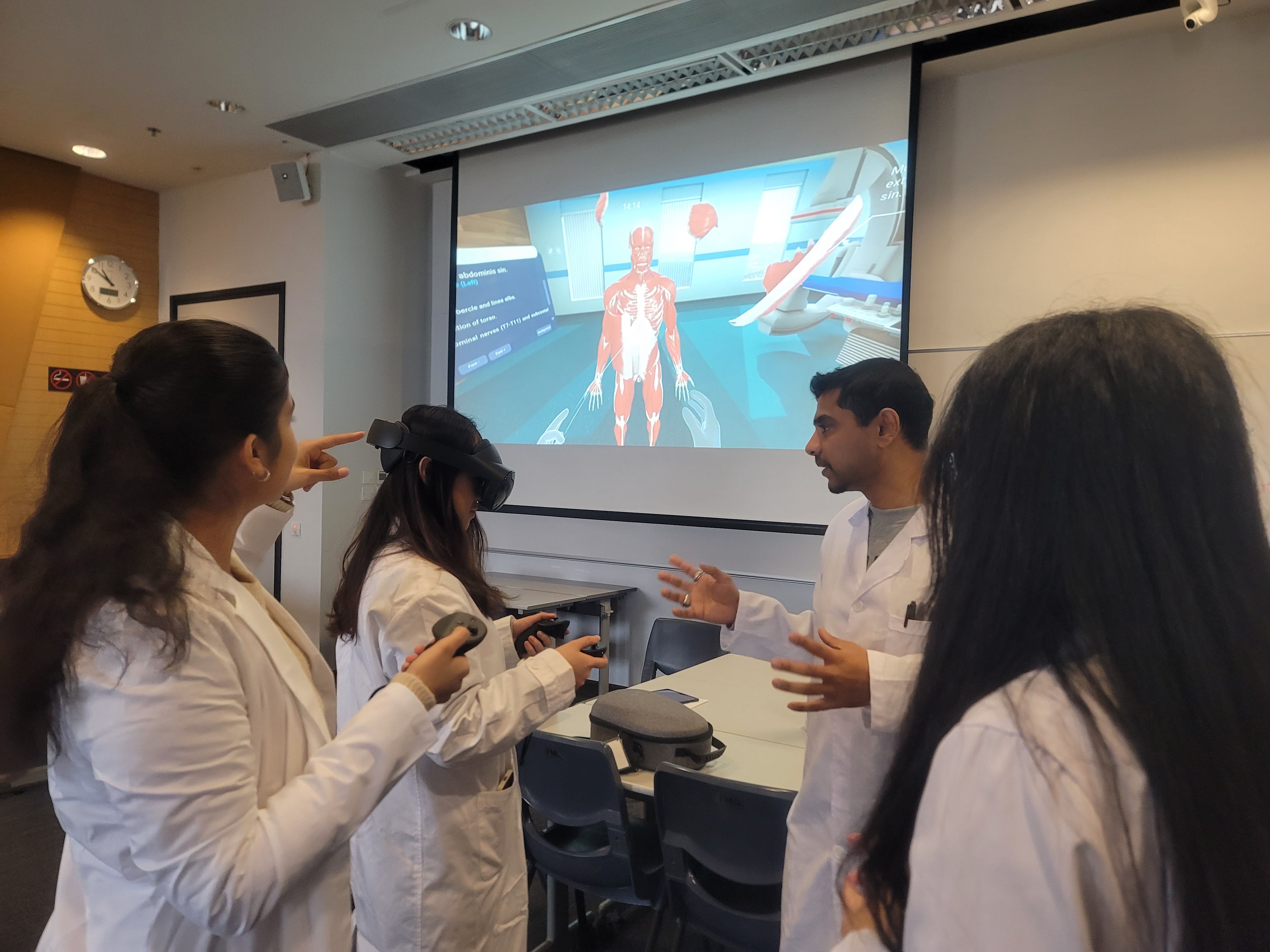
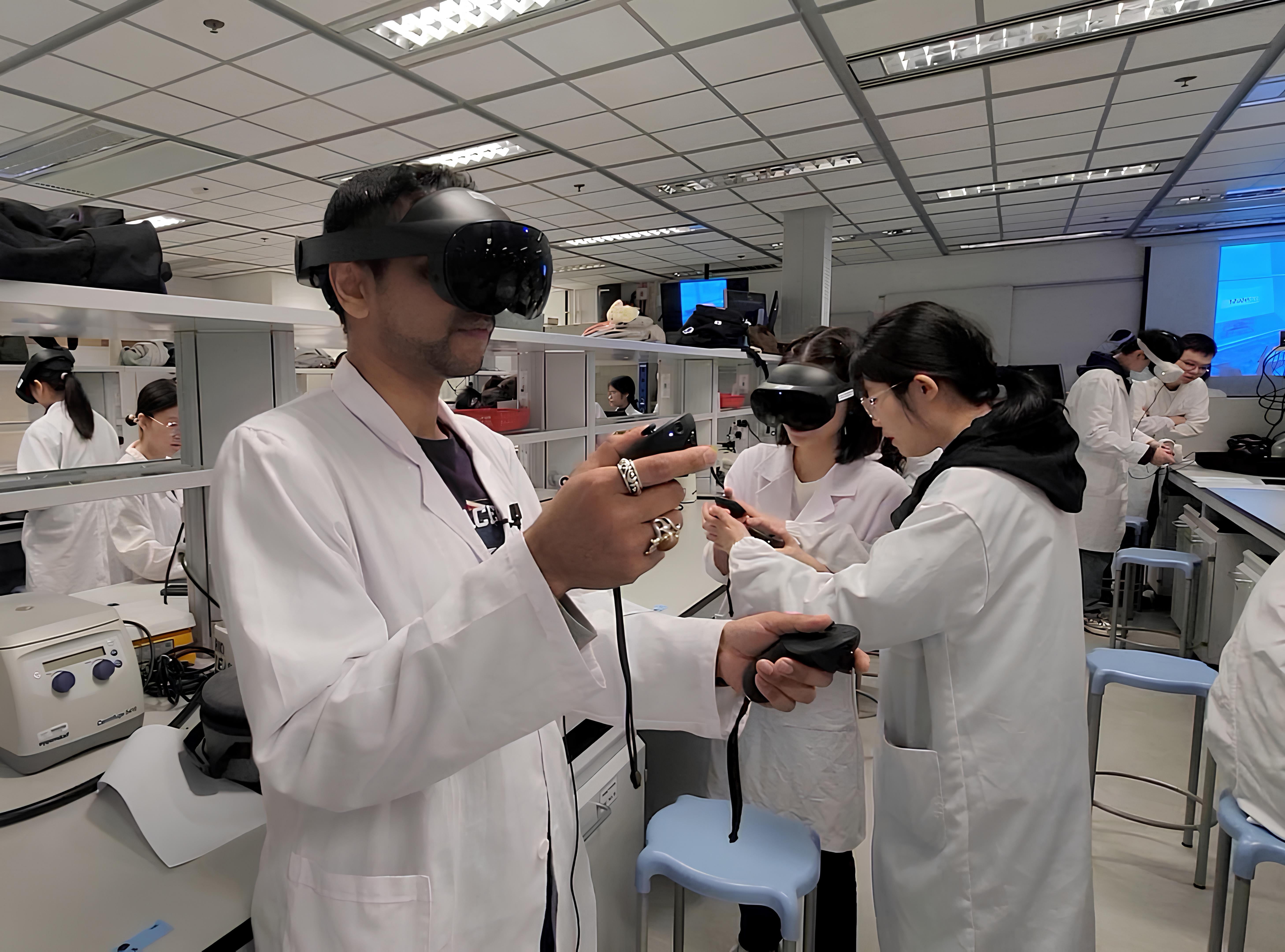
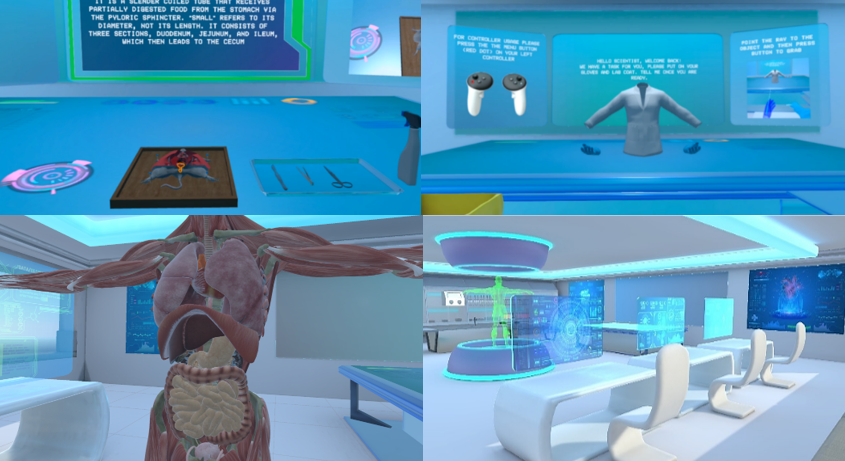
Students who enroll in the course LIFS 1904 – Laboratory for General Biology II can now put down their dense textbooks and switch off static demonstrations. Instead, they don a virtual reality (VR) headset and step into a fully immersive laboratory where an exciting new gamified environment is revealed.
Dr. Amin's platform has garnered significant recognition. It received the Education Technology Innovation GOLD Award at the Teaching and Learning Expo at the Chinese University of Hong Kong, as well as HKUST’s Thetos Early Career Distinguished Teaching Award. Moreover, his publication “Immersive Graphics in Education: A VR Rat Dissection Case Study” earned a Best Paper Nomination at the ACM SIGGRAPH Asia 2025 Educator's Forum in Hong Kong for its innovative approach.
Additionally, he was shortlisted for the Most Innovative Teacher of the Year at the Times Higher Education Asia Awards 2026. This project, titled “Gamification and Virtual Reality Pedagogy for Active Learning in Genetics, Forensics, and Biochemistry Laboratories,” has transformed the learning experiences of more than 300 students from diverse HKUST science and technology disciplines.
“The platform fosters an immersive educational experience and integrates generative AI to enhance active learning and formative assessments, benefiting all students, including those with special educational needs,” noted Dr. Amin.
Complementary pedagogy
Specifically, this platform aims to complement and extend traditional laboratory pedagogy by addressing the negative aspects of passive learning, the challenges inherent in visualizing abstract concepts, and logistical constraints.
“By simulating authentic laboratory environments and instruments, the platform reduces reliance on physical resources while enhancing accessibility, scalability, and cost-efficiency,” Dr. Amin explained.
Multidisciplinary collaboration
A systematic, literature-informed rationale underpins the design vision: VR can provide safe, controlled, realistic, and engaging learning contexts that promote deeper processing, higher retention, and improved problem-solving when aligned with evidence-based strategies.
“VR environments can adapt to diverse learning styles and support deliberate practice with low-stakes feedback, enabling students to make and recover from errors without real-world consequences. This approach leverages multisensory engagement, cognitive realism, and interactive simulations to foster conceptual understanding and procedural fluency,” Dr. Amin said.
The project has also benefited greatly from multidisciplinary collaboration. Dr. Amin led a cross-functional team comprising software developers, user experience designers, biology educators, undergraduate contributors, teaching assistants, and technicians.
This is how educational games, such as the rat dissection module that guides the systematic use of dissection tools, can mirror actual lab practice. The platform also features a biochemistry simulation that explores enzyme–substrate interactions under varying conditions to reveal the effects on reaction rates and kinetics.
A new and powerful tool
“By nurturing engagement, conceptual understanding, and procedural fluency, the platform equips students with greater confidence and competence when engaging in subsequent physical experiments, while preserving safety and enabling risk-free exploration of complex techniques,” Dr. Amin said.
Ultimately, while virtual reality serves as a powerful educational tool, it is best understood as a supplement to traditional teaching methods rather than a full substitute for real-world experiences.