


Weiqi, one of the oldest known board games in human history, requires complex strategic maneuvers while also promoting Chinese culture to a broader audience, helping bridge cultures and bring young people together.
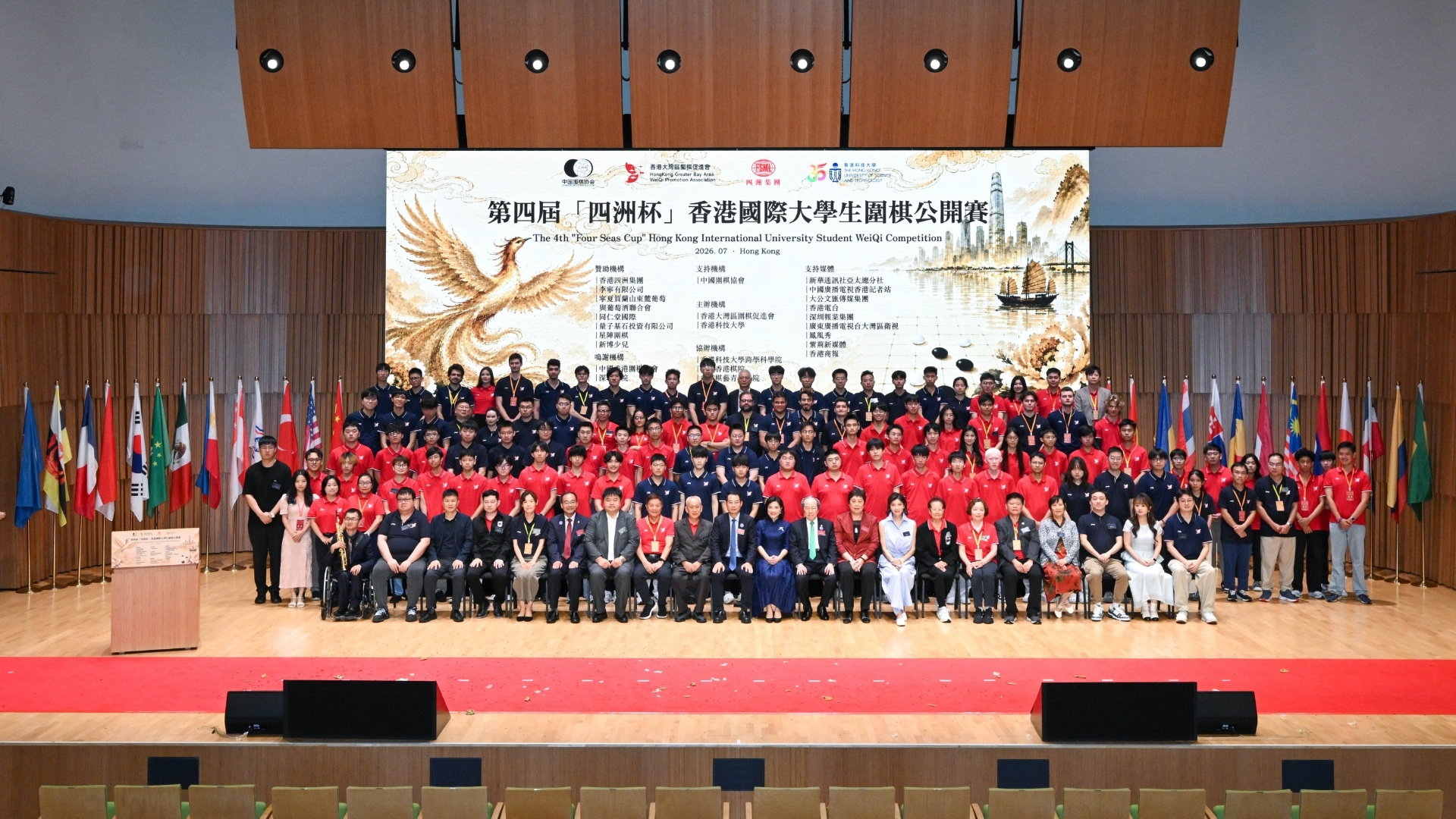
HKUST therefore co-hosted the 4th "Four Seas Cup" Hong Kong International University Student Weiqi Competition with the Hong Kong Greater Bay Area Weiqi Promotion Association from July 15 to 18, bringing together top players from universities across China, Japan, Korea, and Southeast Asia.
Co-hosted by HKUST for the fourth consecutive year, the tournament promoted cultural exchange and supported the goals of whole-person education and the nurturing of innovative talent, as outlined in the National 15th Five-Year Plan, according to Prof. Charles NG, Vice-President for Institutional Advancement.
“Over the past four years, the Four Seas Cup has grown into a hallmark international youth event in Hong Kong, providing a valuable platform for young people from around the world to connect through weiqi, deepen their appreciation of Chinese culture, and develop the strategic thinking, resilience, and global perspective needed for the future,” Prof. Ng said.
"These objectives closely reflect HKUST's commitment to whole-person education and the nurturing of globally minded talent. As we celebrate HKUST's 35th anniversary, we remain dedicated to advancing the integration of sports, culture, and the arts as part of a vibrant learning environment. The Four Seas Cup exemplifies how intellectual sports and cultural exchange can inspire innovation, foster lasting friendships across borders, and contribute to both national and global development,” he added.
An intellectual game with roots in China and a global following, weiqi continues to grow in popularity. Reflecting this trend, the number of teams participating in the tournament increased significantly this year, from 19 to 29. Nearly 90 elite university players from 25 countries and regions took part.
This year’s event also welcomed teams from the United States, including the Massachusetts Institute of Technology (MIT) and the University of Chicago, alongside participants from Europe and Latin America.
Making their debut in the Southeast Asia division were an ASEAN joint team, as well as teams from Indonesia and the Philippines. Meanwhile, five Chinese universities joined the tournament for the first time: Sichuan University, Xiamen University, Zhejiang University, Guizhou University, and Guangzhou Huashang University.
By bringing together young people from around the world through the shared language of weiqi, the tournament helped promote Chinese culture on the global stage, said Dr. CHOI Yuk-lin, Secretary for Education of the HKSAR Government.
This unprecedented gathering of weiqi players also encouraged tertiary institutions to broaden their students’ understanding of Chinese culture, history, and society through diverse learning opportunities, she added.
This view was shared by Ms. XU Ying, President of the Hong Kong Greater Bay Area Weiqi Promotion Association. Endorsed by the China Weiqi Association, the tournament reached a significant milestone in its fourth year.
Xu welcomed for the tournament’s expanded participation and highlighted the successful collaboration with HKUST in bringing together an increasingly diverse group of tertiary institutions from around the world.
Prof. QU Huamin, Dean of Academy of Interdisciplinary Studies, highlighted weiqi courses as a stellar example of interdisciplinary learning at HKUST.
“Weiqi is a timeless treasure of Chinese culture,” Prof. Qu remarked. “Through these interdisciplinary offerings, we hope students can broaden their horizons across history, strategy, and culture—developing an analytical agility and global mindset that extends far beyond the board.”
After several intense rounds of competition, the Hong Kong, China team achieved a highly commendable 6th place finish among a strong field of participants. While every game has its winners; all participants walked away with something equally valuable - friendships forged across the board. The “Four Seas Cup” has once again demonstrated Weiqi’s enduring power to connect young people from around the world and serve as a bridge for sharing Chinese culture on the world stage.