





News & Stories
2026
News
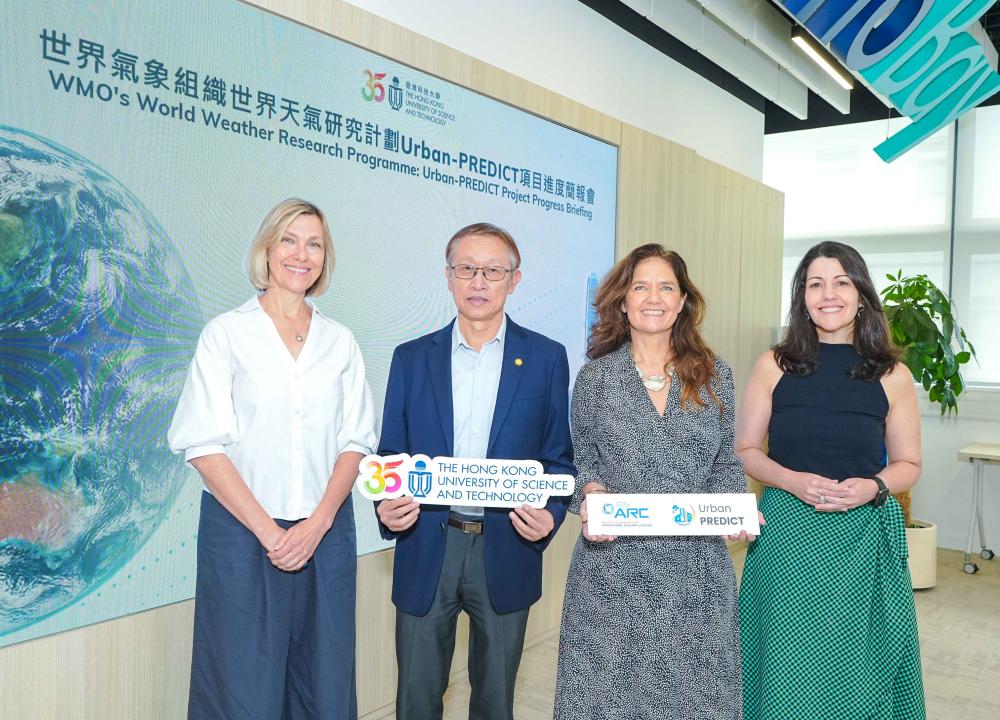
Global Climate Experts Convene at HKUST to Advance the Future of Urban Weather Forecasting and Early Warnings
As climate change continues to intensify the frequency and severity of extreme weather events worldwide, a recent United Nations Environment Programme report warns that global temperatures are likely to exceed the 1.5°C threshold within the coming years, posing increasing risks to cities and communities around the world. To help address these challenges, HKUST is leading global collaboration in urban weather forecasting and climate resilience through the Urban-PREDICT International Coordination Office (the Office), established on campus in November 2025 under the World Meteorological Organization's (WMO) World Weather Research Programme (WWRP).
News
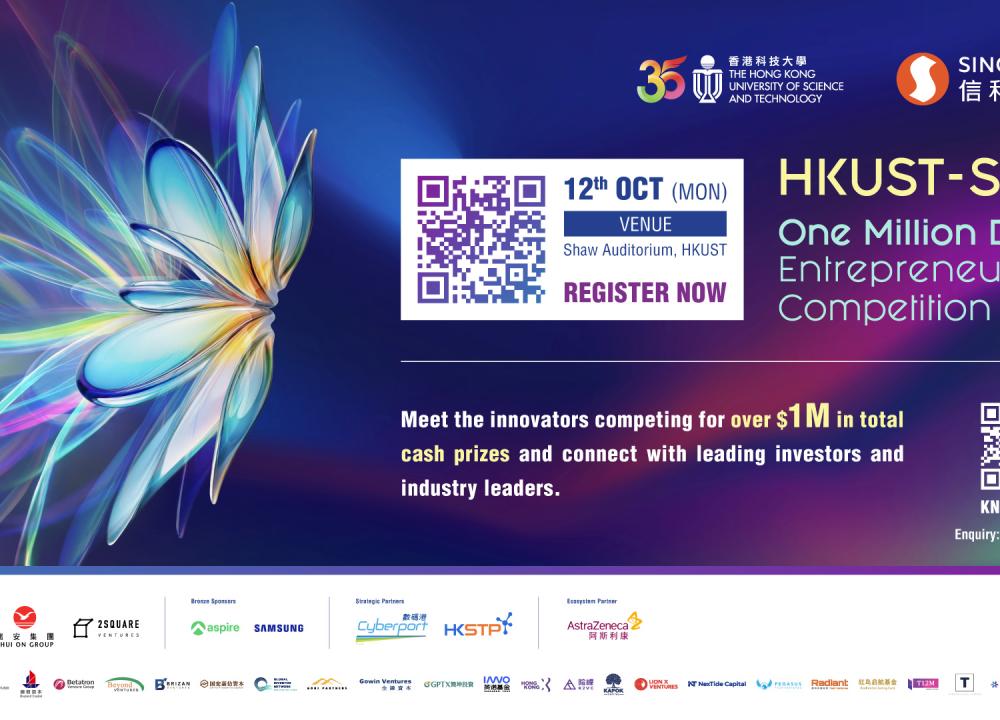
HKUST-SINO One Million Dollar Entrepreneurship Competition 2026 Grand Final Set for Next Month
Jointly organized by The Hong Kong University of Science and Technology (HKUST) and Sino Group, the HKUST-SINO One Million Dollar Entrepreneurship Competition 2026 (OMC) will hold its Grand Final on 12 October. This year’s competition attracted a record 390 teams from 24 countries and regions, including students from leading institutions such as the University of Oxford, the University of Pennsylvania, and the National University of Singapore. 15 finalist teams will compete for prizes worth more than HK$1 million.

News
HKUST-Nurtured Startups Triumph at the HICOOL 2026 Global Entrepreneur Summit and Entrepreneurship Competition
The Hong Kong University of Science and Technology (HKUST) nurtured startups showcased their innovations at the HICOOL 2026 Global Entrepreneur Summit and Entrepreneurship Competition and seized four prestigious accolades: the Overseas Group Championship, First Prize, Second Prize, and Third Prize. This achievement not only underscores HKUST's strong capabilities in deep-tech and cutting-edge innovation but also highlights the immense commercialization potential of its research breakthroughs to a global audience of industry leaders and investors. It further reinforces the University's leadership in innovation and technology, leveraging research excellence to accelerate industry advancement and generate meaningful societal impact.

News
HKUST Secures Largest Share of RGC Strategic Topics Grant to Drive Innovation in Elderly Healthcare
The Hong Kong University of Science and Technology (HKUST) has distinguished itself in the 2026/2027 Strategic Topics Grant (STG) of the Research Grants Council (RGC) under the University Grants Committee. Of the six approved projects, two are led by HKUST scholars, collectively receiving more than HKD 54.41 million in funding (including matching fund from the University). This represents the highest total funding amount among local universities. The projects leverage artificial intelligence (AI) in healthcare to enhance the management of bacterial infections in older adults and provide integrated management for Parkinson's disease, underscoring HKUST's leadership in cutting-edge research and its commitment to developing innovative solutions to the healthcare challenges posed by the aging global population.

News
HKUST Develops World's First AI Slide-Free Pathology Imaging System
A research team from The Hong Kong University of Science and Technology (HKUST), together with an HKUST-incubated medtech startup, PhoMedics Limited, has developed Glanzir®, the world's first artificial intelligence (AI)-enabled, slide-free pathology imaging system. The system enables direct imaging of fresh tissue without the need for conventional procedures such as freezing, sectioning, and staining, producing histological images in approximately three minutes in an operating room setting for intraoperative assessment.

News
HKUST Establishes Biodiversity and Nature-Based Solutions Hub to Drive Education, Research, Innovation, and the New Biodiversity Core Curriculum
The Hong Kong University of Science and Technology (HKUST) has established the Biodiversity and Nature-Based Solutions Hub under the Division of Environment and Sustainability (ENVR) of the Academy of Interdisciplinary Studies (AIS) to advance biodiversity education, research, innovation and public engagement, alongside the efforts of its My Climate Risk Hub.
News
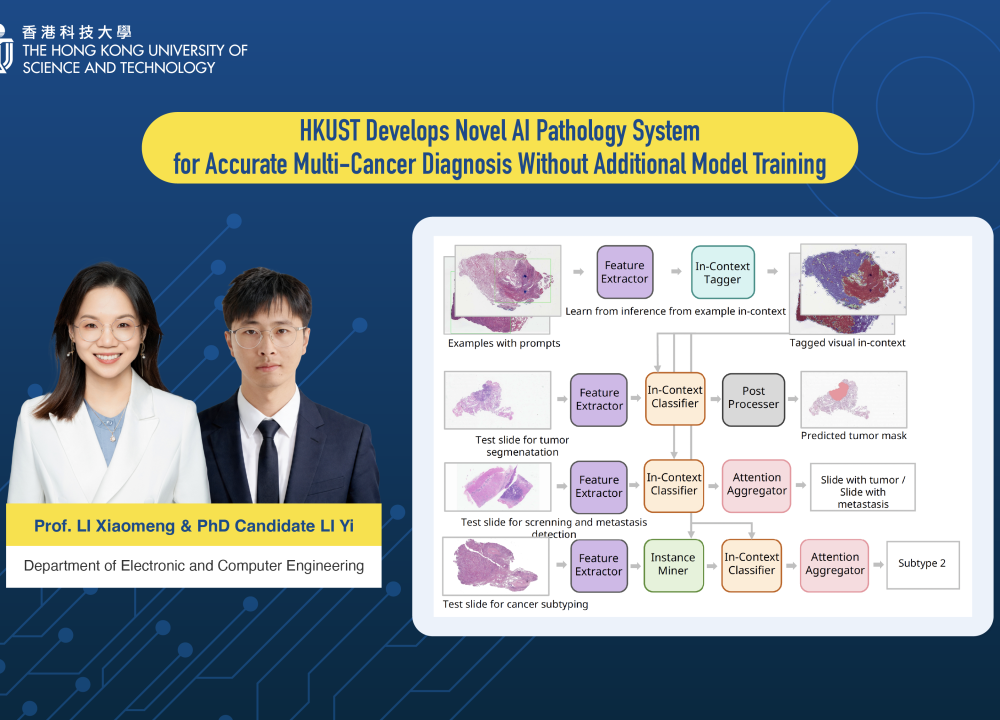
HKUST Develops Novel AI Pathology System for Accurate Multi-Cancer Diagnosis Without Additional Model Training
A research team led by The Hong Kong University of Science and Technology (HKUST) has developed a pioneering artificial intelligence (AI) pathology analysis system that can accurately recognize multiple types of cancer using only a minimal number of samples—without requiring any additional training. This breakthrough significantly enhances the flexibility and efficiency of AI-assisted medical care, marking a major step forward toward the widespread adoption of intelligent pathology.

News
HKUST Achieves Outstanding Results in the Third Round of the RAISe+ Scheme
The Hong Kong University of Science and Technology (HKUST) has once again achieved strong results under the Research, Academic and Industry Sectors One‑Plus (RAISe+) Scheme launched by the Innovation and Technology Commission. In the third round of funding, seven HKUST research projects have been recommended for funding, accounting for nearly one-third of all approved projects in this round. Together with the first two rounds, HKUST has now secured a total of 19 funded projects, the highest number among local universities, underscoring its leading role in translating research outcomes into real-world applications and in advancing industry-academia-research collaboration.