





News & Stories
2026
News
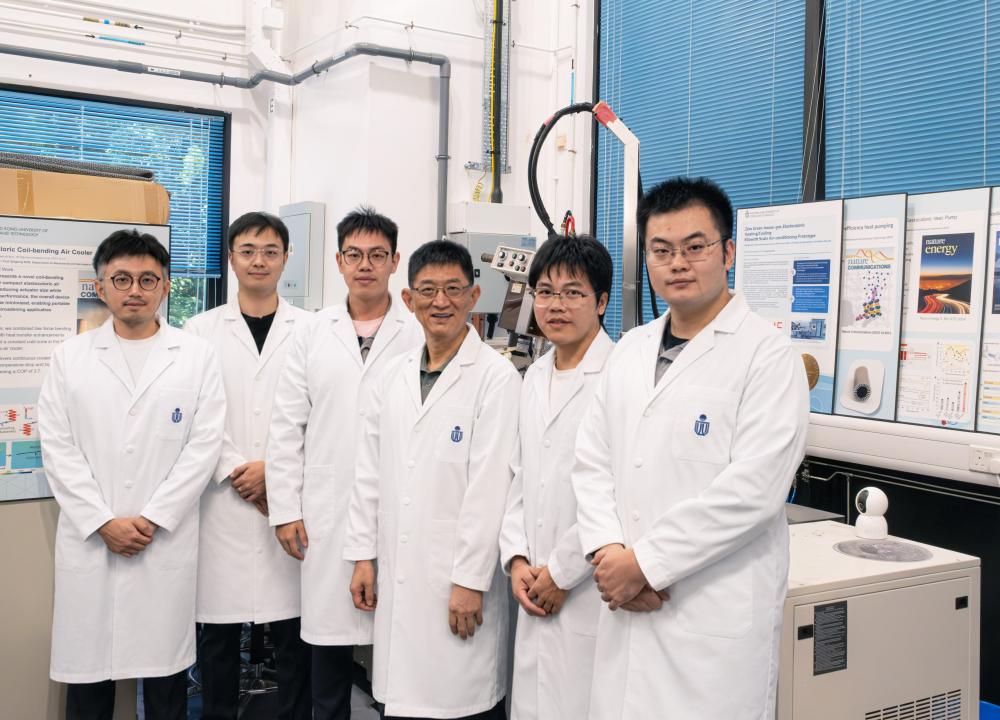
HKUST Unveils World’s First Zero-Degradation Elastocaloric Cooling Device to Revolutionize Sustainable Refrigeration Technology
Invaluable to modern society, refrigeration faces challenges from traditional vapor-compression systems, which are energy-intensive and employ refrigerants that exacerbate the greenhouse effect and damage the ozone layer. Addressing this, a research team from The Hong Kong University of Science and Technology (HKUST) has unveiled the world’s first zero-degradation elastocaloric cooling device. Powered by a fatigue-resistant, solid-state refrigerant, this innovation delivers durable and green cooling, maintaining its stable performance even over a stunning one million operational cycles. This breakthrough will usher in highly efficient eco-friendly cooling, driving progress towards sustainable global development.
News
HKUST Develops Optimization Framework for Autonomous Materials Experimentation Platforms
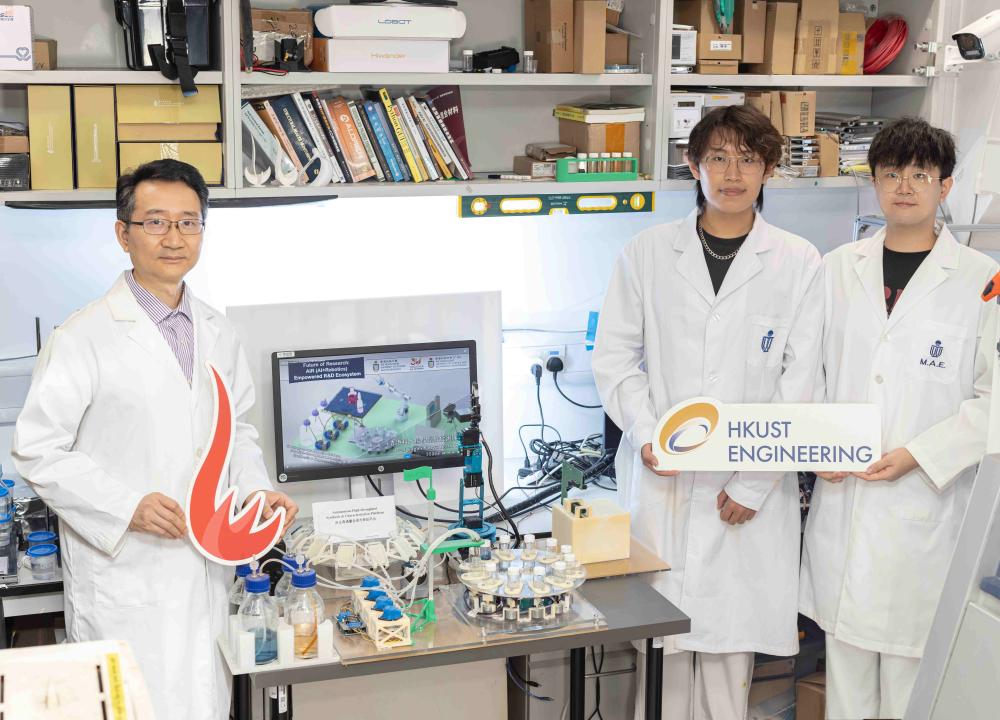
A research team from The Hong Kong University of Science and Technology (HKUST) has developed a new modeling and optimization framework that helps researchers design modularized autonomous experimentation (MAE) platforms for new materials by determining the optimal combination of equipment before construction begins, thereby reducing both time and cost before the platform is physically built.
News
HKUST Charts a Roadmap for Agentic 7G AI-Powered Wireless Networks
A research team from the Hong Kong University of Science and Technology (HKUST) proposed a new Reasoning-Empowered Task-Oriented Communication (TOC) framework that enables AI agents to determine what information to share, when communication is necessary, and why a communicate should occur. The research could pave the way for collective intelligence in future 7G wireless networks.
News
HKUST Develops "One-Pot" 30-Minute High-Sensitivity At-Home Testing
A research team from The Hong Kong University of Science and Technology (HKUST) has developed an innovative "one-pot" testing platform, known as TEMPO, that could transform highly sensitive nucleic acid testing from a laboratory-based procedure into a simple, single-step test that can be performed at home. With a single reaction tube, users can obtain results comparable to those of professional laboratory tests in as little as 30 minutes. The breakthrough has the potential to bridge the technological gap between existing rapid tests and laboratory-based nucleic acid diagnostics, offering a more convenient solution for future infectious disease surveillance and genetic screening.

News
HKUST Study Reveals Inter-City Collaboration on Emission Reduction Boosts Sustainability Performance
With Hong Kong recently recording record-breaking high temperatures, extreme weather has once again raised public awareness of global warming and emission reduction measures. A large-scale international study led by The Hong Kong University of Science and Technology (HKUST) has revealed that inter-city collaboration on emission reduction can improve overall sustainability performance by more than 10%. This comprehensive analysis covers 4,116 cities and spans 11 years of data, shedding new light on regional and global strategies towards achieving the United Nations Sustainable Development Goals (SDGs).

News
HKUST Pioneers Novel Water Purification Technology for Selective Pollutant Polymerization
Wastewater treatment is a critical issue for global environmental protection and public health. Researchers from The Hong Kong University of Science and Technology (HKUST) have recently achieved a major breakthrough by discovering a novel oxidant-free electrocatalytic mechanism, opening up a new direction for water purification technologies. The findings are set to significantly improve pollutant identification efficiency and potentially double the economic feasibility compared with existing methods.
News
HKUST Develops Novel AI Framework Enabling Efficient Collaboration between Generalist and Specialist Models for Disease Diagnosis
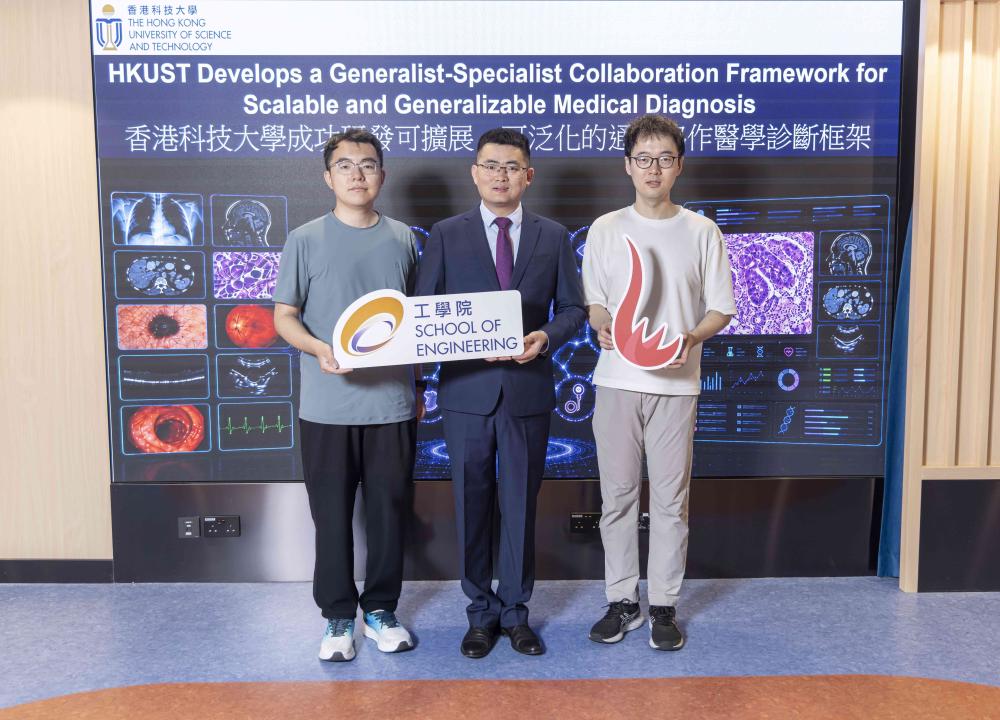
A research team from The Hong Kong University of Science and Technology (HKUST) has developed a novel AI framework, the Generalist–Specialist Collaboration (GSCo), which enables a generalist foundation model and specialist models to collaborate on disease diagnosis. GSCo outperforms both standalone models in tasks such as medical imaging, visual question answering, and radiology report generation, while significantly reducing development costs of medical models to adapt to new clinical tasks. This marks a meaningful step toward bringing AI medical models into everyday clinical workflows. The study, titled "Towards generalizable AI in medicine via Generalist–Specialist Collaboration," was published in the prestigious academic journal Nature Biomedical Engineering.

News
HKUST Develops New Biocompatible Chemical Reaction to Advance Next-Generation Anticancer Prodrugs
Anticancer prodrugs have attracted significant attention from the medical and scientific communities in recent years due to their potential to improve treatment precision while reducing adverse side effects. These drugs are specially engineered to remain inactive until they are activated at specific sites or under particular physiological conditions within the body, at which point they release their therapeutic effect. This targeted approach helps minimize damage to healthy tissues that often occurs when conventional chemotherapy agents attack cancer cells, addressing the longstanding challenge of collateral toxicity in cancer treatment.However, achieving precise drug activation within the body's highly complex biological environment remains a considerable challenge. Existing chemical strategies and activation technologies continue to face a number of technical limitations and obstacles, highlighting the need for further innovation in this field.