


HKUST Unveils World’s First Zero-Degradation Elastocaloric Cooling Device to Revolutionize Sustainable Refrigeration Technology

Invaluable to modern society, refrigeration faces challenges from traditional vapor-compression systems, which are energy-intensive and employ refrigerants that exacerbate the greenhouse effect and damage the ozone layer. Addressing this, a research team from The Hong Kong University of Science and Technology (HKUST) has unveiled the world’s first zero-degradation elastocaloric cooling device. Powered by a fatigue-resistant, solid-state refrigerant, this innovation delivers durable and green cooling, maintaining its stable performance even over a stunning one million operational cycles. This breakthrough will usher in highly efficient eco-friendly cooling, driving progress towards sustainable global development.
Elastocaloric cooling, which is based on the reversible stress-induced phase transformation of shape memory alloys (SMAs), offers a promising green alternative to traditional refrigeration. Despite its great potential, commercialization has been impeded by performance degradation and low reliability. The prevalent use of commercial NiTi SMA as the refrigerant in most existing elastocaloric cooling devices is a key challenge. This material is prone to functional fatigue, causing its cooling power to decline over extended use.
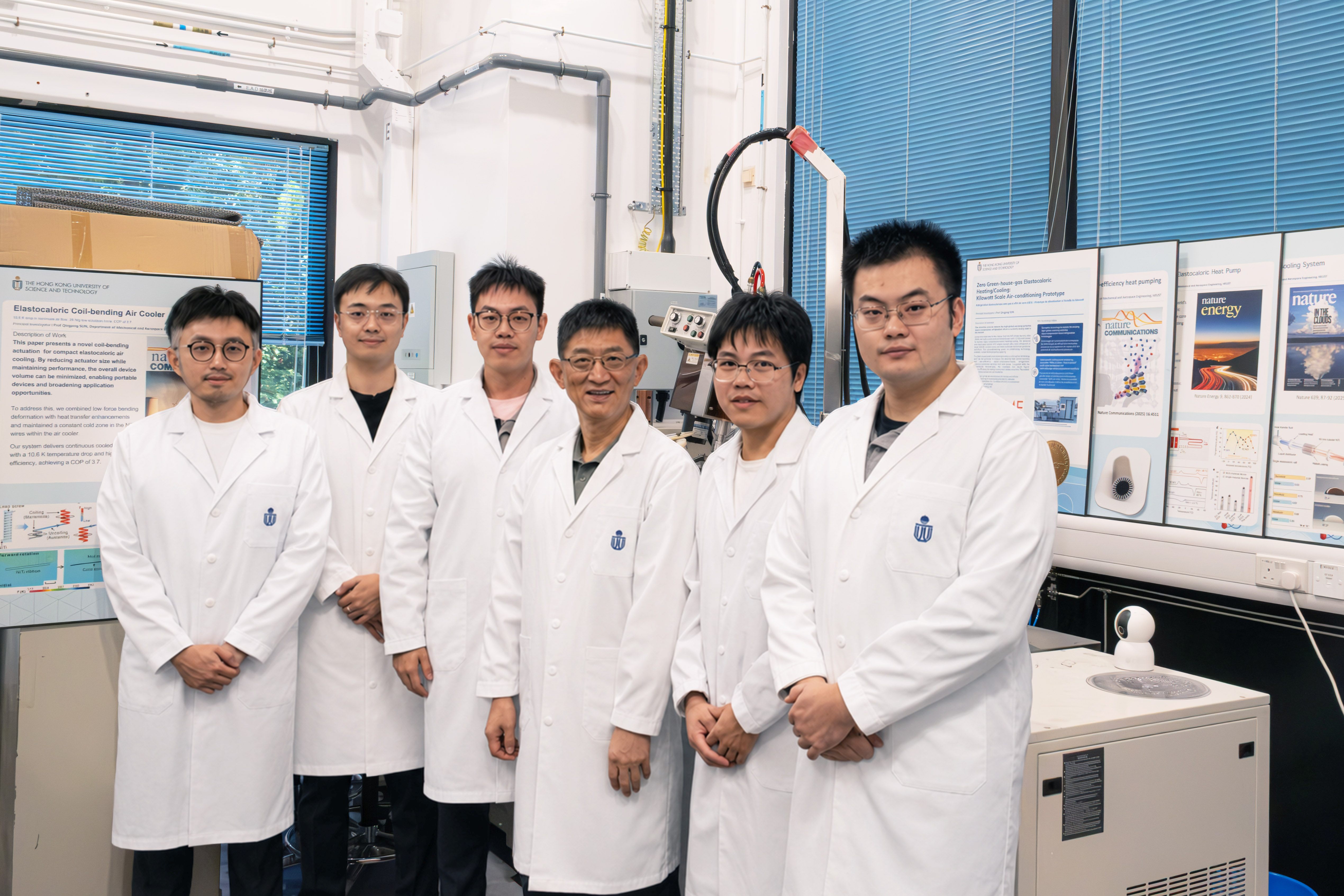
To overcome this bottleneck, a team led by Prof. SUN Qingping, Chair Professor in the Department of Mechanical and Aerospace Engineering at HKUST, has developed a fatigue-resistant SMA and integrated it into an innovative refrigerant structure. By combining advanced SMA materials with device-level design and engineering, they have successfully addressed the critical issues of material functional fatigue and structural reliability. The breakthrough has resulted in a zero-degradation elastocaloric cooling device capable of maintaining stable cooling performance over long-term operation, characterized by the following distinct features:
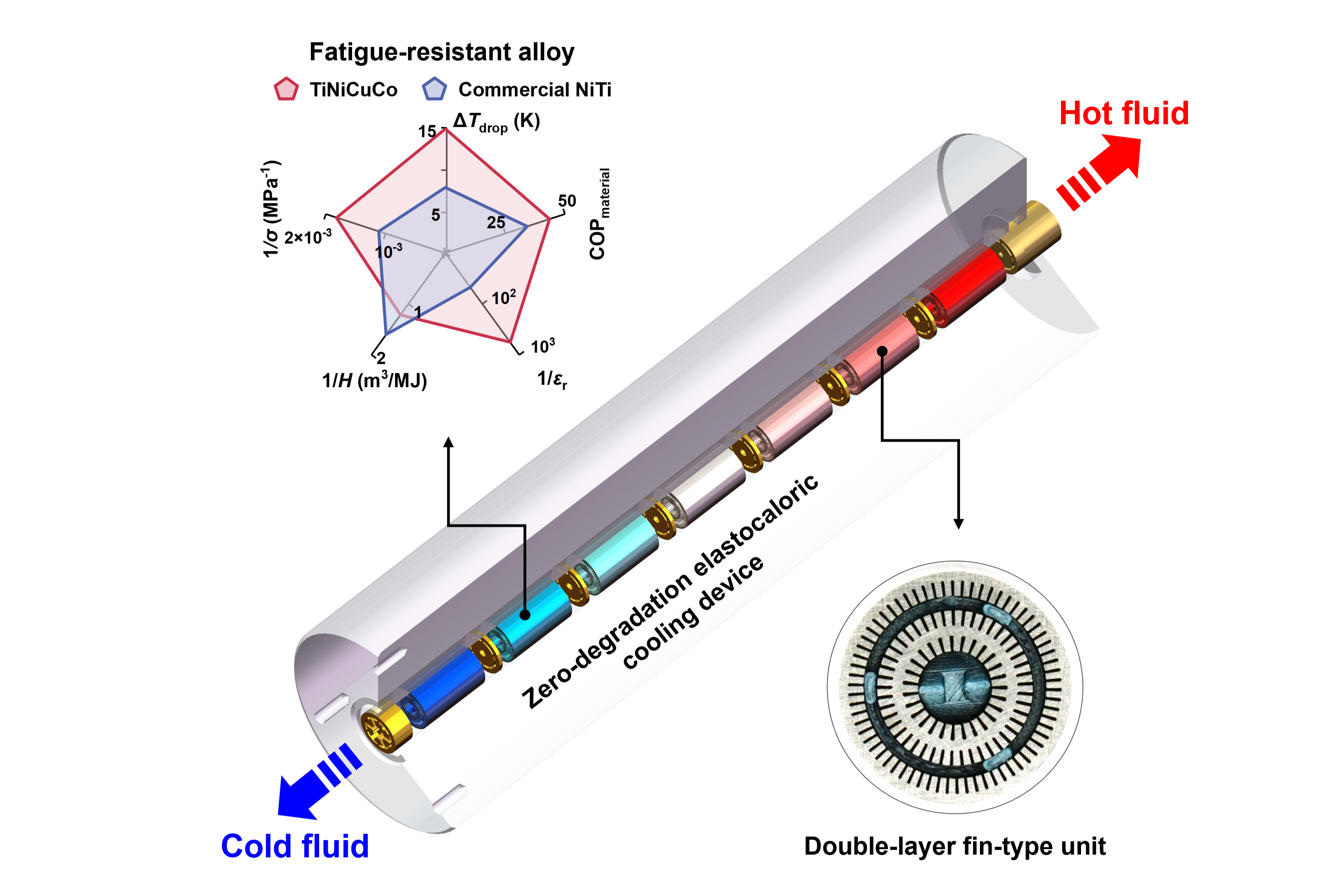
(1) Fatigue-Resistant Shape Memory Alloy: A new quaternary TiNiCuCo alloy was engineered. Compared with traditional NiTi alloys, this material provides stable elastocaloric performance throughout numerous cyclic phase transitions. Its consistent release and absorption of latent heat are key to its function as a dependable solid-state refrigerant, crucial for the device’s sustained cooling capabilities.
(2) Mechanically Reliable Refrigerant Structure: A double-layer fin-type refrigerant structure was designed and fabricated to enhance both heat transfer efficiency and buckling resistance, achieving an ultra-high fatigue life exceeding 10 million cyclic compressive cycles.
(3) Compact and Durable Device Architecture: The device architecture was optimized to reduce thermal losses and improve system stability. This innovative design achieved a 50% reduction in components and reduced the proportion of ineffective parts from 15% to 5%.
Utilizing this novel material and device design, the research team constructed a novel elastocaloric cooling device integrated with multiple refrigerant units. This device achieved a constant cooling power of 400W and maintained a constant temperature span of 41K (a temperature difference of 41°C) over one million operation cycles without degradation. Accelerated fatigue testing of the TiNiCuCo refrigerant also showed no functional degradation after 100 million cycles. Under real-world cooling conditions, the refrigerant is expected to operate reliably for more than a decade.
Prof. SUN Qingping, corresponding author of the paper, stated, “While significant progress has been made in cooling performance over the past decade, long-term cooling stability is crucial for practical deployment. By integrating advanced shape memory alloy materials with innovative device engineering, we have tackled this key challenge. This breakthrough in cooling stability, achieved at both the material and device levels, brings the technology one step closer to real-world applications beyond laboratory demonstrations. We are currently developing an air-conditioner based on this technology. Moving forward, we aim to further enhance energy efficiency, power density, and cost competitiveness of elastocaloric refrigeration systems to accelerate their market adoption as a sustainable cooling solution.”
Dr. LIN Hongyang, a Postdoctoral Fellow in the Department of Mechanical and Aerospace Engineering at HKUST, is the co-corresponding author of this study. PhD student LI Yang is the first author. Contributing alongside them were Postdoctoral Fellow Dr. LI Xueshi, and PhD students SU Changfeng and HU Jiyuan. The findings have been published in Joule, a leading academic journal in the energy field, under the title “A zero-degradation elastocaloric cooling device using fatigue-resistant refrigerant”.
About The Hong Kong University of Science and Technology
The Hong Kong University of Science and Technology (HKUST) (https://hkust.edu.hk/) is a world-class university renowned for its excellence in innovative education, research, and impactful knowledge transfer. Adopting a holistic and interdisciplinary approach to education, HKUST was ranked 33rd globally and 6th in Asia in the QS World University Rankings 2027 and QS Asia University Rankings 2026, respectively. It was also ranked 20th worldwide in the Times Higher Education Sustainability Impact Ratings 2026, placing first among universities in Hong Kong and the Chinese Mainland for the third consecutive year. Eleven HKUST subjects were ranked among the world's top 50 in the QS World University Rankings by Subject 2026. In addition, HKUST's Computer Science discipline, which encompasses areas such as artificial intelligence and machine learning, was ranked No. 1 in Hong Kong for the tenth consecutive year in the Times Higher Education World University Rankings by Subject 2026. Its graduates are highly competitive, consistently ranking among the world's top 30 most sought-after employees. In research and entrepreneurship, more than 80% of HKUST's research was rated "world-leading" or "internationally excellent" in the University Grants Committee's Research Assessment Exercise 2020. As of July 2026, HKUST members have founded more than 2,000 active start-ups, including 11 unicorns and 22 successful exits through initial public offerings (IPOs) or mergers and acquisitions (M&A).
For media enquiries, please contact:
Email: media@ust.hk
Sign Up for Our Latest News
Latest News
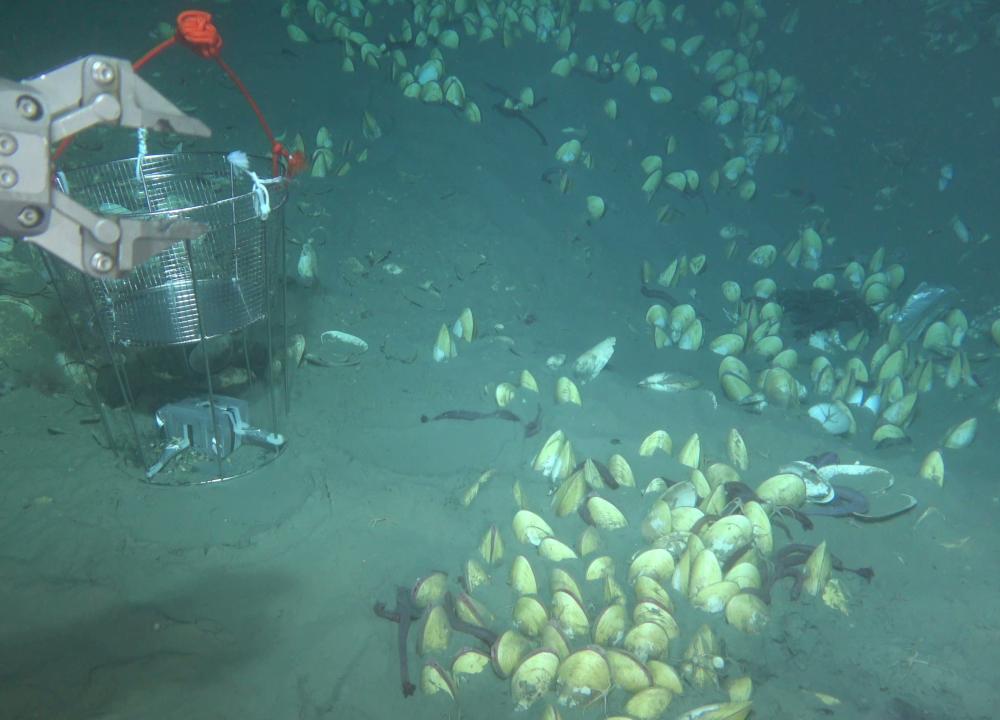
A research team led by Prof. QIAN Peiyuan, Chair Professor of the Department of Ocean Science at The Hong Kong University of Science and Technology (HKUST), in collaboration with international partners, has made significant progress in uncovering how deep-sea chemosynthetic symbioses cope with environmental change.
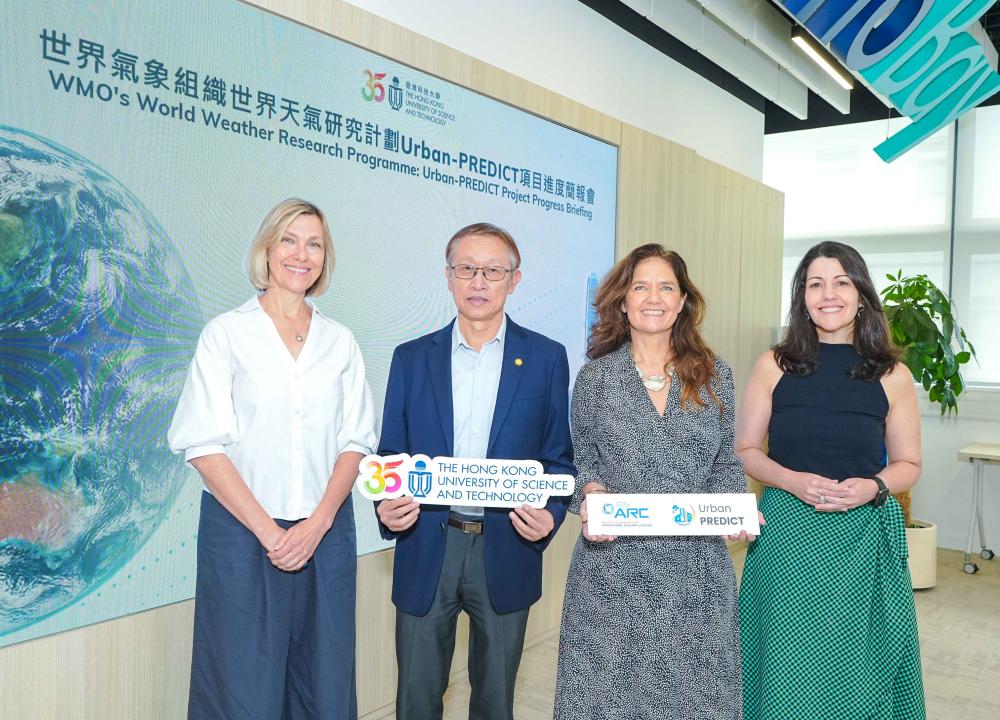
As climate change continues to intensify the frequency and severity of extreme weather events worldwide, a recent United Nations Environment Programme report warns that global temperatures are likely to exceed the 1.5°C threshold within the coming years, posing increasing risks to cities and communities around the world.

The Center for Technology and Business Ecosystem (CTBE) of the School of Business and Management at The Hong Kong University of Science and Technology (HKUST Business School), HKUST Shanghai Alumni Chapter, and Tencent Research Institute have successfully concluded the “NOVA: National AI Creativity Competition”.