


News & Stories
2021
Stories
Expert Series: Into the Darkest Mystery
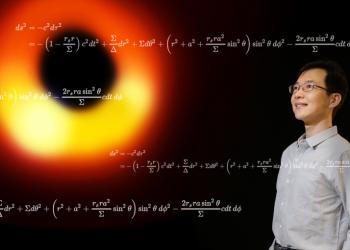
Sixty years ago, the whole world was gladly amazed when the first human blasted into space; over the years, hundreds of exploration missions have been deployed to extend our knowledge and understanding of the universe. Of all the space mysteries scientists still hope to solve, black holes remain the strangest and most mysterious phenomena we know so little about. After decades of effort, scientists finally reached a major milestone when they came face to face with a black hole by capturing its first-ever image in 2019, and a more detailed one earlier this year. The ground-breaking images show the supermassive black hole at the center of Messier 87, a galaxy about 54 million light-years away from Earth. The black hole's mass is equivalent to 6.5 billion suns.
News
HKUST Researchers Unlock Genomic Secrets of Gutless Deep-sea Tubeworm
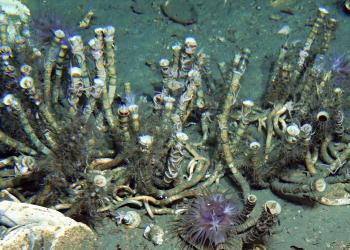
Researchers from The Hong Kong University of Science and Technology (HKUST) decoded for the first time the chromosomal-level genome of a deep-sea gutless tubeworm and how the worm’s co-living bacterial partners manufacture organic nutrients for its host so it can survive the extreme habitat. The discovery lays foundation for potential applications such as biomaterial production and microbial growth control.Living in deep-sea hydrothermal vents and cold seeps ecosystems characterized by darkness, high pressure and often high concentrations of toxic substances, submarine tubeworms - common living organisms of such extreme environments, were known to owe their survival and fast growth to sulphide-oxidising symbiotic bacteria that live inside their body. However, the success behind such a complementary “marriage” between the tubeworms and their co-living bacteria had remained unknown due to the lack of genomic resources.
News
Adversity is Opportunity
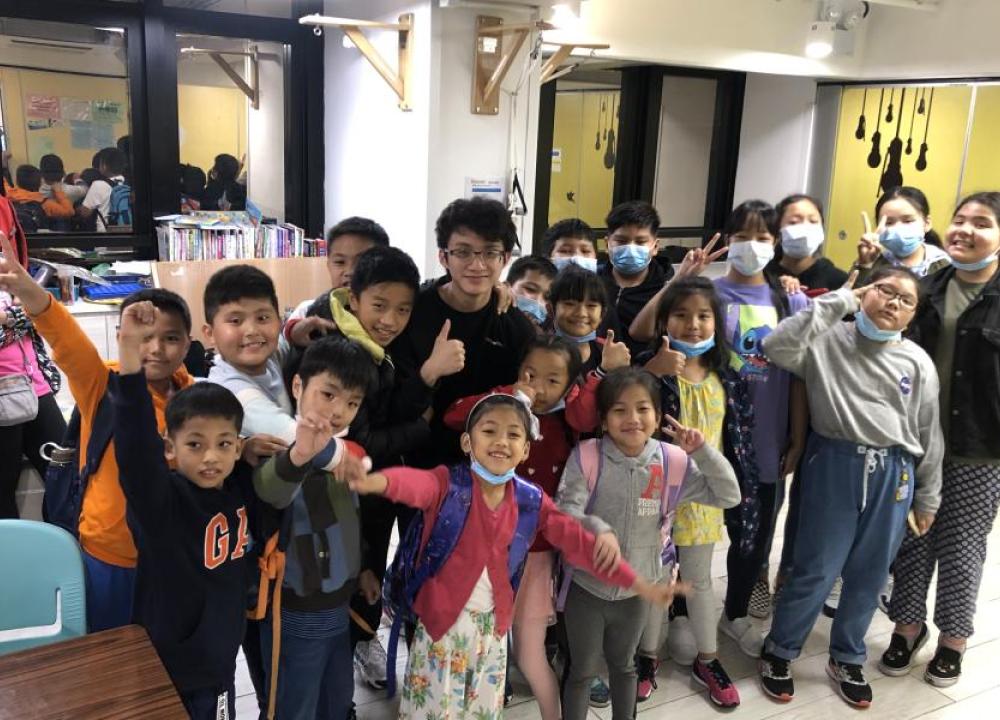
Life’s hardships come much early for HKUST’s third-year Data Science and Technology (DSCT) student Kevin LEUNG, who, despite coming from an underprivileged background, has not sold himself short. Recognized by numerous scholarships at HKUST, Kevin stands out from his fellows not only with his excellent grades, entrepreneurship spirit, and a caring heart for others, but, above all, a zest to turn adversity into opportunity. A dashing runnerRaised in a single-parent family, he has had a lot to shoulder since his youth. “I have helped with household chores since primary grade one, in addition to taking care of my ill father’s daily life,” says Kevin, whose father is diagnosed with kidney failure and is unable to work due to his health condition.