








News & Stories
2021
News
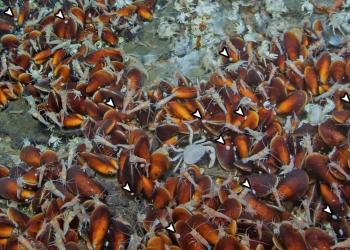
Research jointly led by HKUST and HKBU Unlock Biogeographical Secrets of Deep-sea Limpets
Researchers from The Hong Kong University of Science and Technology (HKUST) and Hong Kong Baptist University (HKBU) have decoded for the first time the demographic history, genetic structure, and population connectivity of a deep-sea limpet widely distributed in vent and seep ecosystems in the Northwest Pacific. This study not only enhances our knowledge of the historical population divergence and contemporary gene flow of deep-sea organisms under the intricate interactions amongst local habitats, seafloor topography, and ocean currents, but also serves as a scientific basis for better conservation of marine biodiversity and more effective environmental management.
News
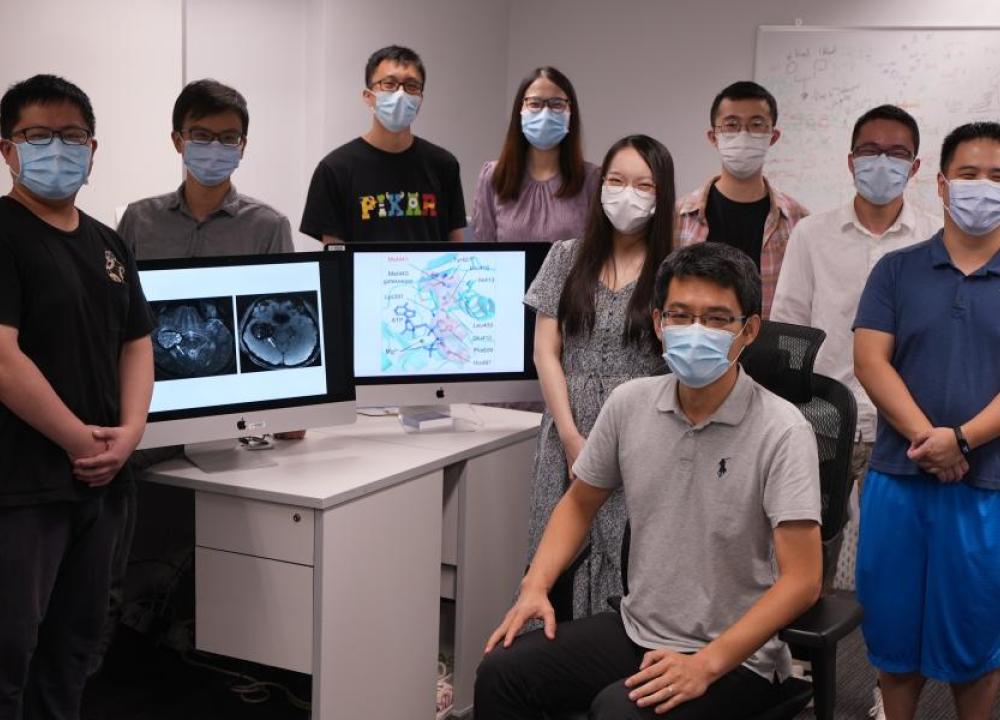
HKUST-Beijing Tiantan Hospital Researchers Discover a New Cause for the Cerebral Cavernous Malformation
Researchers from the Hong Kong University of Science and Technology (HKUST) and Beijing Tiantan Hospital have recently uncovered a new gene mutation responsible for the non-familial patients of cerebral cavernous malformation (CCM) - a brain vascular disorder which inflicted about 10~30 million people in the world.While the mutation of three genes: namely CCM1, CCM2, and CCM3, were known to be a cause of CCM – they mostly targeted patients who has family history in this disorder – which only account for about 20 per cent of the total inflicted population. The cause for the remaining 80 per cent non-familial cases, however, were not known.
News
Humanizing Yeast ORC Sheds Light on Cancer Therapy and Human Development
Researchers from the Hong Kong University of Science and Technology (HKSUST) and the University of Hong Kong (HKU) recently demonstrated that the selectivity determinant of Origin Recognition Complex (ORC) for DNA binding lies in a 19-amino acid insertion helix in the Orc4 subunit, which is present in yeast but absent in human. Removal of this motif from Orc4 transforms the yeast ORC, which selects origins based on base-specific binding at defined locations, into one whose selectivity is dictated by chromatin landscape (genomic nucleosome profile), a characteristic feature shared by human ORC.
Further understanding of the preferred DNA shapes and nucleosome positioning requirements will provide new insights for the plasticity of the human ORC in selecting replication initiation sites during programmed development and disease transformation, and also help identify potential targets for anti-cancer drug screening and therapy design.