

HKUST Pioneers Trans-Interface Engineering to Boost Perovskite Solar Cell Efficiency and Stability
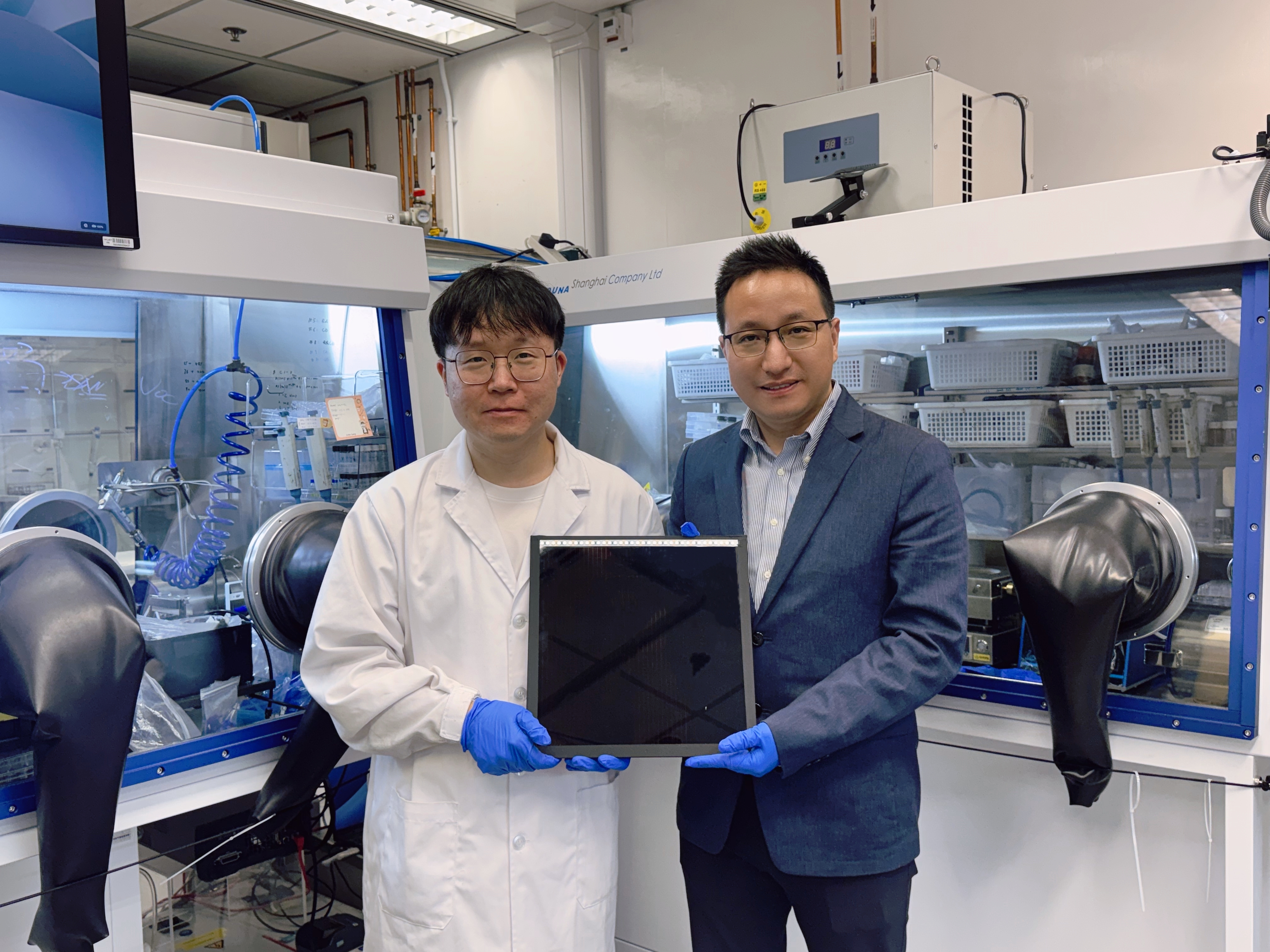
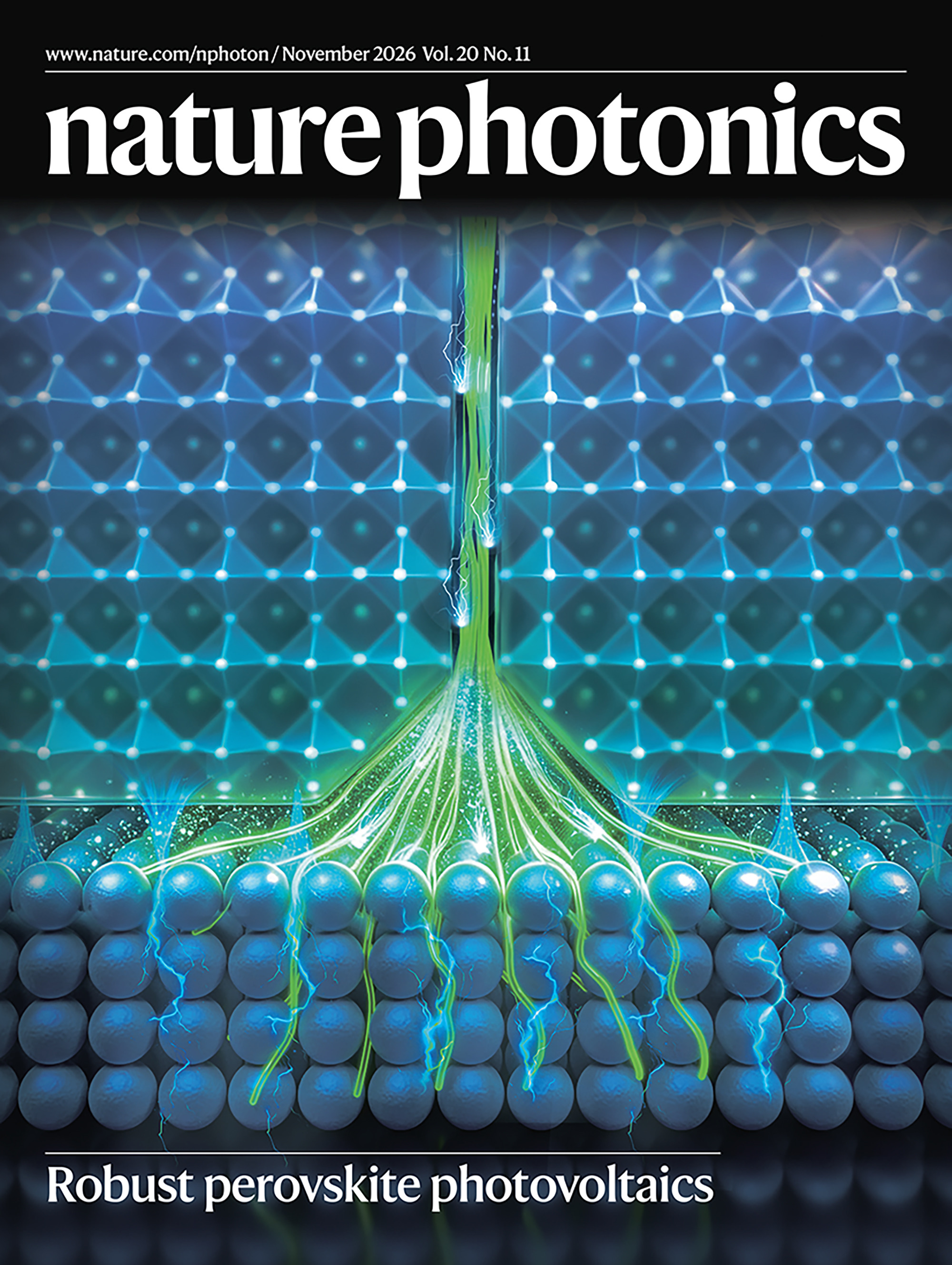
Hong Kong has been actively advancing the development of renewable in recent year as part of its commitment to reaching carbon neutrality before 2050. Among these efforts, solar power stands out as a pivotal technology propelling the city's low-carbon, green transformation. A research team at The Hong Kong University of Science and Technology (HKUST) has developed a novel interface engineering technology that addresses performance degradation in perovskite solar cells caused by interfacial mechanical failure. By forming nano-link networks across and within the interfacial layers of the solar cell, the technology significantly improves the mechanical reliability and stability of the devices while maintaining high power conversion efficiency. The study was published in the international journal Nature Photonics, entitled “Trans-interface engineering for reliable perovskite solar cells with reproducible stability,” and was featured as the cover article in November 2026 (Volume 20, Issue 11).
Perovskite solar cells are widely regarded as one of the most promising photovoltaic technologies due to their low-cost solution processing and flexible manufacturing capabilities. While laboratory-scale perovskite solar cells have achieved power conversion efficiencies exceeding 27%, long-term operational stability remains a major barrier to commercialization. During prolonged operation and thermal cycling, interfacial delamination and cracking can occur, accelerating device degradation. Existing approaches typically introduce interfacial layers to passivate defects and improve adhesion; however, these methods often entail trade-offs between charge transport performance and stability while failing to fundamentally resolve mechanical failure.
To address this challenge, the HKUST team pioneered Trans-Interface Engineering (TIE), fundamentally redefining the spatial dimension of conventional interface engineering by replacing flat, passive interlayers with vertically penetrating nano-links. The researchers incorporated distinct polymerizable monomers into the perovskite and electron-transport layers, followed by thermally induced free-radical copolymerization. This creates vertically aligned, covalently bonded nano-link networks across and within both layers. Unlike conventional interface designs that rely on relatively weak interactions such as coordination or hydrogen bonds, the TIE-generated nano-link networks can withstand accumulated mechanical stress during device operation while simultaneously enhancing charge transport and device performance.
Experimental results demonstrated that perovskite solar cells incorporating the TIE technology achieved a power conversion efficiency of 27.04% (26.67% certified) and an open-circuit voltage of 1.220V, while exhibiting a nearly threefold increase in interfacial toughness.
The research team further conducted maximum-power-point stability tests on more than 50 devices, revealing a significant improvement in operational lifetime, with 92% of TIE devices maintaining stable performance for over 1,400 hours. By comparison, the control devices showed substantial variation in lifetime, ranging from a few dozen hours to over 1,800 hours. Even under accelerated aging conditions of 85°C and 85% relative humidity, TIE devices demonstrated superior stability and reproducibility.
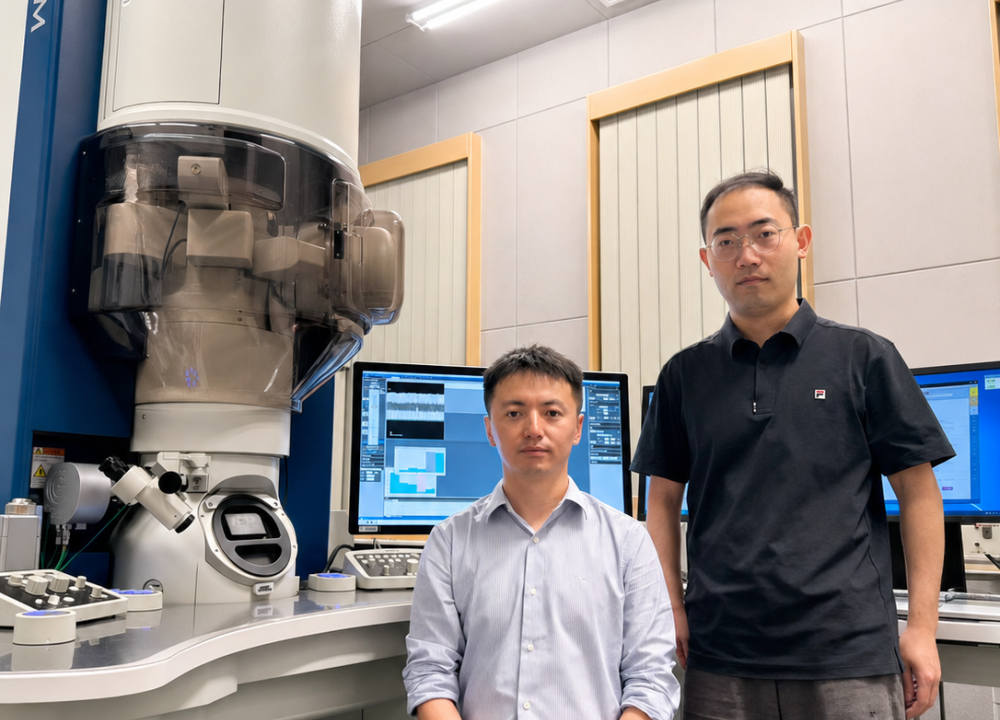
Prof. ZHOU Yuanyuan, Acting Head and Professor of the Department of Materials (MAT) at HKUST, who led the research and served as the sole corresponding author of the study, stated, “Conventional interface engineering attempts to repair interfaces like applying a Band-Aid, but fails to fundamentally address mechanical failure. TIE is more like stitching the layers together. Through trans-interface covalent linkages, we connect the perovskite and charge-transport layers together at the molecular level, substantially improving mechanical reliability and stability without compromising optoelectronic performance.”
Dr. GUO Pengfei, a co-first author and former Postdoctoral Research Fellow in Prof. Zhou’s group, noted, “Our study reveals that mechanical failure is a key factor behind the poor stability of perovskite solar cells. TIE not only addresses this long-overlooked issue but also opens a new avenue for interface design in multilayer optoelectronic devices.” Another co-first author, YU Wenjian, a PhD student in Prof. Zhou’s group, added, “We have validated TIE across different perovskite compositions, charge-transport materials, and device architectures, demonstrating its broad applicability and engineering potential.”
This research was conducted independently by the HKUST team. The team has filed a patent for the TIE technology and secured support from China Merchants Group to further advance its commercialization potential and industrial applications.
About The Hong Kong University of Science and Technology
The Hong Kong University of Science and Technology (HKUST) (https://hkust.edu.hk/) is a world-class university renowned for its excellence in innovative education, research, and impactful knowledge transfer. Adopting a holistic and interdisciplinary approach to education, HKUST was ranked 33rd globally and 6th in Asia in the QS World University Rankings 2027 and QS Asia University Rankings 2026, respectively. It was also ranked 20th worldwide in the Times Higher Education Sustainability Impact Ratings 2026, placing first among universities in Hong Kong and the Chinese Mainland for the third consecutive year. Eleven HKUST subjects were ranked among the world's top 50 in the QS World University Rankings by Subject 2026. In addition, HKUST's Computer Science discipline, which encompasses areas such as artificial intelligence and machine learning, was ranked No. 1 in Hong Kong for the tenth consecutive year in the Times Higher Education World University Rankings by Subject 2026. Its graduates are highly competitive, consistently ranking among the world's top 30 most sought-after employees. In research and entrepreneurship, more than 80% of HKUST's research was rated "world-leading" or "internationally excellent" in the University Grants Committee's Research Assessment Exercise 2020. As of September 2026, HKUST members have founded more than 2,000 active start-ups, including 11 unicorns and 23 successful exits through initial public offerings (IPOs) or mergers and acquisitions (M&A).
For media enquiries, please contact:
Public Affairs and Global Communications Office
Email: media@ust.hk
Sign Up for Our Latest News
Latest News

The Hong Kong University of Science and Technology (HKUST) has launched the HKUST Institute for China Economic Development (ICED) and held its Inaugural Talk and Launch Ceremony on November 23, marking a new chapter in its research focus on China’s economic development and the Guangdong-Hong Kong-Macao Greater Bay Area.

The Hong Kong University of Science and Technology (HKUST) held the opening ceremony of the Martin Ka Shing Lee Innovation Building recently, marking a new chapter in the University's frontier research, innovation, and entrepreneurship development.