


HKUST Holds Establishment Ceremony for Department of Materials
Leveraging Three Research Pillars to Foster Interdisciplinary Innovation and Nurture Future Talent
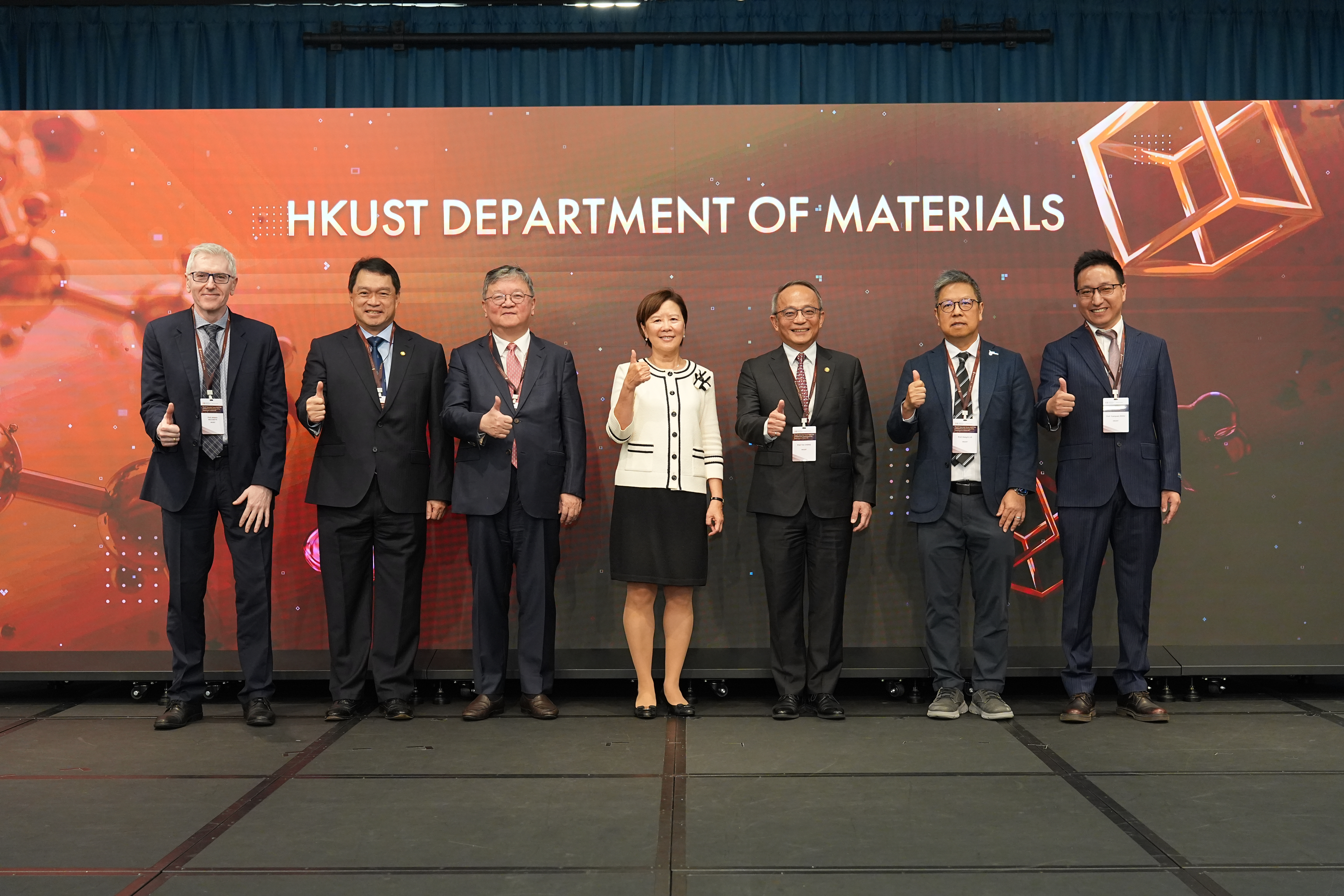
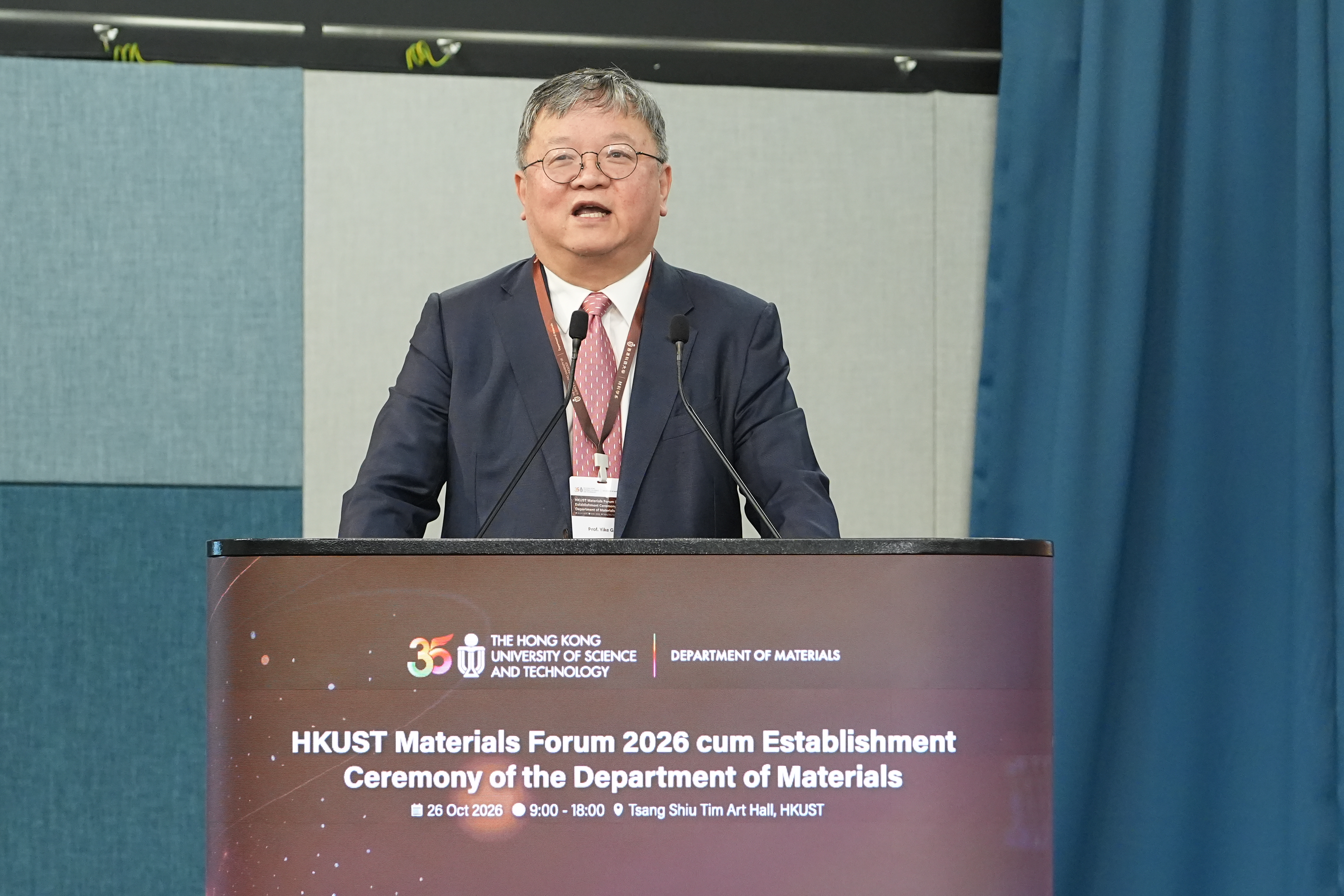
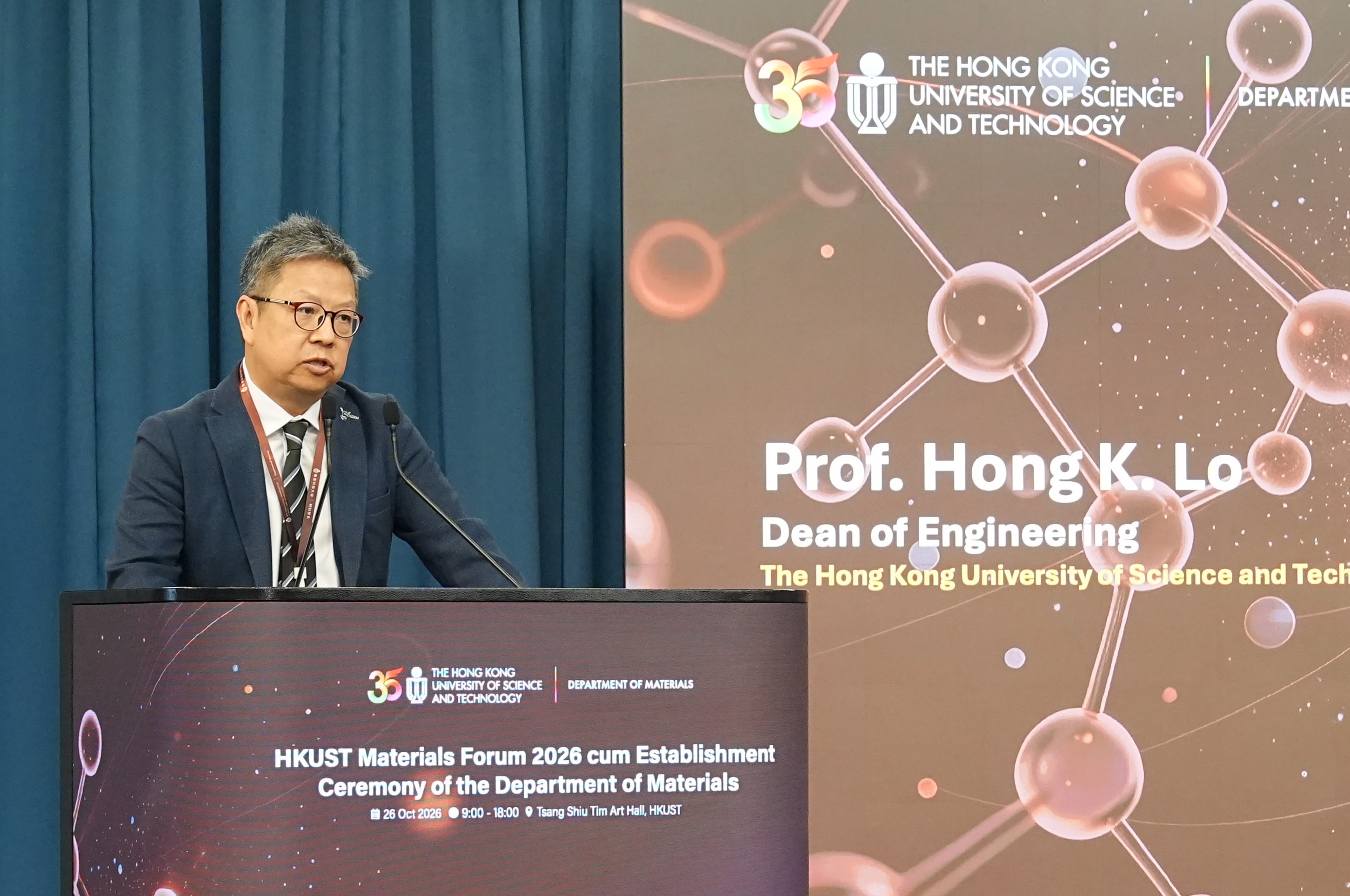
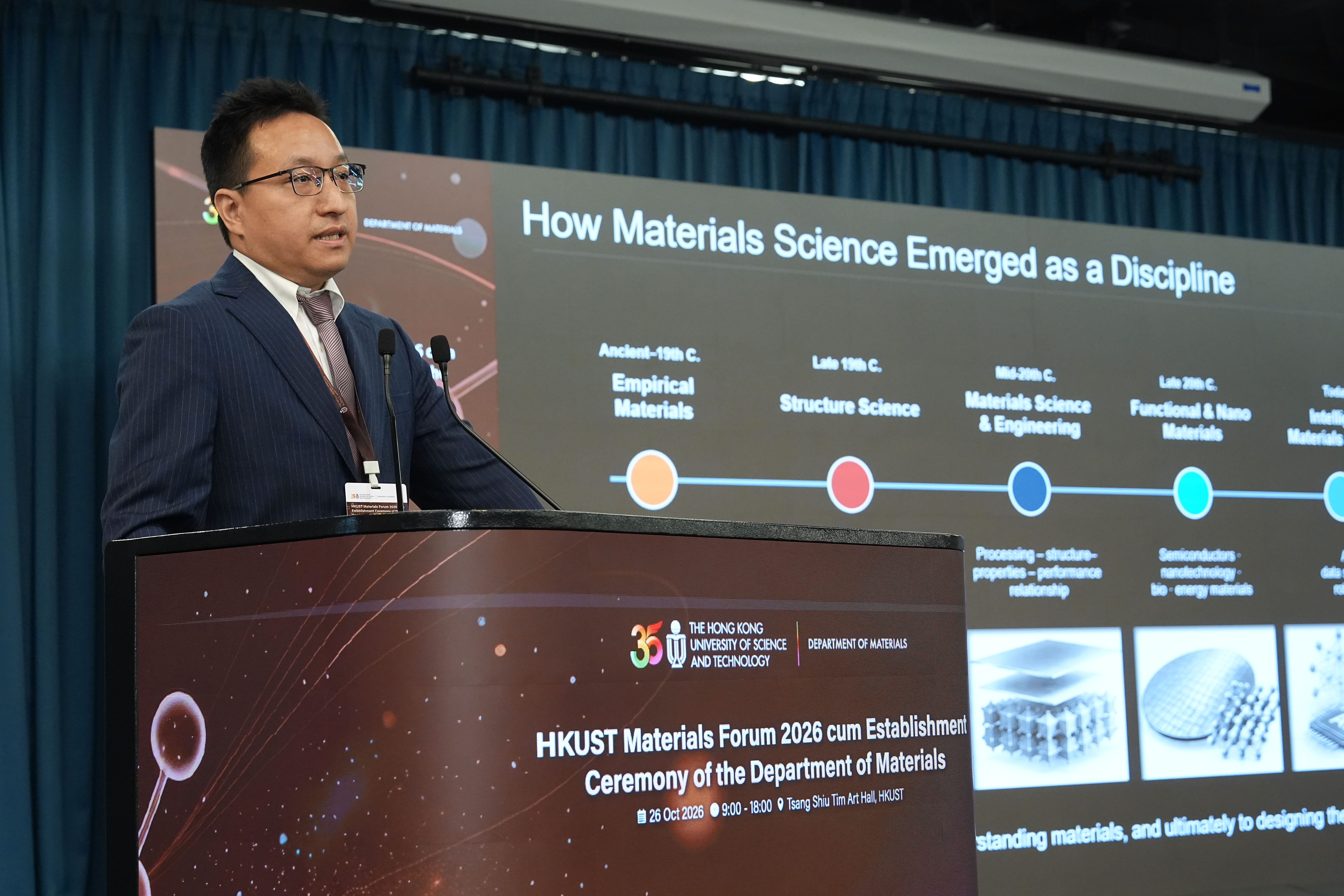
The Hong Kong University of Science and Technology (HKUST) today held the “Materials Forum 2026 cum Establishment Ceremony of the Department of Materials (MAT)”. As the first flagship academic event following the department's inception, the forum brought together distinguished scholars and researchers from Hong Kong, the Chinese Mainland, the United States, Korea, and other regions. The event not only marked the establishment of MAT but also provided a platform for discussing emerging frontiers and future opportunities in materials science.
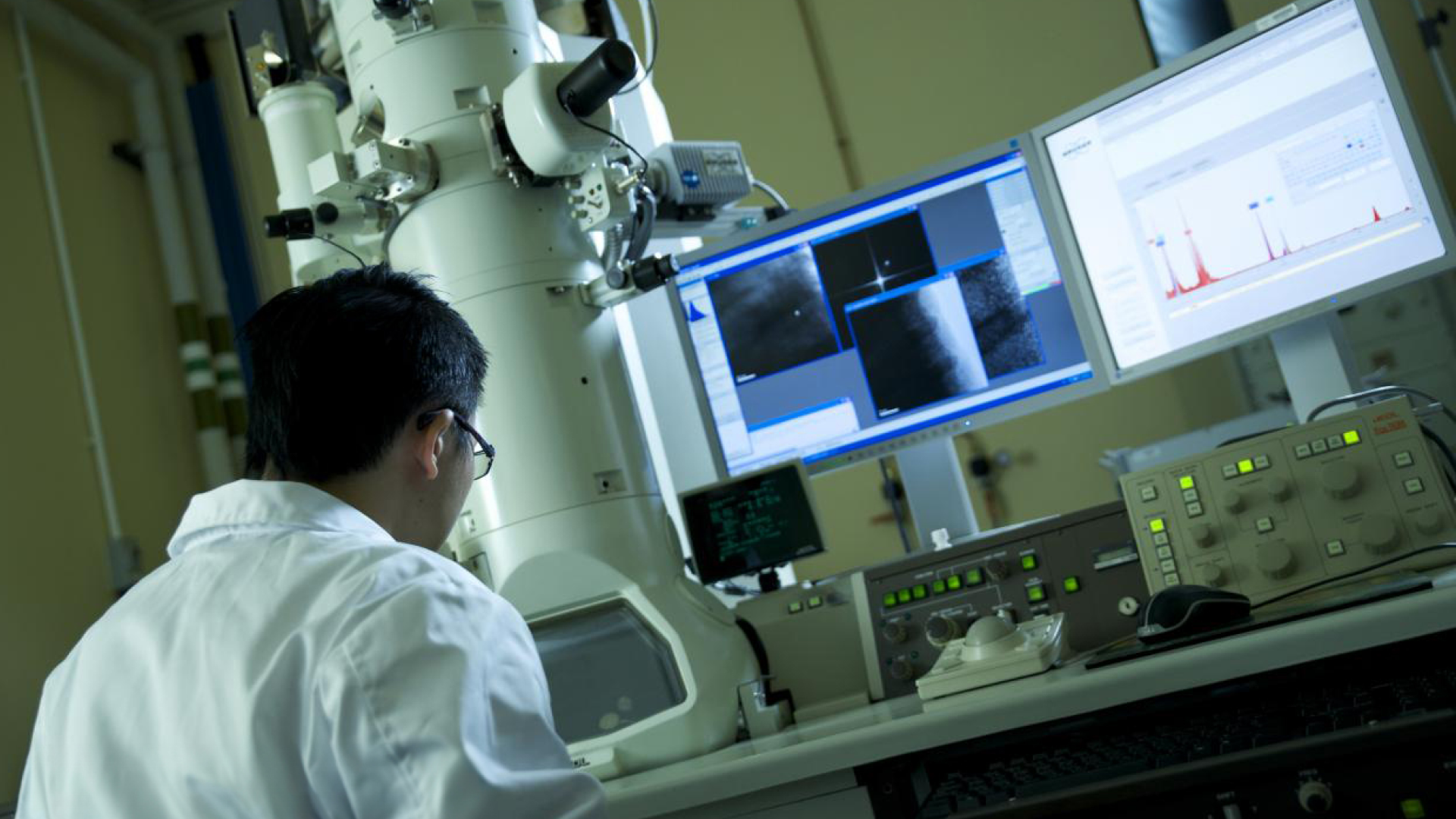
As the seventh academic department within the School of Engineering, MAT aims to become a world-class, impact-driven, interdisciplinary research hub, transforming traditional Materials Science and Engineering (MSE) into a new era of AI-powered “MSE-I”. To drive interdisciplinary innovation and talent development, the Department will anchor its research on three core pillars supported by two frontier technology platforms. The three core research pillars include: “Materials for Health and Biomedicine”, focusing on advanced materials to improve healthcare, diagnostics, and medical technologies; “Materials for Energy and Information”, addressing challenges in sustainable energy, electronics, and next-generation information technologies; and “Materials for Terrestrial and Space Sustainability”, extending materials innovation to environmental sustainability, extreme environments, and space exploration. The two cross-disciplinary technology platforms are “Advanced Materials Modeling and Characterization”, enabling researchers to understand and analyze materials across multiple length and time scales; and “AI-Empowered Materials Synthesis and Discovery”, integrating AI, automation, and data-driven experimentation to accelerate materials synthesis and the discovery of novel materials.
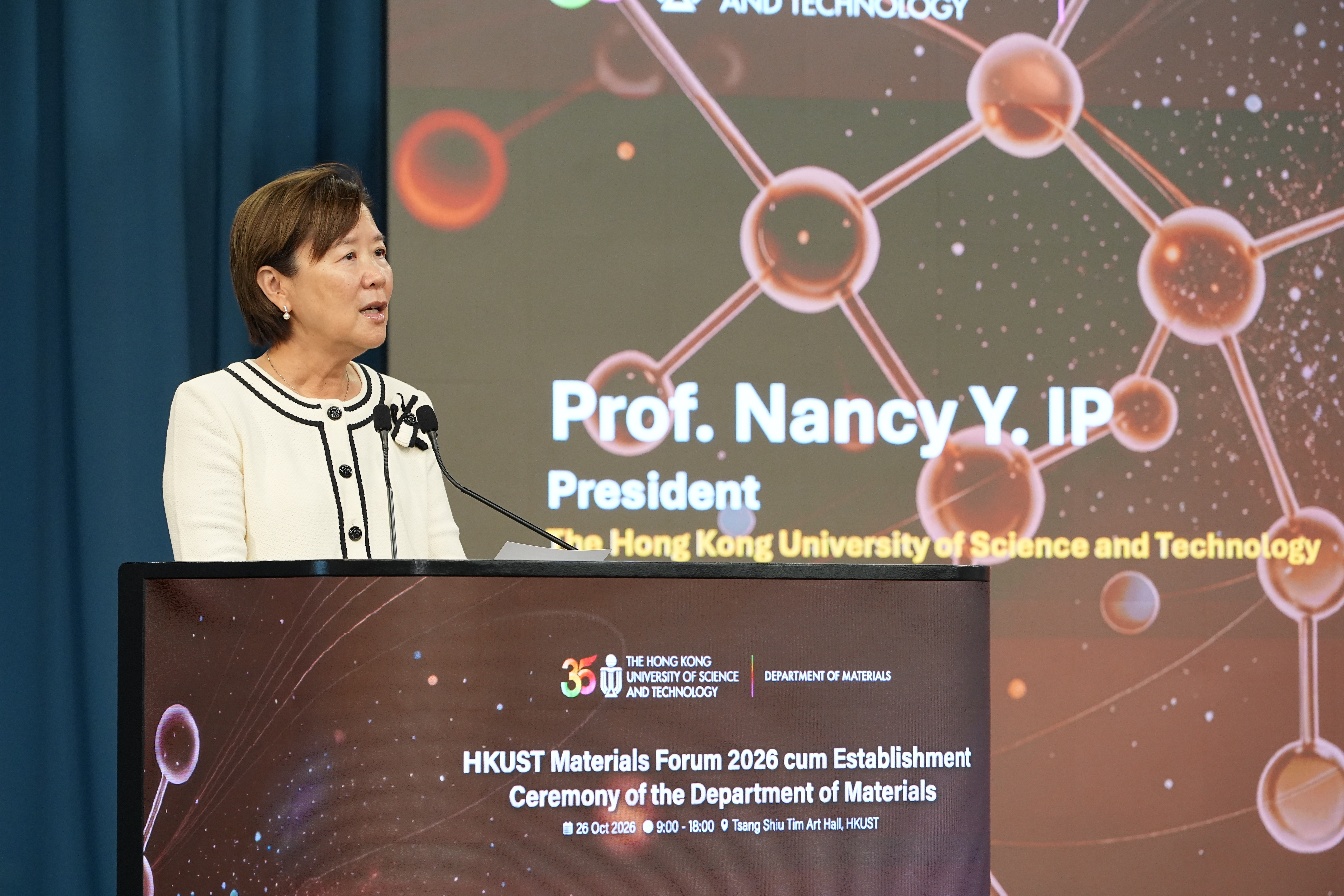
In her opening remarks, Prof. Nancy IP, President of HKUST, said, "Advanced materials underpin strategic emerging industries ranging from new energy and next-generation information technologies to biomedicine, advanced manufacturing, and aerospace. As our nation advances scientific and technological innovation to cultivate new quality productive forces, the strategic role and leading influence of materials innovation have become increasingly prominent. The newly established MAT integrates our strengths across engineering, physics, life sciences, artificial intelligence, energy, sustainability, and advanced manufacturing. The Department is dedicated to bridging cutting-edge, fundamental materials discovery with engineering innovation, striving to drive tangible and far-reaching societal and economic impact."
Prof. GUO Yike, Provost of HKUST, remarked, “The establishment of MAT further strengthens the vital connection between innovations and engineering applications, opening up new opportunities for interdisciplinary collaboration. Today, AI is transforming the way how materials are explored, designed, and developed, with unprecedented impact. At this pivotal moment, the establishment of MAT is particularly significant, enabling the University to build on its strong foundation in materials science while harnessing the boundless potential of AI. MAT will leverage the synergy between materials science and AI to advance cutting-edge research and nurture the next generation of top-tier talent, translating research breakthroughs into innovative solutions that address pressing global challenges.”
Prof. Hong K. LO, Dean of Engineering at HKUST, said, “The new Department of Materials not only bridges an important dimension in our academic structure and strengthens the foundations of engineering, but also connects our existing disciplines. Rather than serving merely as another academic unit, it will act as a powerful catalyst for interdisciplinary education and innovation across the School. By deepening these engineering foundations, MAT will unlock boundless opportunities for its future growth.”
To nurture the next generation of materials engineers, MAT will launch its PhD and MSc programs in 2027, followed by a BEng program in 2028. These comprehensive programs will equip students with the advanced knowledge, technical expertise, and problem-solving skills required to navigate contemporary challenges and opportunities arising from the convergence of materials science, engineering, and AI.
Prof. ZHOU Yuanyuan, Acting Head of MAT at HKUST, stated: "The Department’s research strategy is organized around three pillars supported by two shared foundations. Together, they form an interconnected framework where foundational capabilities continuously advance application-driven research, while new scientific challenges stimulate methodological breakthroughs. Moving forward, we aim to build our curriculum upon four core elements—solid scientific foundations, deep interdisciplinary integration, comprehensive experiential learning, and leadership training that cultivates an entrepreneurial spirit and a global vision. We are steadfastly committed to nurturing future leaders who can transform scientific knowledge into meaningful impact."
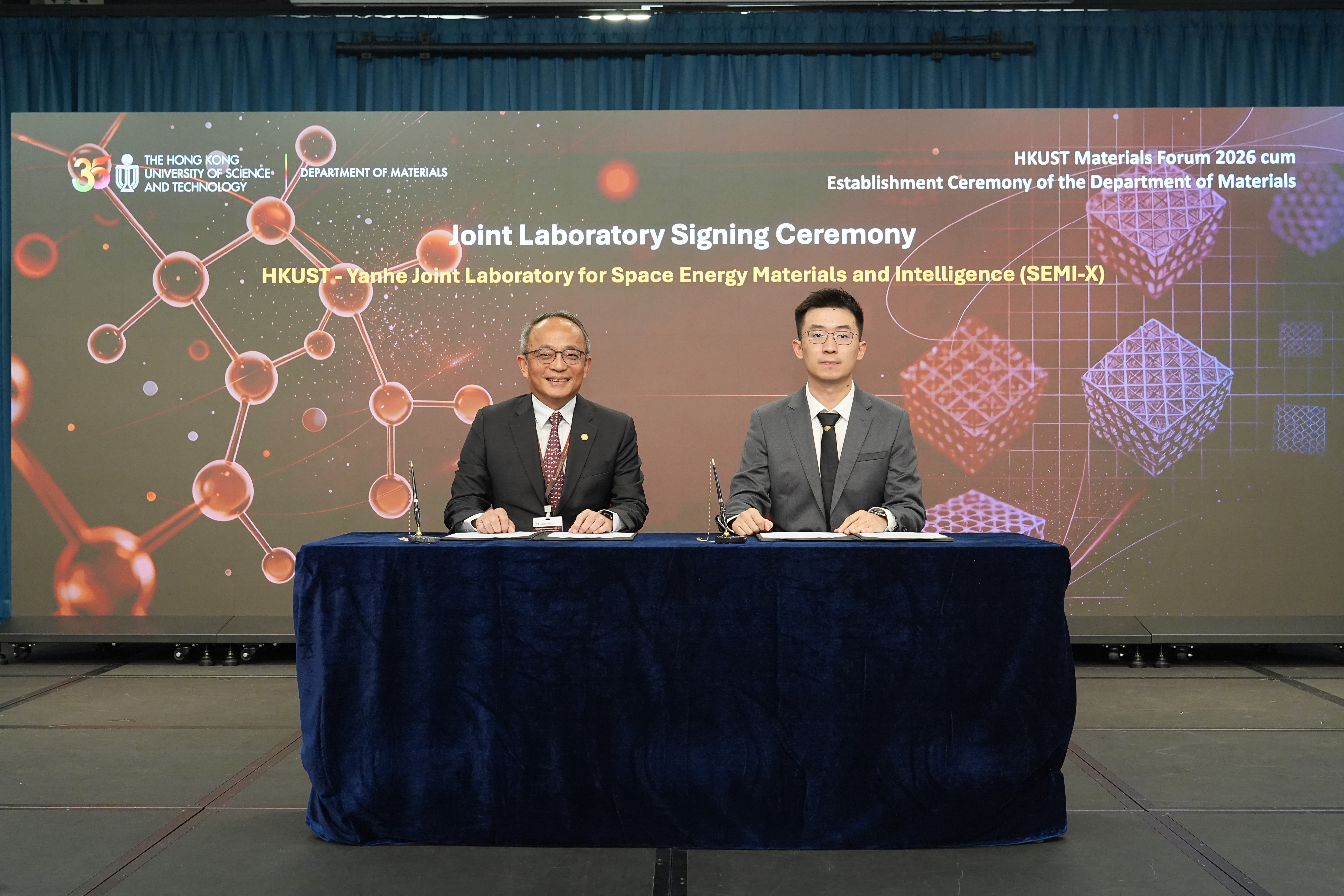
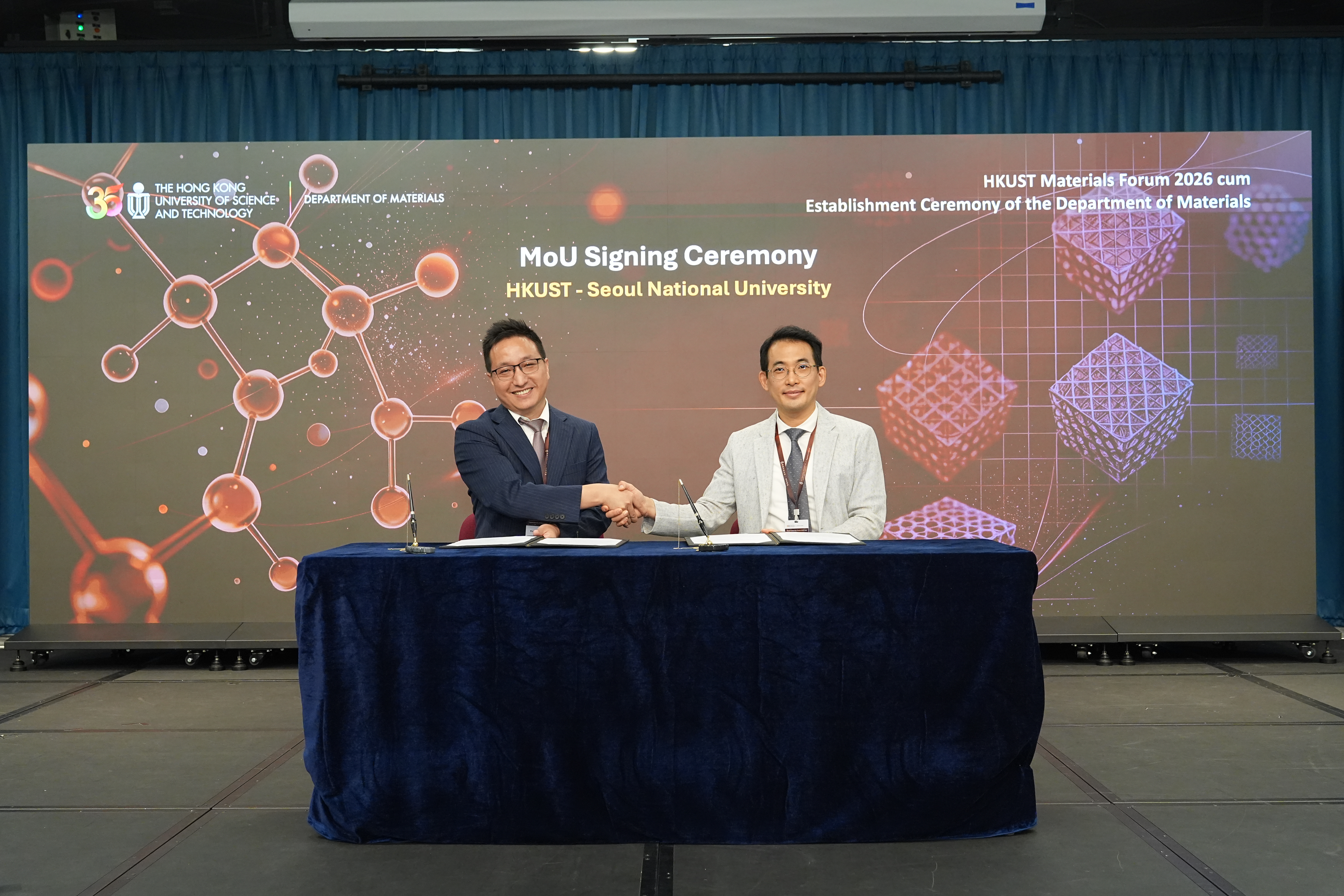
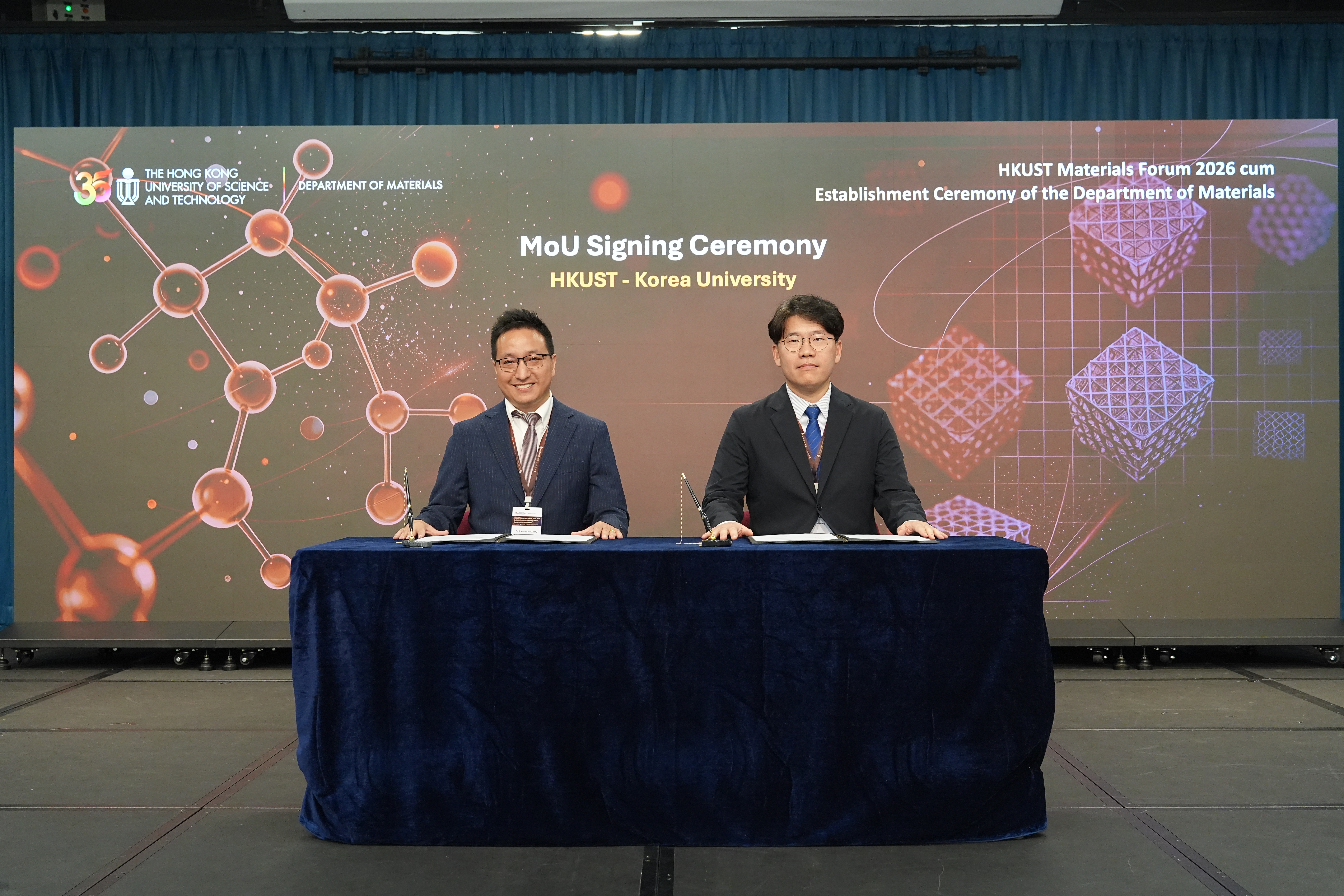
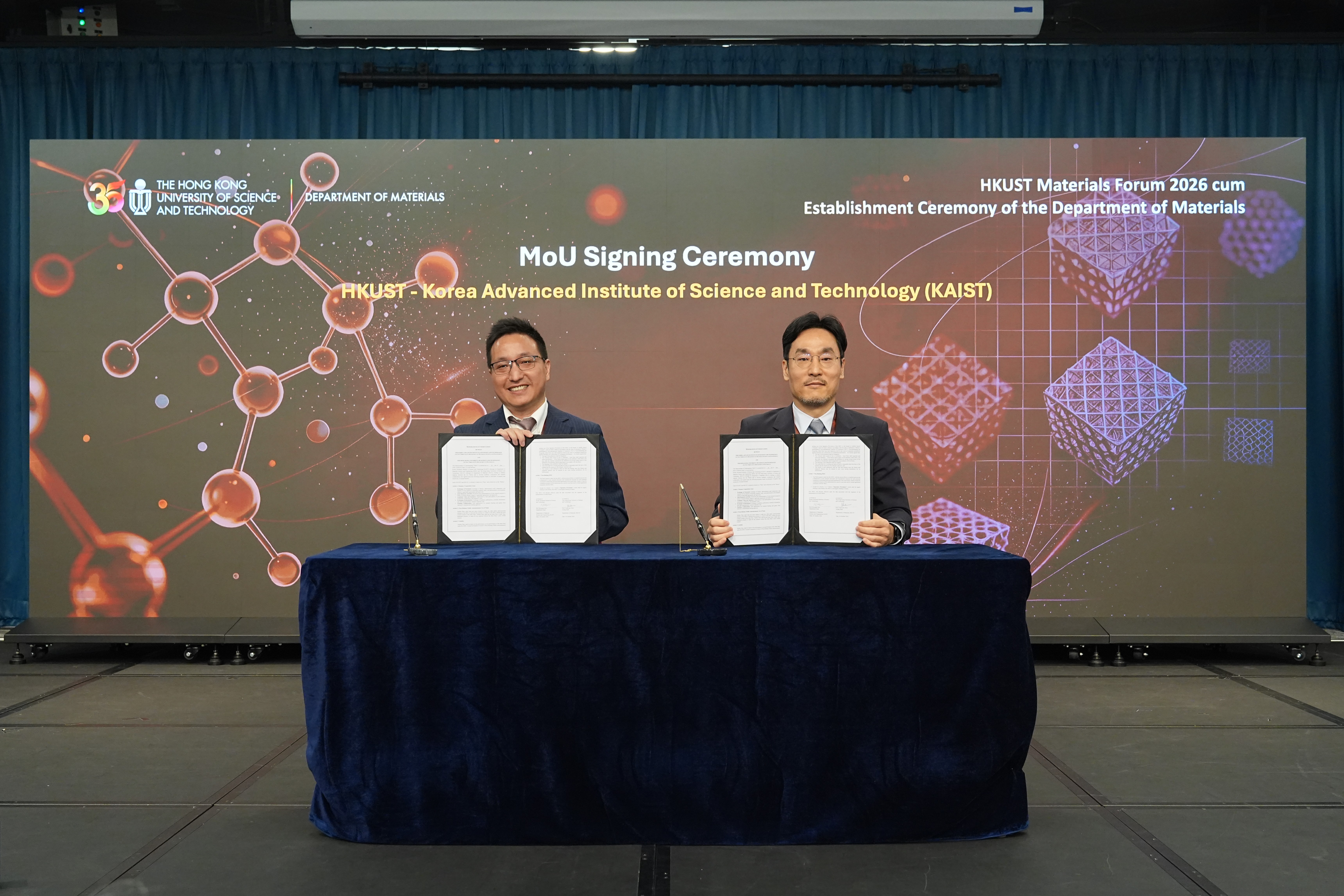
The Department is actively expanding its international academic and industry partnerships. At the ceremony, HKUST signed a collaboration agreement with Yanhe Technology to jointly establish the "Joint Laboratory for Space Energy Materials and Orbital Intelligence," with Prof. Tim CHENG Kwang-ting, Vice-President for Research and Development of HKUST, signing on behalf of the University. The Joint Laboratory will focus on lightweight, high-efficiency space photovoltaics, advanced space energy materials, in-orbit intelligence, and the integration of energy harvesting with edge-AI computing. Additionally, the Department signed MoUs with Seoul National University, KAIST, and Korea University to deepen collaboration with Korea’s premier materials research institutions through joint research, faculty and student exchanges, academic workshops, and a series of symposia.
The high-level academic forum following the inauguration ceremony successfully featured a lineup of world-renowned scholars with significant global impact. These leading experts engaged in high-level discussions across several cutting-edge fields, covering topics ranging from AI and materials design, advanced materials characterization, functional oxides and 3D integration, energy and information materials, perovskite and organic photovoltaics, and sustainable materials.
About The Hong Kong University of Science and Technology
The Hong Kong University of Science and Technology (HKUST) (https://hkust.edu.hk/) is a world-class university renowned for its excellence in innovative education, research, and impactful knowledge transfer. Adopting a holistic and interdisciplinary approach to education, HKUST was ranked 33rd globally and 6th in Asia in the QS World University Rankings 2027 and QS Asia University Rankings 2026, respectively. It was also ranked 20th worldwide in the Times Higher Education Sustainability Impact Ratings 2026, placing first among universities in Hong Kong and the Chinese Mainland for the third consecutive year. Eleven HKUST subjects were ranked among the world's top 50 in the QS World University Rankings by Subject 2026. In addition, HKUST's Computer Science discipline, which encompasses areas such as artificial intelligence and machine learning, was ranked No. 1 in Hong Kong for the tenth consecutive year in the Times Higher Education World University Rankings by Subject 2026. Its graduates are highly competitive, consistently ranking among the world's top 30 most sought-after employees. In research and entrepreneurship, more than 80% of HKUST's research was rated "world-leading" or "internationally excellent" in the University Grants Committee's Research Assessment Exercise 2020. As of September 2026, HKUST members have founded more than 2,000 active start-ups, including 11 unicorns and 23 successful exits through initial public offerings (IPOs) or mergers and acquisitions (M&A).
For media enquiries, please contact:
Public Affairs and Global Communications Office
Email: media@ust.hk
Sign Up for Our Latest News
Latest News
A research team at The Hong Kong University of Science and Technology (HKUST) has developed a dynamic integrated interface engineering strategy that enhances the energy density and stability of anode-free lithium metal batteries by reconfiguring key battery interfaces. A pouch cell using the strategy achieved a specific energy of 467 Wh kg-1, comparable to conventional commercial batteries. A full coin cell retained 90% of its capacity after 200 cycles.

The Hong Kong University of Science and Technology (HKUST) MBA Program and HKUST Entrepreneurship Center, in collaboration with two leading European student organizations, Erasmus AI Society and MAIN (Maastricht AI & Tech Network), recently concluded the AI Hackathon and Symposium. The event was strongly supported by Hong Kong Talent Engage under the Labour and Welfare Bureau of the HKSAR Government and featured as a flagship event of the Hong Kong AI Summit 2026.

The Hong Kong University of Science and Technology (HKUST) has recently received a generous donation from distinguished alumnus Dr. Joseph CHEUNG Wang Ngai to establish the Dr Joseph W N Cheung Research Excellence Award, a new initiative designed to recognize and support outstanding research achievements at the University. The gift will be designated for HKUST's new School of Medicine and HKUST Business School, underscoring Dr.