





AI Matches Human Teachers: HKUST Study Finds a Brief Pre-Lecture Chat Boosts Students' Brain Synchrony and Learning Outcomes
This study provides the first neuroscientific evidence that scalable, AI-powered interactions can enhance online education

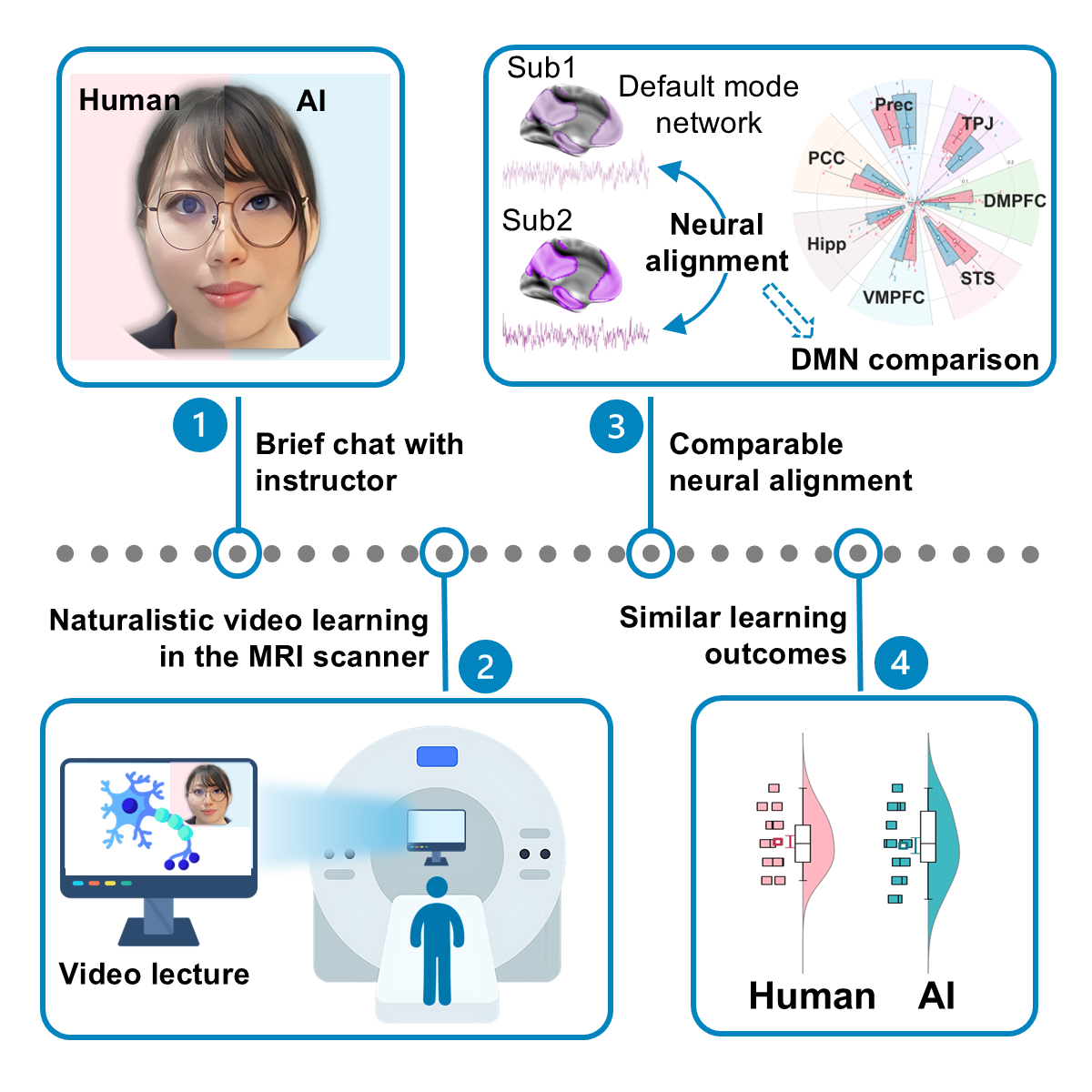
Millions of students worldwide have long relied on self-paced learning through pre-recorded video lectures, a model that forms the backbone of massive open online courses (MOOCs) and large-scale online education. Since the COVID-19 pandemic, dependence on video-based online learning has increased significantly, with learner participation rising sharply. However, this expansion has also been accompanied by a widespread decline in student engagement, undermining overall learning outcomes.
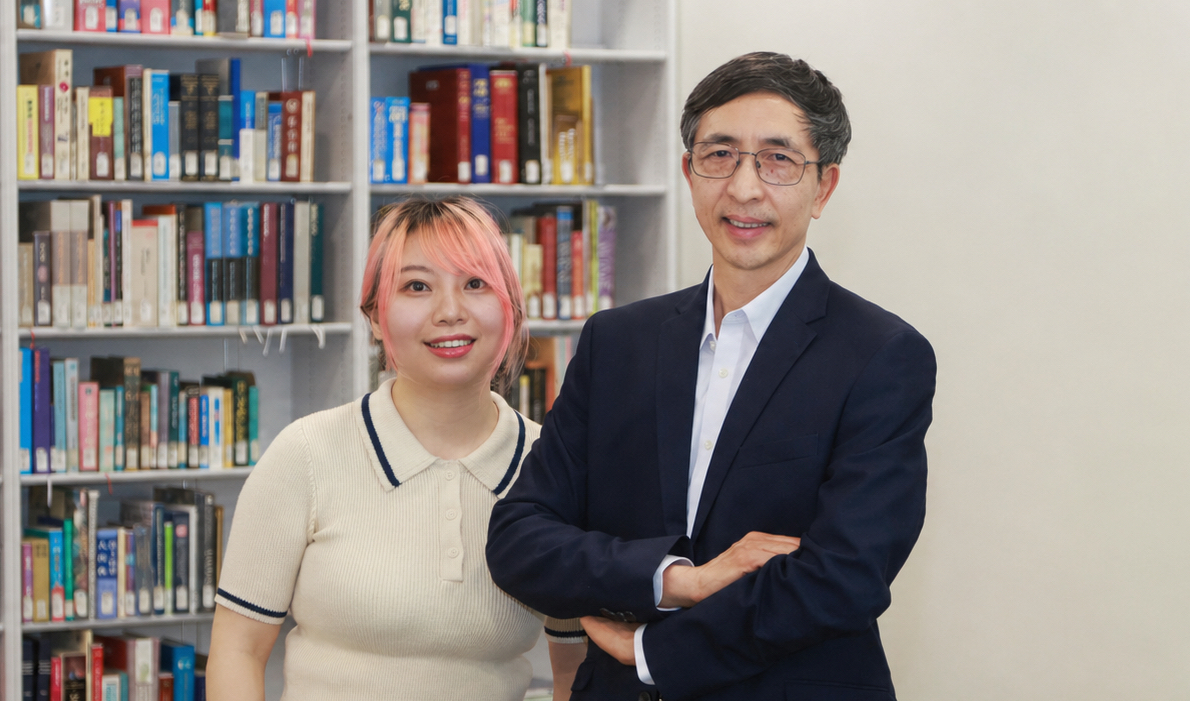
A research team at The Hong Kong University of Science and Technology (HKUST), led by Prof. LI Ping, Dean of the School of Humanities and Social Science and Chair Professor of Psychology and Cognitive Science, has found that a brief one-on-one pre-lecture conversation (8–10 minutes) — whether with a human or an AI instructor — improves students’ neural synchrony and learning outcomes.
Human and AI instructors achieve comparable learning outcomes, but through different neural pathways. Human interaction engages both cognitive scaffolding and strong social-emotional processing, mediated by gaze alignment, while AI interaction supports more top-down cognitive processing. The study shows that AI-led and human-led pre-class interactions yield statistically indistinguishable learning outcomes across recall, comprehension, and knowledge transfer.
The study, published in the leading international academic journal Neuron under the title "Scaffolding human and AI instruction: neural alignment and learning gains in online education," provides the first neuroscientific evidence that AI instructors can match their human counterparts in improving online learning quality.
How the Study Was Conducted
The research team recruited 57 university students and randomly assigned them to three groups:
- Group 1 (No interaction): Watched a 14-minute video lecture with no prior student-teacher conversation.
- Group 2 (Human instructor interaction): Engaged in a brief structured face-to-face conversation (8–10 minutes) with a human instructor beforehand.
- Group 3 (AI instructor interaction): Participated in a similarly timed interaction with an AI instructor that closely resembled the human instructor in appearance and voice. The AI instructor, powered by GPT-4, incorporated speech recognition, content generation, text-to-speech synthesis, and real-time talking-head animation. Students were aware they were interacting with an AI.
All participants then watched the same 14-minute video lecture inside an MRI scanner, while their eye movements, brain responses, and learning outcomes were recorded.
The Results
The results were striking. Students who spoke with either the human or the AI instructor showed stronger synchronized neural activity in brain regions responsible for information processing, cognitive resource allocation, and socio-emotional responses during subsequent video learning. No significant differences were found between the two groups across recall, comprehension, and knowledge transfer.
By contrast, students who had no pre-lecture interaction did not exhibit these patterns, and their learning outcomes paled in comparison.
Prof. Li explained: "Both groups—students who interacted with a human instructor and those who interacted with the AI instructor—showed similar brain synchrony patterns during learning, and both outperformed students who had no interaction, especially on challenging comprehension questions. This tells us that social scaffolding, even when brief and AI-mediated, fundamentally shapes how the brain prepares us to learn."
Different Pathways, Same Destination
While AI-led interaction produced comparable learning outcomes, the study also identified meaningful differences. Students who interacted with the AI instructor reported lower perceived social closeness and showed lower gaze alignment during the lecture compared with those in the human-interaction group.
Brain imaging shows synchronized neural activity in information-processing, cognitive control and socio-emotional regions, while eye-tracking data demonstrates gaze alignment. Although students reported feeling less socially close to the AI instructor and showed lower gaze alignment, their learning outcomes were equally strong.
Both methods proved effective. These findings suggest that effective AI educational systems do not need to perfectly replicate human interaction. AI instruction can succeed by generating sufficient social-emotional resonance while leveraging its computational strengths in retrieving knowledge and delivering personalized learning.
A particularly novel contribution of the study is its demonstration of a multi-stage, reciprocal cascade linking eye movements, brain activity, and learning outcomes — which researchers call "eye-brain-behavior correspondence."
Students who had prior interaction with the human instructor showed significantly higher gaze alignment: their eyes moved in more coordinated directions and followed more similar patterns to one another and to the instructor's gaze. Further analyses revealed that this shared visual attention was associated with better learning, mediated by activity in the superior temporal sulcus (STS), a region involved in social perception and language comprehension. At the same time, alignment in the posterior cingulate cortex — a core hub of the default mode network — appeared to guide coordinated gaze behavior in a top-down fashion.
Dr. PENG Yingying, HKUST Postdoctoral Fellow and the paper's first author, said, "We found bidirectional pathways in the workings of the mind and the brain: when students fixate their attention on the same learning material, their brains align, and aligned brains further help keep their attention in sync. Together, these processes reinforce one another and support learning."
What This Means for Education
This research reveals multiple routes to improving students' online learning. Human interaction engages both cognitive scaffolding and strong social-emotional processing mediated by visual alignment, whereas AI interaction supports more top-down cognitive processing while still providing meaningful emotional support.
Prof. Li remarked, "This points toward a looming future for the social fabric of education, where even an AI instructor can pause, notice a student's subtle changes, and respond with care. These subtle aspects of human communication, if successfully realized in AI-empowered systems, may help cultivate what it means to feel seen, heard, and socially connected in a digital classroom."
As AI continues to evolve at a rapid pace, gaining deeper insight into how AI shapes human cognition and brain function - and how the brain, in turn, adapts to AI - will be critical for the development of scalable and socially enriched learning environments. Such understanding will help ensure that AI enhances, rather than replaces, human‑centered, active learning.
About The Hong Kong University of Science and Technology
The Hong Kong University of Science and Technology (HKUST) (https://hkust.edu.hk/) is a world-class university known for its innovative education, research excellence, and impactful knowledge transfer. With a holistic and interdisciplinary pedagogy approach, HKUST was ranked 6th in the QS Asia University Rankings 2026, 3rd in the Times Higher Education’s Young University Rankings 2024, and 19th globally and 1st in Hong Kong in the Times Higher Education’s Impact Rankings 2025. Eleven HKUST subjects were ranked among the world’s top 50 in the QS World University Rankings by Subject 2026. In addition, in the Times Higher Education World University Rankings by Subject 2026, HKUST’s Computer Science discipline which encompasses areas such as artificial intelligence and machine learning, has been ranked No. 1 in Hong Kong for ten consecutive years. Our graduates are highly competitive, consistently ranking among the world’s top 30 most sought-after employees. In terms of research and entrepreneurship, over 80% of our work was rated “internationally excellent” or “world leading” in the Research Assessment Exercise 2020 of the Hong Kong’s University Grants Committee. As of January 2026, HKUST members have founded over 1,900 active start-ups, including 10 Unicorns and 21 exits (IPO or M&A).
For media enquiries, please contact:
PR and Media Team, Global Engagement and Communications Office
Email: media@ust.hk
Sign Up for Our Latest News
Latest News

Co-organized by The Hong Kong University of Science and Technology (HKUST) and Sino Group, the HKUST-SINO One Million Dollar Entrepreneurship Competition 2026 Final and Award Ceremony was held today at Shaw Auditorium, HKUST. During the ceremony, HKUST and Sino Group also announced the launch of the HKUST InnoBay 1M PLUS program, extending the competition beyond a one-off contest into an ongoing platform for start-up incubation and technology commercialization.
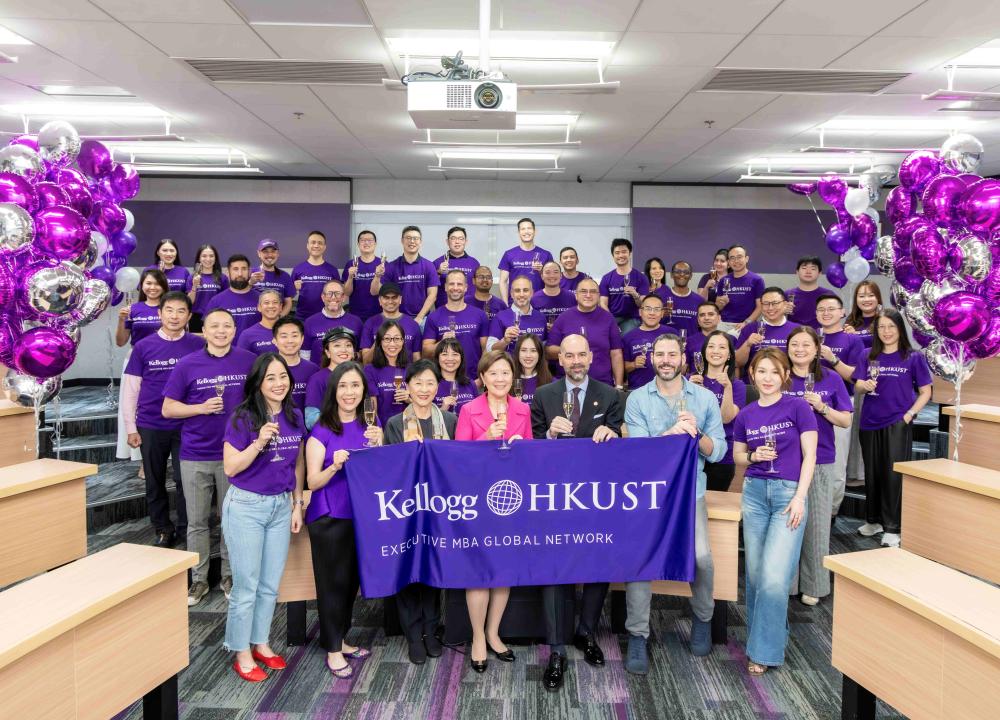
The Kellogg-HKUST Executive MBA (KH EMBA) Program has secured the No. 1 position globally in the Financial Times Executive MBA Ranking 2026, released today, marking an unprecedented 13th time the program has attained the top position.

Turning climate science and early warnings into practical action to protect people, strengthen infrastructure and finance resilience is the focus of the Climate Adaptation and Resilience Conference 2026 (CARE2026) at The Hong Kong University of Science and Technology (HKUST). Running from 8 to 10 October, the conference opened with calls to connect scientific knowledge with better preparedness and decisions that make cities more resilient.