

RGC Recognition Highlights HKUST’s Strength in Strategic Innovation and Fundamental Discovery
Two major announcements from Hong Kong’s Research Grants Council (RGC) reaffirm the strength of the research-intensive ecosystem that HKUST has built over the past 35 years.
Together, these awards represent more than HK$74 million in competitive funding and highlight HKUST’s strengths in both large-scale collaborative research and individual scholarly excellence. The University secured the largest share of funding under the RGC’s 2026/27.
Strategic Topics Grant (STG) scheme with two pioneering projects focused on AI-enabled healthcare for an aging population. Just weeks later, three HKUST scholars were named RGC Senior Research Fellows and Research Fellows in recognition of their outstanding research achievements in sustainable chemistry, quantum materials, and generative AI.
Driving the Future of Elderly Healthcare
HKUST researchers are spearheading two of the six projects funded under this year’s Strategic Topics Grant scheme. The projects received more than HK$54.41 million, the largest allocation awarded to any Hong Kong university in this funding cycle.
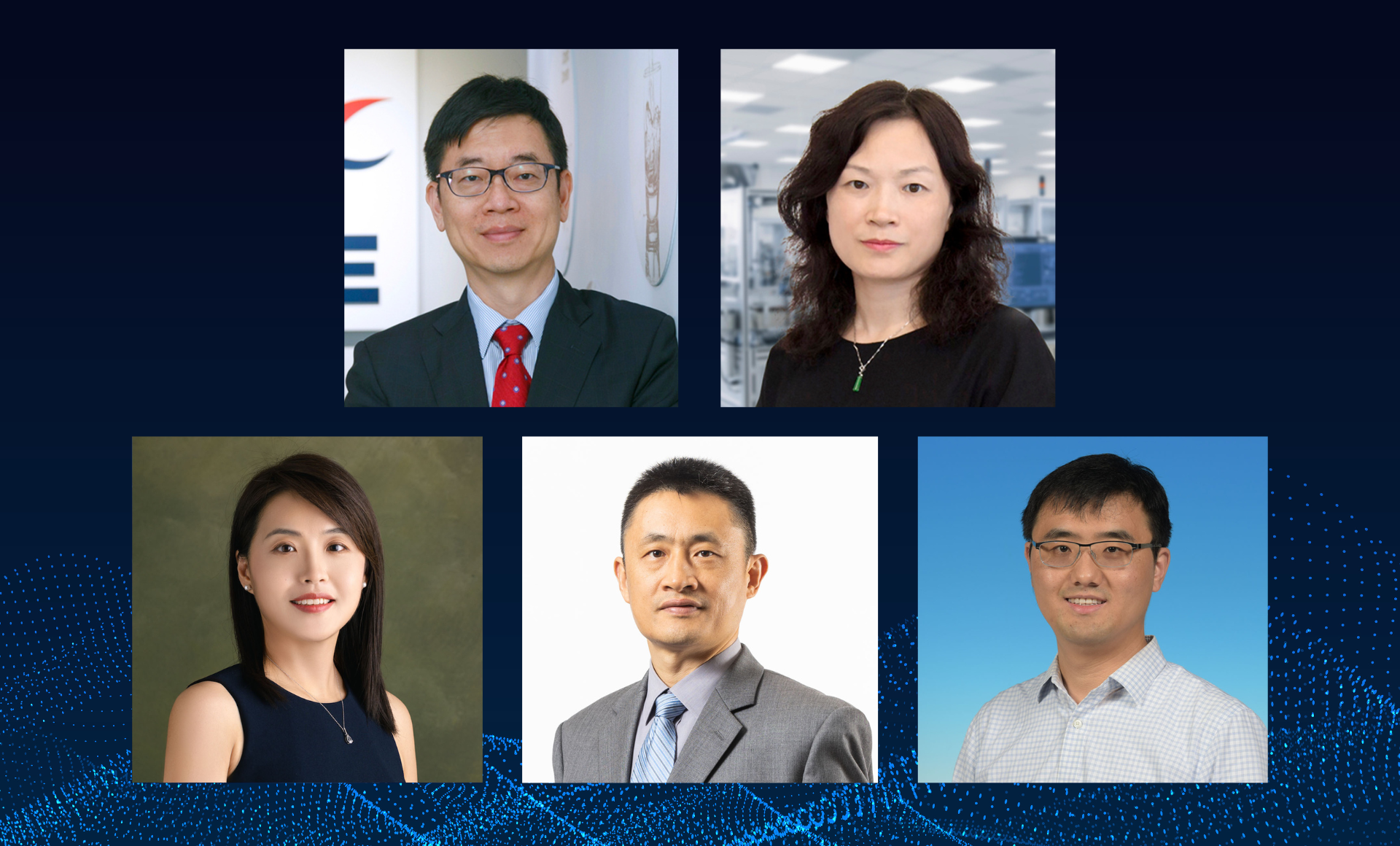
The project “AI-assisted Infection Management in Elderly Hospitals and Nursing Homes: Safeguarding Health through Point-of-Care Technologies and Smart Materials,” led by Prof. HSING I-Ming of the Department of Chemical and Biological Engineering. It addresses one of the most pressing healthcare challenges facing aging societies: preventing infections among elderly patients with weakened immune systems.
The wearable and point-of-care biosensors developed by this interdisciplinary team can rapidly identify drug-resistant organisms, assess antimicrobial susceptibility, and continuously monitor patients’ vital signs. Combined with an AI-powered clinical-decision support system, the technology aims to enable more personalized treatment, helping healthcare professionals identify risks earlier and intervene before infections become more severe.
The second project, “PMAI-PD: A Personalized Multimodal AI Platform for Integrated Life-Cycle Management of Parkinson’s Disease in Aging Populations,” is headed by Prof. ZHANG Qian, Head of the Division of Integrative Systems and Design and Chair Professor in the Department of Computer Science and Engineering and the Department of Electronic and Computer Engineering.
Focused on Parkinson’s disease, the project uses AI to detect subtle changes in patients’ daily behavior and clinical indicators before symptoms significantly worsen. Using wearable and contactless sensing technologies, patients can continuously be monitored at home while receiving AI-guided rehabilitation support, creating an integrated care model that seamlessly connects hospital care with home-based disease management.
“This achievement highlights HKUST's profound expertise in AI and healthcare technology and demonstrates how pioneering research can drive more efficient screening, monitoring, and disease management for older adults,” said Prof. Tim CHENG Kwang-Ting, Vice-President for Research and Development.
Celebrating Research Leadership
While the STG recognizes ambitious collaborative research, the RGC’s Senior Research Fellow Scheme (SRFS) and Research Fellow Scheme (RFS) honor individual scholars whose sustained research excellence has enhanced respective fields. The fellowships provide recipients with five years of dedicated research time, free from teaching and administrative responsibilities, allowing them to pursue high-impact research.
The HKUST academics selected this year have been awarded more than HK$19.72 million in fellowship funding. Prof. SHAO Minhua, Head and Chair Professor of the Department of Chemical and Biological Engineering, was named an RGC Senior Research Fellow for his research on near-stoichiometric electrosynthesis. His work seeks to develop more energy-efficient and environmentally sustainable methods for producing oximes and amino acids. These compounds, which are widely used in pharmaceuticals and antibacterial applications, could be manufactured through greener alternatives to conventional production processes.
Prof. LIU Junwei, Associate Professor in the Department of Physics, received an RGC Research Fellowship for his groundbreaking work on altermagnets, a new class of quantum materials that he helped to identify in 2021. By combining desirable properties of both ferromagnets and antiferromagnets, these materials could enable faster, denser and more energy-efficient memory devices, opening new possibilities for next-generation computing technologies.
Also receiving an RGC Research Fellowship was Prof. LIU Jia, Associate Professor in the Department of Marketing and the Department of Industrial Engineering and Decision Analytics. Her research examines how businesses can respond to consumers' growing reliance on AI-powered platforms for discovering, comparing, and evaluating products. Her work aims to equip enterprises with the tools needed to remain competitive in an increasingly AI-driven landscape.
Commenting on the fellowships, Prof. Cheng said these awards reflect the breadth and quality of HKUST’s research capabilities. He noted that advances in electrochemical synthesis and quantum materials are helping accelerate industrial innovation, while research in generative AI is enabling businesses to strengthen their competitiveness in a rapidly evolving digital economy.
Together, these achievements demonstrate the breadth and impact of HKUST’s research excellence, which ranges from interdisciplinary projects tackling pressing societal challenges to individual scholars pushing the frontiers of scientific discovery and technological innovation.