





News & Stories
2026

News
HKUST researchers reveal the pathogenesis of a rare respiratory disease through super-resolution microscopy
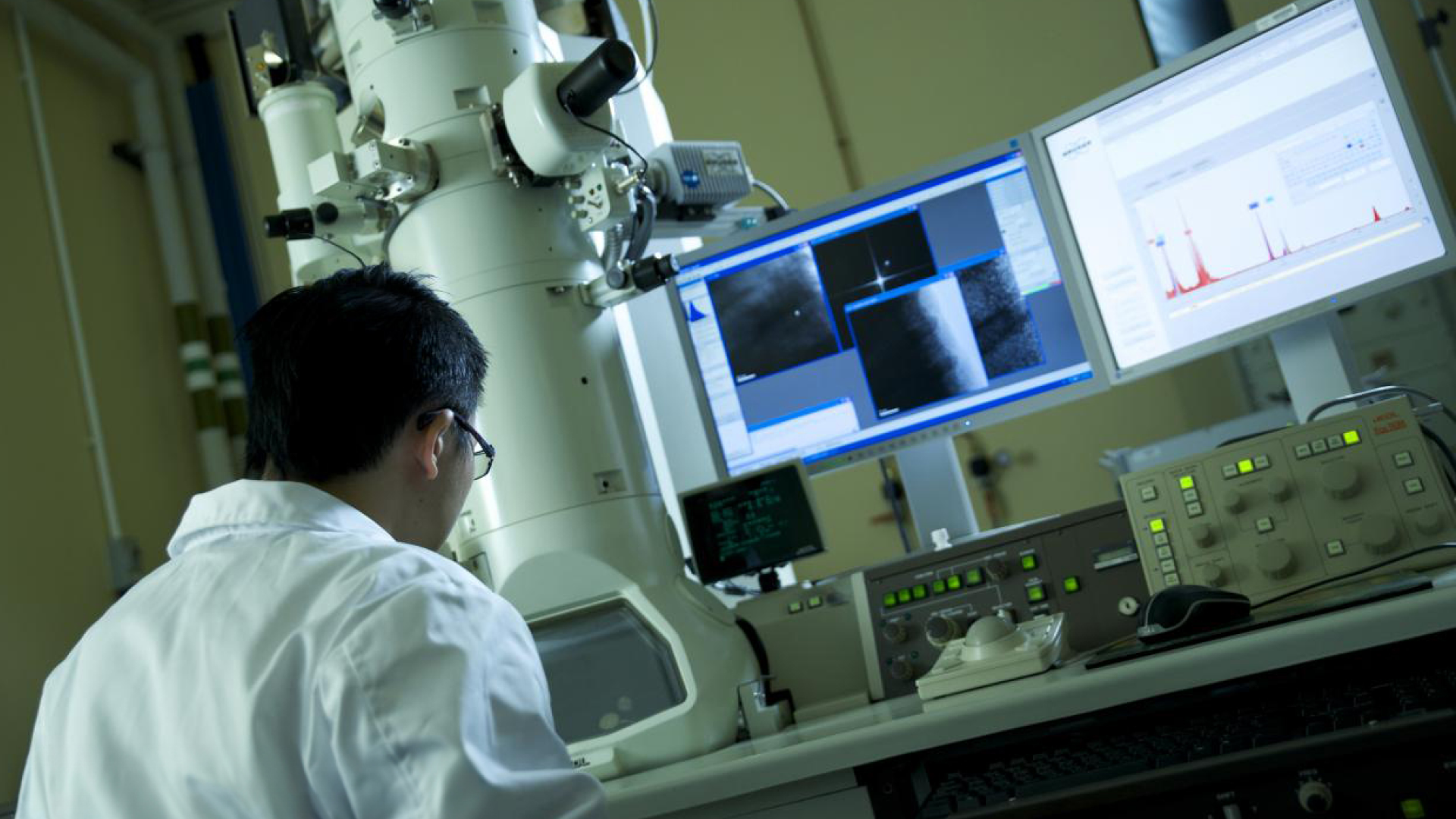
Researchers at The Hong Kong University of Science and Technology (HKUST) have uncovered how mutations in a specific gene can trigger a rare respiratory disease, shedding light on the critical role played by cellular structures known as cilia. Cilia are tiny and hair-like organelles extruding from the surface of most cell types, serving either sensory or motile functions. In the eyes, photoreceptor cells possess sensory cilia that are important for vision. Meanwhile, motile cilia align along the surface of the respiratory tract and function in airway clearance of mucus and inhaled pathogens.

News
HKUST Researchers Flip the CRISPR Script to Develop World's First DNA-Guided Gene Editing Tool for Precise Infectious Disease Diagnosis and Advancing Antiviral Therapies
A research team led by Prof. HSING I-Ming, Professor of the Department of Chemical and Biological Engineering (CBE) at The Hong Kong University of Science and Technology (HKUST), in collaboration with Prof. ZHAI Yuanliang, Associate Professor of the Division of Life Science (LIFS), has successfully developed the world's first DNA-guided CRISPR-Cas system capable of programmable RNA targeting and cleavage.This breakthrough overturns the conventional CRISPR paradigm, which uses RNA as a guide to target DNA. The new system holds tremendous potential for clinical applications, opening new avenues for RNA-targeted therapies and diagnostics, including improved accuracy in rapid infectious disease testing and the advancement of antiviral treatments. The findings have been published in the international prestigious journal Nature Biotechnology.
News
HKUST Team Unveils Innovative Technology for Precise Reading and Control of Brain Circuits to Advance Brain Disease Research
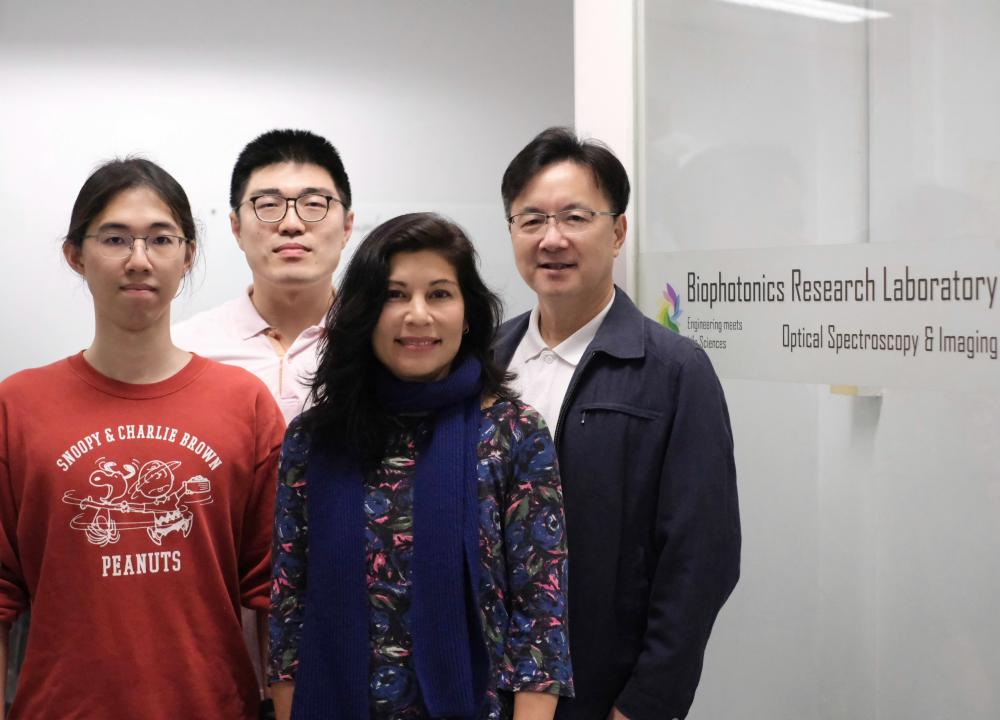
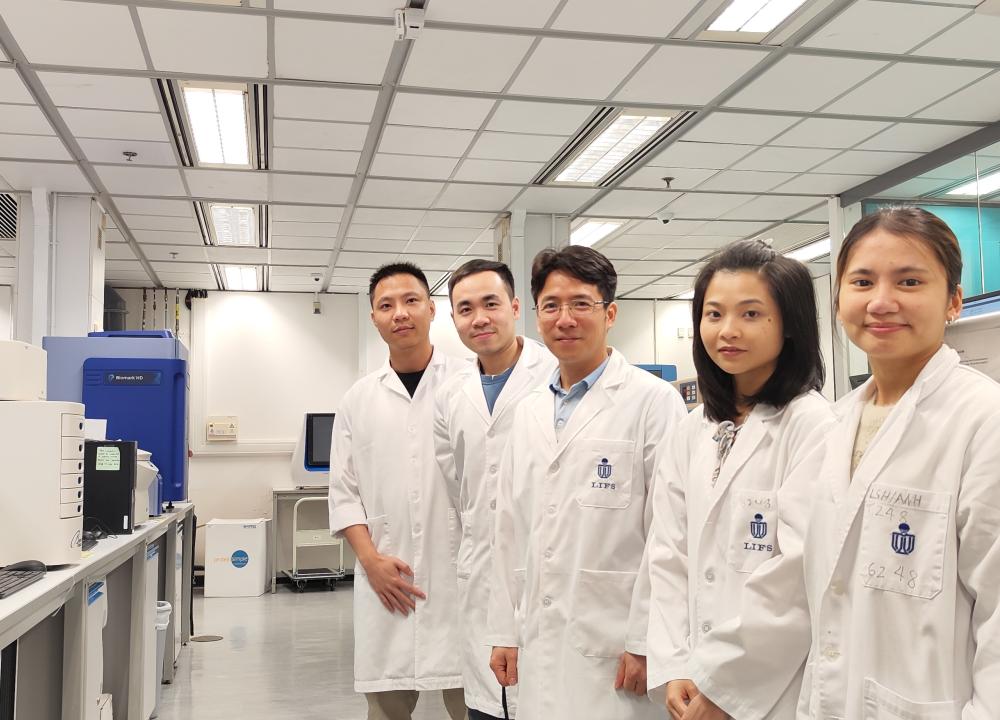
A cross-disciplinary team led by Prof. QU Jianan, Professor from the Department of Electronic and Computer Engineering and Prof. Julie L. SEMMELHACK, Visiting Assistant Professor from the Division of Life Science at The Hong Kong University of Science and Technology (HKUST) has developed a powerful laser control technique. Functioning as a “smart dimmer”, it can selectively adjust the brightness of every pixel during laser scanning, and prevent unintended neural activation, thereby significantly enhancing the precision of all-optical brain manipulation and imaging. This innovation will drive research into brain disease mechanisms and facilitate small animal disease models for new drug development.
Stories
Unveiling the Secrets of RNA Silencing
Boundless: What recent discovery has the HKUST research team made regarding the human enzyme DICER?Prof. Nguyen: Our discovery is genuinely groundbreaking. We found that the enzyme DICER, which is crucial for gene silencing, possesses a "dual-pocket" mechanism for measuring RNA. This is significant because it changes our understanding of how DICER interacts with RNA strands.Boundless: What exactly is “gene silencing”?Prof. Nguyen: Good question. Gene silencing means reducing or eliminating the expression of a specific gene. This process may occur naturally in cells or be induced artificially. Gene silencing is used to prevent the production of proteins from a targeted gene. This technique helps researchers study the function of a gene, investigate disease mechanisms, and develop gene-based therapies.

News
HKUST Researchers Achieve Breakthrough in RNA Silencing Mechanism
A research team from The Hong Kong University of Science and Technology (HKUST) has made a breakthrough discovery in understanding the molecular machinery of RNA silencing. The team uncovered how the human enzyme DICER achieves highly precise processing of microRNAs (miRNAs), advancing gene regulation research and offering new insights into the mechanisms underlying cancer, immune disorders, and genetic diseases.
2025
News
Meet Nobel Laureates at HKUST: Where Curiosity Connects with Global Scientific Excellence
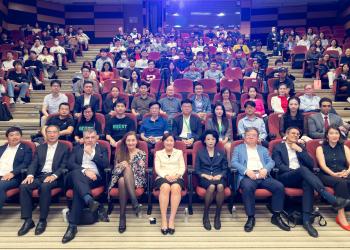
The Hong Kong University of Science and Technology (HKUST) recently hosted an engaging dialogue featuring three Nobel Prize winners, drawing nearly 200 students, faculty members and guests on campus, and an additional 2,000 online viewers from sister institutions across Mainland China. The event highlighted HKUST’s dedication to fostering cross-disciplinary innovation, and bridging the local scientific community with global thought leaders.
As part of the Hong Kong World Youth Science Conference and Xiang Jiang Nobel Forum this year, the event titled “Together with the Scientists – Nobel Laureates Visit HKUST” took place on April 14 in collaboration with the Hong Kong Alumni Association of Beijing Universities. The program showcased the groundbreaking insights from three distinguished laureates:
News
HKUST Life Science Researchers Establish an Intracranial Optic Tract Injury Model to Reveal Mechanisms of Functional Circuit Reconstruction Following CNS Injury
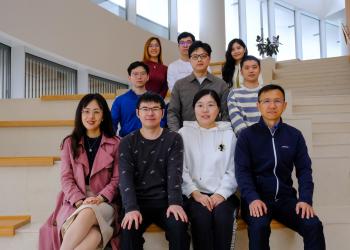
A research team led by Prof. LIU Kai from the Division of Life Science and Department of Chemical and Biological Engineering at the Hong Kong University of Science and Technology (HKUST) has established an innovative intracranial pre-olivary pretectal nucleus (OPN) optic tract injury model (pre-OPN OTI), shedding light on crucial mechanisms of functional axonal rewiring following central nervous system injury.
2024
News
HKUST Welcomes Four Nobel Laureates at the Molecular Frontiers Symposium Sparking Passion for Science and Innovation Among Young Minds
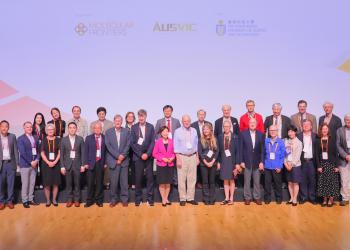
The Hong Kong University of Science and Technology (HKUST) is excited to kick off a prestigious three-day “Molecular Frontiers Symposium” at Shaw Auditorium on campus today. The high-level event showcases a lineup of internationally renowned scientists including four Nobel laureates, serving as a dynamic thought-leadership platform for exchanging ideas among brilliant and young minds.
Around 40 leading molecular scientists, including Nobel laureates Prof. Stefan HELL, Sir Tim HUNT, Prof. K. Barry SHARPLESS, and Sir Gregory WINTER, will share their knowledge and insights spanning the latest development in genome editing, fluorescence microscopy and protein engineering in this inaugural symposium in Greater China entitled "Frontiers of New Knowledge in Science".