





News & Stories
2025
News
HKUST Leads Local Institutions in RAISe+ Scheme with 7 Funded Projects
The Hong Kong University of Science and Technology (HKUST) has emerged as the top-performing local institution in the second round of the Innovation and Technology Commission’s (ITC) Research, Academic and Industry Sectors One-plus (RAISe+) Scheme, securing funding for seven projects. Spanning health and medical sciences, artificial intelligence (AI) and robotics, advanced manufacturing, and electrical and electronic engineering, these projects underscore HKUST’s leadership in transforming pioneering research into real-world applications.
Stories
Igniting Innovation and Entrepreneurship
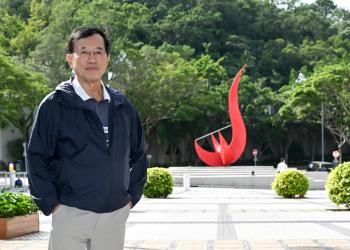
Academic-entrepreneur Professor KO Ping-Keung came to HKUST in 1993 as Visiting Professor in the Department of Electronic and Computer Engineering after working at the University of California, Berkeley, as Director of the Microfabrication Laboratory from 1984-1993, and Vice-Chairman of the Department of Electrical Engineering and Computer Sciences from 1991-1993. He served as Dean of the HKUST School of Engineering from 1995-2000 and in 2002 received the prestigious IEEE Solid-State Circuits Award. He has since become an innovator and angel investor in China’s chip industry and is a Professor Emeritus at HKUST. In 2024, Prof. Ko was awarded a HKUST Honorary Fellowship in recognition of his long-standing service and commitment to the University’s development.
Stories
Opportunity of a Lifetime I Couldn’t Miss
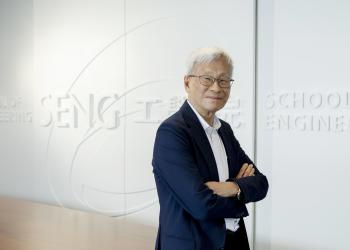
Prof. Philip CHAN Ching-Ho joined the School of Engineering in 1991 as a founding member. He served as Head of the School of Engineering’s Electrical and Electronic Engineering Department from 1995-2002 and Dean of the School from 2003-09. He was Director of the Nanosystem Fabrication Facility from 1997-2003. From 2010-20, he held the positions of Deputy President and Provost at Hong Kong Polytechnic University. He became Professor Emeritus in HKUST’s Department of Electronic and Computer Engineering in 2010.
2024
News
Pioneering the Future of Microelectronics and Integrated Circuits
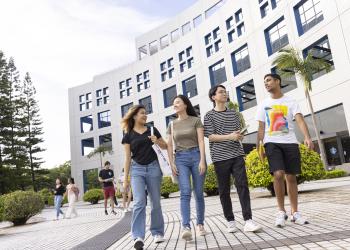
Electronic and Computer Engineering (ECE) drives computation, energy, information, and communications technologies that are at the core of a vibrant, interconnected global economy. It is the innovation engine behind 5/6G wireless networks, robotics, Internet of Things (IoT), micro-displays for augmented/virtual reality, power systems for electric vehicles and data centers, and artificial intelligence running on integrated circuits fabricated on semiconductor chips, all of which have fundamentally impacted our society. By constantly adapting to an ever-changing world, electronic and computer engineers turn challenges into possibilities.

News
HKUST Engineering Researchers Develop Groundbreaking Platform for One-Step Production of Sperm-Like Micro-Robots to Enhance Precise Drug Delivery
A research team from the School of Engineering of the Hong Kong University of Science and Technology (HKUST) has developed an innovative magnetic actuation platform that enables the one-step formation of sperm-like “micro-robots”, demonstrating excellent motility and efficient performance in precise drug delivery. By addressing the limitations of traditional microfluidic devices in processing sophisticated 3D structures, the research team has significantly streamlined the production procedure of these micro-robots, paving the way for more promising applications of this technology in the biomedical field.
News
HKUST Develops Groundbreaking Artificial Compound Eye to Revolutionize Robotic Vision at Lower Cost but Higher Sensitivity
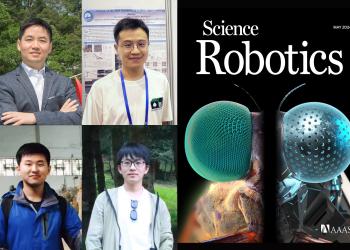
A research team at the School of Engineering of the Hong Kong University of Science and Technology (HKUST) has recently developed a novel artificial compound eye system that is not only more cost-effective, but demonstrates a sensitivity at least twice that of existing market products in small areas. The system promises to revolutionize robotic vision, enhance robots' abilities in navigation, perception and decision-making, while promoting commercial application and further development in human-robot collaboration.

News
HKUST Researcher Developed Liquid Metal-Based Electronic Logic Device that Mimics Intelligent Prey-Capture Mechanism of Venus Flytrap
A research team led by the School of Engineering of the Hong Kong University of Science and Technology (HKUST) has developed a liquid metal-based electronic logic device that mimics the intelligent prey-capture mechanism of Venus flytraps. Exhibiting memory and counting properties, the device can intelligently respond to various stimulus sequences without the need for additional electronic components. The intelligent strategies and logic mechanisms in the device provide a fresh perspective on understanding “intelligence” in nature and offer inspiration for the development of “embodied intelligence”.

Stories
An Educator Focusing on Experiential and Service Learning
It was during the first wave of COVID in early 2020 when Prof. Tim WOO Kam-Tim and his HKUST Robotics Team students made the bold decision to continue with their explorations. Observing COVID restrictions and regulations, they broke into smaller sub-groups and took turns to work in the lab around the clock. When the Robocon 2020 Hong Kong Contest was finally postponed from June to September 2020, the Robotics Team members had already enjoyed a five-month head start since other teams had been dormant during the peak of the pandemic. Becoming the champion in Hong Kong and the first-runner up in Asia-Pacific at ABU Robocon Festival 2020, the HKUST Robotics Team showed their can-do team spirit once again.