





News & Stories
2020
News
Researchers Uncover Novel Molecular Mechanism
Researchers from the Hong Kong University of Science and Technology (HKUST) discovered a novel molecular mechanism that controls the delivery of a key protein in planar cell polarity (PCP) – an important process in our body that regulates cell growth and cell movement, providing useful guidance on the development of new drugs for cancer treatment.
PCP is a biological process critical for tissue development and organ function. Defects in PCP could lead to illnesses such as neurological disorder, skeletal abnormalities or congenital heart disease. Even worse, cancer cells can hijack PCP to promote their own growth and expansion.
News
HKUST Researchers Unlock Genomic Secrets of Scaly-foot Snail
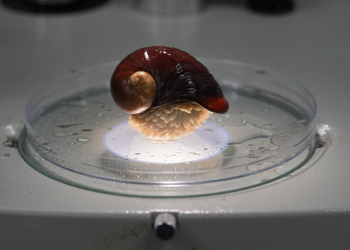
Researchers from the Hong Kong University of Science and Technology (HKUST) have decoded for the first time the genome of Scaly-foot Snail, a rare snail inhabited in what scientists called ‘the origin of life’- deep-sea hydrothermal vents characterized with impossible living condition. Unraveling the genome of this unique creature will not only shed light on how life evolved billions of years ago, but will also lay foundation for the discovery of potential remedies offered by these ancient creatures.
2019
News
HKUST Researchers Unlock Cancer-Causing Mechanism of E. coli Toxin with Synthetic Biology Approach Paving Way for New Preventive Measures for Colorectal Cancer
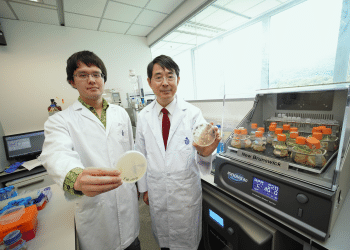
An inter-disciplinary team of researchers at the Hong Kong University of Science and Technology (HKUST) unraveled how a toxin released by Escherichia coli (E. coli) – a human gut bacteria, is connected to colorectal cancer, offering new insights to the health impact of this prevalent bacteria and facilitating future research on the prevention of this third most common cancer worldwide*.

News
Biology Saves STEM Education from Its Shackles
STEM has been a “buzzword” in Hong Kong’s educational scene in recent years with schools investing resources in technology gadgets, but for Prof. King CHOW of Division of Life Sciences, the efforts do not seem to be on the right track. Hong Kong is a city known for rote learning, a key element of STEM education - trying to solve problems in an interdisciplinary approach - is missed out. This not only results in a cul-de-sac in science education but also an impediment to nurture innovators or scientists that Hong Kong needs.
“STEM is really about allowing students to learn about methodology, approach and principles, and rules in application. Unfortunately, in many high schools and universities in Hong Kong, students learn information but miss out on logic and the analytical aspect of it,” comments Prof. Chow.

News
HKUST Researchers Co-Discover a Novel Function of an Enzyme Offering Insight Into the Pathology of Hereditary Spastic Paraplegia
Researchers of the Hong Kong University of Science and Technology (HKUST) and Institute of Biophysics, Chinese Academy of Science recently identified that an enzyme called atlastin (ATL) is used to regulate the transportation of proteins within cells. This novel finding offers new insights into the pathology of Hereditary Spastic Paraplegia – a rare inherited disorder with symptoms of lower limb spasticity accompanied by possible neurological deficiencies.

News
Time to Smell the Roses in Race of Life
Humans are creatures who often judge whether a dish is attractive or a stranger is friendly simply by their own eyes. But our sense of smell is just as important.
We all may have the experience of eating with a stuffy nose and found a dish to be tasteless or using our nose to check whether it has gone bad.
Moreover, people tend to keep their distance from a person with an unpleasant odor, while special odors like gas can alert us to dangers of a leak.
As the old Chinese adage goes, "My shack is better than an emperor's bed."
What makes our own shack better?
Our smell, together with the smell of our family members, and pets as well if any, makes it unique and reassuring.
To understand how smell impacts people, researchers at the University of British Columbia, Canada, invited 96 couples for a study last year.
News
Testing Times in Era of DNA Mapping
By Dr. Zhao Yongqian, Research Assistant Professor of Division of Life Science, HKUST
A few weeks ago, the Department of Health advised the public not to purchase genetic mapping tests on their own because it is hard to ascertain their professional standard and quality after a political party openly accused eight firms offering such tests of exaggerating claims that they are able to identify children's talents and character traits.
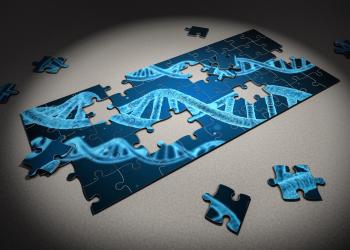
Actually, genetic testing is rather novel in science, having only appeared less than a century ago.
As early as 1940s, scientists began to learn that genetic information about living things was carried by DNA.
Until 1975 when British scientist Frederick Sanger invented a DNA sequencing technology, "Sanger sequencing", humans recognized the nature of biological inheritance at the molecular level.
News
HKUST Researchers Co-discover Novel Mechanism That Helps Delay Degradation of Injured Nerves
A research team consisting of scientists from the Hong Kong University of Science and Technology (HKUST), Chinese Academy of Sciences (CAS) and Jinan University discovered a new mechanism that could delay the degeneration of injured nerves, bringing new hope to the treatment of nerve damage and neurodegenerative diseases such as Parkinson and Amyotrophic Lateral Sclerosis (ALS).