






News & Stories
2021

News
HKUST Researchers Discover a Novel Mechanism of Recruiting Arf Family Proteins to Specific Subcellular Localizations
Researchers of the Hong Kong University of Science and Technology (HKUST) recently uncovered a novel molecular mechanism that regulates the subcellular localizations of Arf proteins, shedding light on the mechanism underlying various inherited diseases and offering new insight to the treatment of them.
2020
News
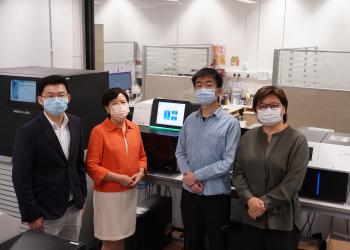
Strengthen Your Brain with Chinese Herbs to Prevent Alzheimer’s
Seeing how Alzheimer’s disease has turned her beloved aunt from a sprightly 75-year-old to a confusing mind, Dr. Fanny IP Chui-Fun says the experience is frustrating for her as a neuroscientist because the disease remains incurable.“My aunt was a secondary teacher who had a sharp mind. She used to help me with my homework, but now she can’t remember things and always says something that makes little sense,” says Dr. Ip.Determined to find a treatment, Dr. Ip has been researching into brain degeneration since 1993 with Prof. Amy FU Kit-Yu, Research Associate Professor in the Division of Life Science, under the guidance of world-renowned neurobiologist Prof. Nancy IP Yuk-Yu, who is Vice-President for Research and Development and the Morningside Professor of Life Science. The trio soon explored a new direction in the field predominantly associated with Western medicine.

News
HKUST Scientists Make Breakthrough Discovery of New Therapeutic Targets for Alzheimer’s Disease
Researchers at the Hong Kong University of Science and Technology (HKUST) have identified new therapeutic targets for Alzheimer’s disease (AD) by studying the patients’ brain with a newly-developed methodology. This novel approach also enables researchers to measure the effects of potential drugs on AD patients, opening new directions for AD research and drug development.

News
Novel Mechanical Mechanism of Metastatic Cancer Cells in Substrates of Different Stiffness Revealed
Metastasis, the spread of cancer cells to a different body part from where it started, is considered as the most dangerous phase of cancer development. When cancer cells break away from the main tumor and enter the bloodstream or lymphatic system, they can travel to anywhere of the body, proliferate and creating a secondary tumor in a new location. It is often said that metastasis is responsible for around 90% of cancer deaths.

News
Deep-brain Imaging at Synaptic Resolution Made Possible with Adaptive Optics Two-photon Endomicroscopy
The ability to undertake in vivo imaging of a living brain in a mammalian animal model is crucial for elucidating how the brain functions. However, the brain consists of tens of billions of neurons, each connected with thousands of others via synapses, the sites of communication between neurons that allows transmission of information. Thus, to truly understand the dynamics of neuronal synaptic interactions, the capacity for morphological and functional imaging of the brain at high spatial and temporal resolution is required.

News
HKUST Researchers Uncover Chemo-resistance Mechanism in Glioma Patients
An international research team co-led by the Hong Kong University of Science and Technology (HKUST), Beijing Neurosurgical Institute, and the Spanish National Cancer Research Center (CNIO) has discovered a mechanism that explains why patients of gliomas – a common and aggressive type of brain tumors, would develop chemo-resistance, potentially allowing early identification of drug-resistant brain cancer patients.
At present, the main treatment for glioma is a combination of surgery, radiotherapy and the chemotherapy agent temozolomide (TMZ). This type of treatment can usually prolong patients’ overall survival time. However, most of them would suffer a relapse and some would become resistant to TMZ.