





News & Stories
2022
News
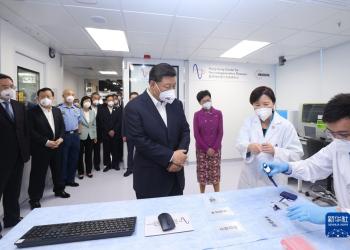
President Xi Visits HKUST’s Hong Kong Center for Neurodegenerative Diseases
President XI Jinping made an official visit to the Hong Kong Center for Neurodegenerative Diseases (HKCeND) at the Hong Kong Science and Technology Park yesterday in the company of officials from the Central Government and the HKSAR Government. Prof. Nancy IP, Director of HKCeND and The Morningside Professor of Life Science at The Hong Kong University of Science and Technology (HKUST), introduced President Xi to the key research projects and outcomes of the Center, including a simple blood test for early detection and classification of Alzheimer’s disease (AD) and related stem cell research.

News
HKUST Pushes Forward Research on Early Diagnostics and Gene Therapy for Neurodegenerative Diseases
Researchers at the Hong Kong Center for Neurodegenerative Diseases (HKCeND), founded by The Hong Kong University of Science and Technology (HKUST), have made promising breakthroughs in early diagnosis and therapeutic treatment of Alzheimer’s disease (AD) that have the potential to transform disease management. The team has established advanced biomarker discovery platforms, identified new blood-based biomarkers, and created an innovative artificial intelligence-based scoring system that enables risk prediction, early detection, and classification of AD. Furthermore, the team has successfully developed a gene therapy strategy as a novel therapeutic treatment for AD.
News
HKUST-led research reveals a novel molecular mechanism that regulates secretion of sonic hedgehog, shedding light on cancer treatments
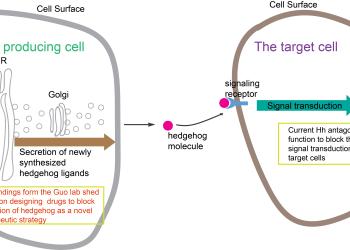
A research led by Hong Kong University of Science and Technology (HKUST) has revealed a novel mechanism that regulates secretion of sonic hedgehog (Shh), a key signaling molecular that plays an important role in cancer progression, in mammals, opening the door to novel therapeutic strategies for cancer induced by the hedgehog signaling pathway.
The hedgehog (Hh) signaling pathway is instrumental in regulating embryonic patterning and facilitating the development of the central nervous system and organs of the human body. Such a pathway transmitting information between cells is initiated by the Hh ligands, which are first secreted from the producing cells and then bound with specific receptors on target cells to induce Hh signaling (Fig. 1).
News
HKUST researchers develop long-term in vivo imaging technique to better understand and treat spinal cord injury
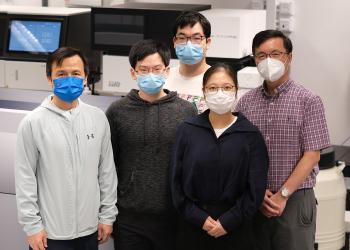
A research team led by scientists from the Hong Kong University of Science and Technology (HKUST) has developed an innovative technology for in vivo imaging of the important biological processes involved in the injury and repair of spinal cords, paving the way for a better understanding of the pathology and potential treatment of spinal cord injury (SCI).
A tight bundle of neural cells (neurons and glia) and nerve pathways (axons), the spinal cord serves as a primary information highway between the brain and the peripheral nerves in the rest of our body. Damage to the spinal cord is a devastating and largely irreversible neurological trauma, and can result in lifelong disability and paralysis with no available cure.
2021
News
HKUST and PolyU researchers develop an in-vitro vesicle formation assay
Scientists from The Hong Kong University of Science and Technology (HKUST) and The Hong Kong Polytechnic University (PolyU) have developed an in-vitro vesicle formation assay, shedding light on cargo clients and factors that mediate vesicular trafficking and providing a robust tool to offer novel insights into the secretory pathway.
News
HKUST-Beijing Tiantan Hospital Researchers Discover a New Cause for the Cerebral Cavernous Malformation
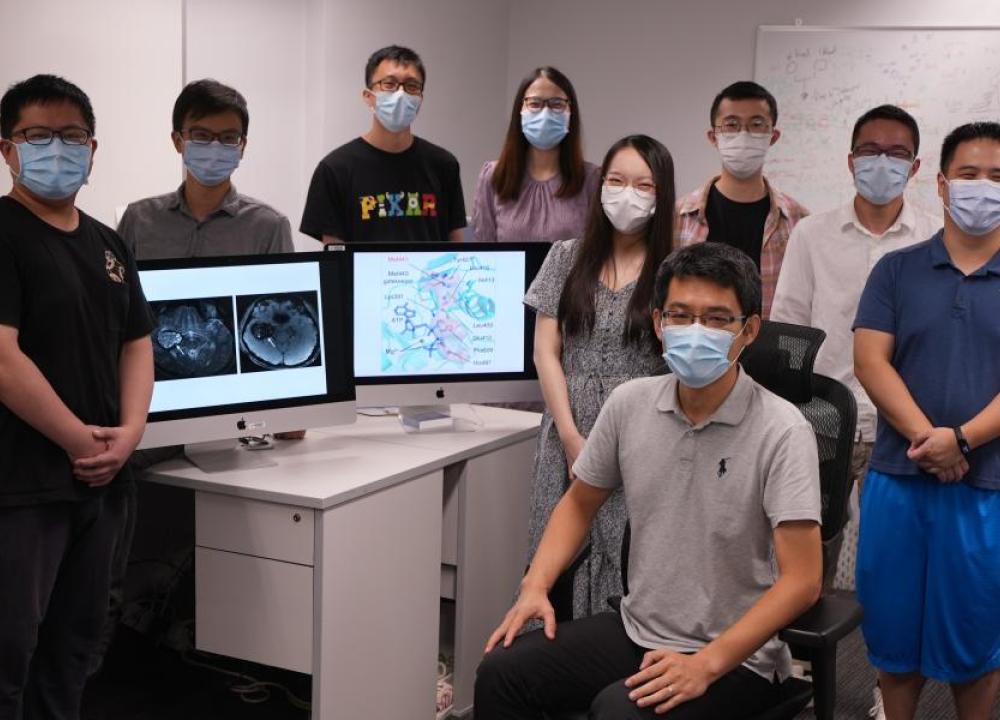
Researchers from the Hong Kong University of Science and Technology (HKUST) and Beijing Tiantan Hospital have recently uncovered a new gene mutation responsible for the non-familial patients of cerebral cavernous malformation (CCM) - a brain vascular disorder which inflicted about 10~30 million people in the world.While the mutation of three genes: namely CCM1, CCM2, and CCM3, were known to be a cause of CCM – they mostly targeted patients who has family history in this disorder – which only account for about 20 per cent of the total inflicted population. The cause for the remaining 80 per cent non-familial cases, however, were not known.
News
HKUST Researchers Unlock the Micro-Molecular Physiochemical Mechanism of Dental Plaque Formation
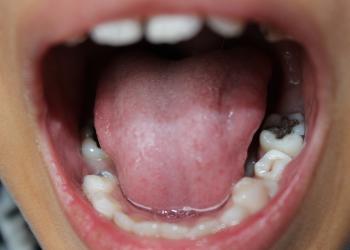
An inter-disciplinary team of researchers led by Prof. Qian Peiyuan, Chair Professor at the Hong Kong University of Science and Technology (HKUST)’s Department of Ocean Science and Division of Life Science has unraveled how a novel microbial small molecule released by Streptococcus mutans (S. mutans) – a bacterium commonly found in the human oral cavity – is connected to dental caries development using a synthetic biology approach, offering new insights to the health impact of the human oral microbiota and facilitating future research on the prevention of tooth decay. The research findings were recently published in the prestigious scientific journal Nature Chemical Biology and reported by Nature as one of the research highlights.