




News & Stories
2024
News
HKUST Identifies Novel Host Factors that Facilitates SARS-CoV-2 Entry
A research team led by Prof. GUO Yusong, Associate Professor of the Division of Life Science at the Hong Kong University of Science and Technology (HKUST), recently made a novel discovery related to the coronavirus (SARS-CoV-2) that causes COVID-19. The team identified new host factors that interact with the receptor binding domain of the SARS-CoV-2 spike protein to promote viral entry. This finding offers valuable mechanistic insights and potential therapeutic strategies against SARS-CoV-2 infection.
2023
News
HKUST Researchers Report the High-res Structure of a Cyanobacterial Virus Paving the Way for More Accurate Predictions of Climate Change
A research team at HKUST has outlined the high-resolution structure of a little-known virus, improving our understanding of viral infection, which could pave the way for more accurate predictions of climate change.
News
HKUST Elucidates How IGF2’s Secretory Pathway Mediates Muscle Stem Cell Differentiation Laying Foundation for Treating Multiple Diseases
A research team led by the Hong Kong University of Science and Technology (HKUST) recently revealed how TMED10, a type of transmembrane protein, regulates muscle stem cell differentiation through mediating the secretion of insulin-like growth factor 2 (IGF2). This provides potential therapeutic strategies to downregulate IGF2 signaling by inhibiting its secretion.
IGF2 is a pivotal player in cellular processes such as proliferation, migration, differentiation, and survival. Its dysregulation has been linked to multiple growth disorders, including Silver–Russell syndrome and Beckwith–Wiedemann syndrome. While the expression of IGF2 and its induced signal transduction pathway have been widely studied, the mechanisms through which newly synthesized IGF2 proteins are secreted to perform their functions have remained enigmatic.
News
HKUST researchers Develop an Innovative Microscope Platform to Unveil the Intricacies of Skeletal Muscle Regeneration
Researchers at the Hong Kong University of Science and Technology (HKUST) have created a cutting-edge platform consisting of a dual-laser nonlinear optical microscope to investigate the dynamics of muscle satellite cells (MuSCs) during the process of muscle regeneration. This breakthrough has identified new mechanisms of MuSC behavior in muscle repair, paving the way for the development of targeted therapeutic strategies for muscle-related disorders.
News
HKUST Researchers Identify a Protein as a Potential Therapeutic Target for Age-Related Diseases
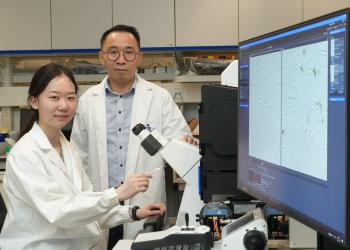
A research team from the Hong Kong University of Science and Technology (HKUST) has identified a key protein that may shed light on how to reverse the aging process using the adult stem cell of skeletal muscle (or muscle stem cells, MuSCs) as a model system. The discovery paves the way for the possible future development of therapeutic interventions for aging-related diseases and various mitochondrial diseases.
News
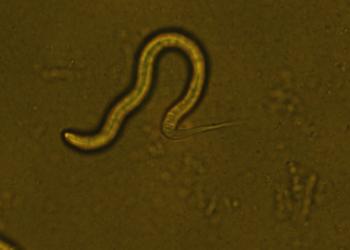
Scientists reveal the molecular mechanism of Microprocessor in Caenorhabditis elegans
The study of microRNAs (miRNAs), small RNAs that play important roles in gene regulation in animals and humans alike, have long been a topic of interest to many. How these miRNAs control and regulate gene expression, a subject of great importance in biology and medicine, is often believed to hold the keys to providing effective cures, or strategies, to different phenomenon and symptoms, such as cancer, a result of cell mutations.
News
Joint study reveals how DNA unzipping machine works, shedding lights on cancer therapy
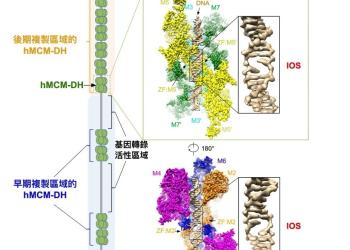
Scientists from The Hong Kong University of Science and Technology (HKUST), The University of Hong Kong (HKU) and Institut Curie, France have jointly uncovered a new mechanism of the human MCM2-7 complex in regulating replication initiation, which can be used as a novel and effective anticancer strategy with the potential for selective killing of cancer cells. The findings were recently published in the Cell journal (link to publication).
2022

News
Study Reveals the Intrinsic Immune Mechanism that Boosts Axon Regeneration in the Adult Nervous System
Damages to the central nervous system (CNS), for example in the case of spinal cord injury, can result in permanent loss of sensory and motor function. It is because the severed axons are unable to regenerate. As of today, there are very limited options to help these patients regain their motor abilities. Scientists have been exploring ways to enable the regeneration of severed axons, with a view to developing viable treatments in the long term.