



News & Stories
2020

2019

News
HKUST Researchers Untangle Links between Nitrogen Oxides and Airborne Sulfates Bringing New Hope to Improvement of Hazy Air Pollution
A research team led by scientists from the Hong Kong University of Science and Technology (HKUST) unveiled a first-in-kind study of nitrogen oxides (NOx) and its role in the rise and fall of airborne sulfates in hazy air pollution, offering policymakers new insights into ways to tackle smoggy weather.
Dense, hazy fog episodes characterized by relatively high humidity, low visibility and extremely high PM2.5 have been a headache to many megacities including those in Mainland China. Among pollutants that are less than 2.5 microns in diameter (PM2.5), airborne sulfate is one of the most common components of hazy air pollution formed atmospherically via the oxidation of sulphur dioxide (SO2).
News
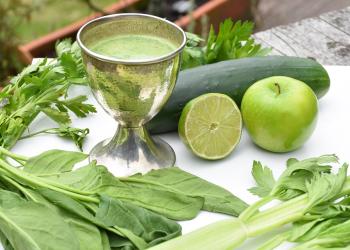
Here's a Drink to Acid Test for Pseudoscience
By Jason Chan, Lecturer, Department of Chemistry, HKUST
Science is hailed by modern society as an academic discipline of strict moral grounding and high integrity.
Almost every one would place some degree of trust in scientific studies as they are deemed to represent knowledge derived from empirical evidence gathered through meticulous experiments.
Given its high social status, there is no doubt that people would feel inclined to trust a product or service backed up by scientific studies or claims.
Unlike medical products and services that are tightly regulated by civil authorities, commercial use of scientific claims is less severely vetted.
This has created a grey area for pseudoscientists, who devise clever scams that have the appearance of science but are full of errors and lies.
One can learn well from a few recent (and still ongoing) examples - the alkaline diet and alkaline water scam.
2018

News
HKUST Faculty wins UGC Teaching Award 2018
Dr. Jason CHAN Kwan-Kit, Lecturer at the Department of Chemistry of the Hong Kong University of Science and Technology (HKUST), received the University Grants Committee (UGC) Teaching Award 2018 under the category of Early Career Faculty Members today, in recognition of his outstanding teaching performance and achievements.
HKUST President Prof. Wei SHYY congratulated Dr. Chan on winning the award, “HKUST is committed to fostering innovation, open-mindedness, and a can-do spirit. We strive to nurture a diverse and conducive culture to allow all our members to reach their full potential and achieve their aspirations, so that they can contribute to the society by conquering challenges that matter. I am very proud of Dr. Chan, whose innovation and dedication to teaching excellence earned him not only the recognition from his students and peers, but also this great honor at such a young age. I congratulate him sincerely for his outstanding accomplishments.”
News
HKUST Scientists Find New Way to Produce Chiral Molecules which may Bring Safer and More Affordable Medicine
A research team from the Hong Kong University of Science and Technology (HKUST) has discovered a more efficient and eco-friendly way to produce a family of chiral molecules, which would potentially bring down the cost of chiral medicine and make them more accessible to all.
Over half of the approved drugs now in use in the world are chiral, which treats a wide range of conditions including cardiovascular, respiratory and gastrointestinal diseases. Many chiral drugs are top sellers including high-cholesterol medicine Lipitor, and antibiotic Amoxicillin. But production of chiral drugs are difficult and costly, as the production process is complicated and requires rare and expensive raw materials in general.
2016
News
HKUST Finds a New Material System that Opens a New Era for Organic Solar Cells
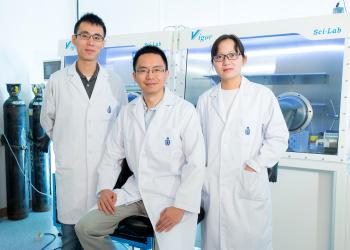
Researchers at The Hong Kong University of Science and Technology (HKUST) have discovered a novel material system that would revolutionize the future development of Organic Solar Cells (OSCs). OSCs based on this new material system have demonstrated ultrafast and efficient charge separation despite a nearly zero charge separation driving force, meaning that the more environmentally-friendly OSCs may be able to perform as good as inorganic solar cells in the future.The breakthrough, discovered by a research team led by Prof. Henry He Yan from the Department of Chemistry, was published in Nature Energy in June.
News
HKUST Develops Environmentally Friendly Organic Solar Cells with Record Performance
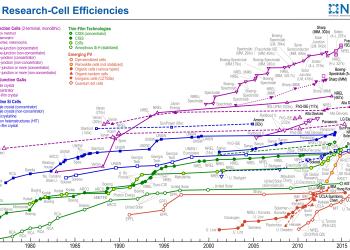
A record-efficient organic solar cell developed by a research team of the Hong Kong University of Science and Technology (HKUST) via an environmentally-friendly method, has been put on the renowned “Best Research-Cell Efficiencies Chart” by the National Renewable Energy Laboratory of the United States, the first time a solar cell developed by a Hong Kong institution appears on this historic chart, which records all the best efficiency cells around the world over the past 40 years.
2015

News
HKUST Scholars Develop Materials for Record-efficiency Polymer Solar Cells
Smartphones are getting more powerful every year and many people are treating their phones as a replacement of their computers. Extensive usage brings a severe drain to the phone’s battery life, making it almost mandatory to keep a mobile charger ready at all times. Keeping the mobile charger fully charged, however, can be a cumbersome practice, as one requires another set of cables and a power outlet to do so.
In the future, one may be able to charge its phone anywhere with daylight. HKUST’s Chemistry Professor Henry He Yan and his research team recently discovered a material design motif for polymer solar cells that produces electricity with record efficiencies; this new discovery can greatly accelerate the commercialization of portable chargers powered by solar energy.